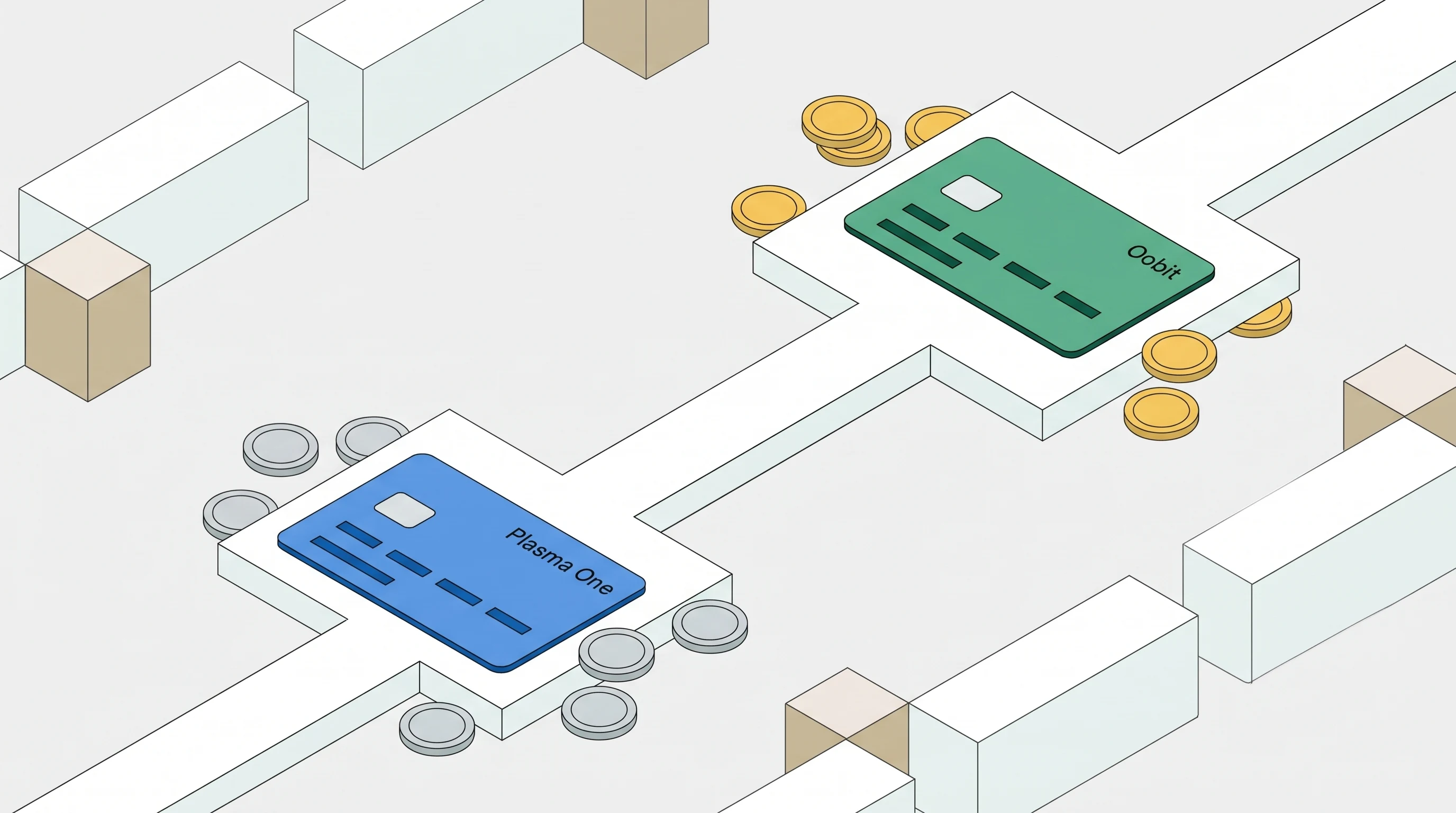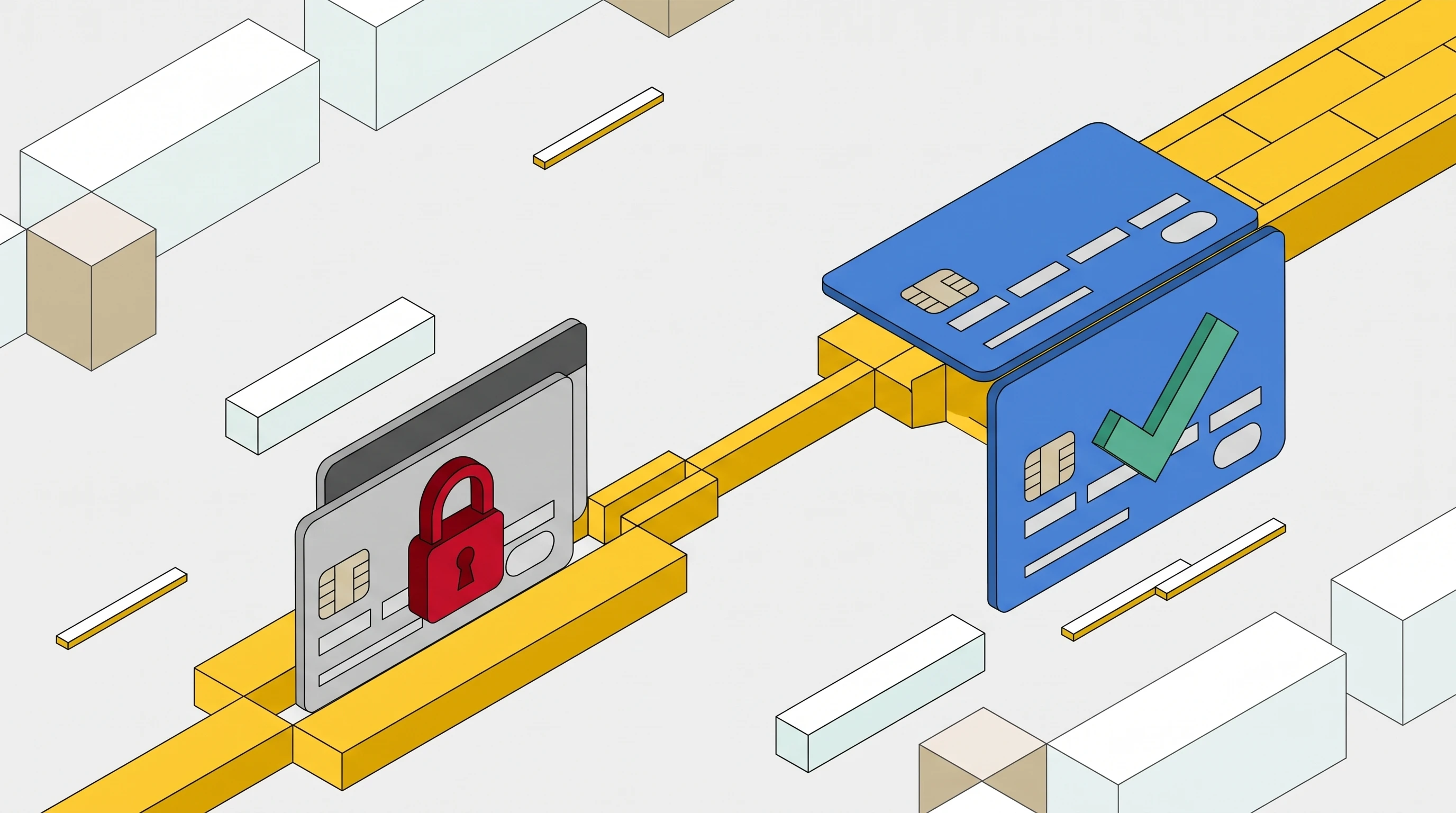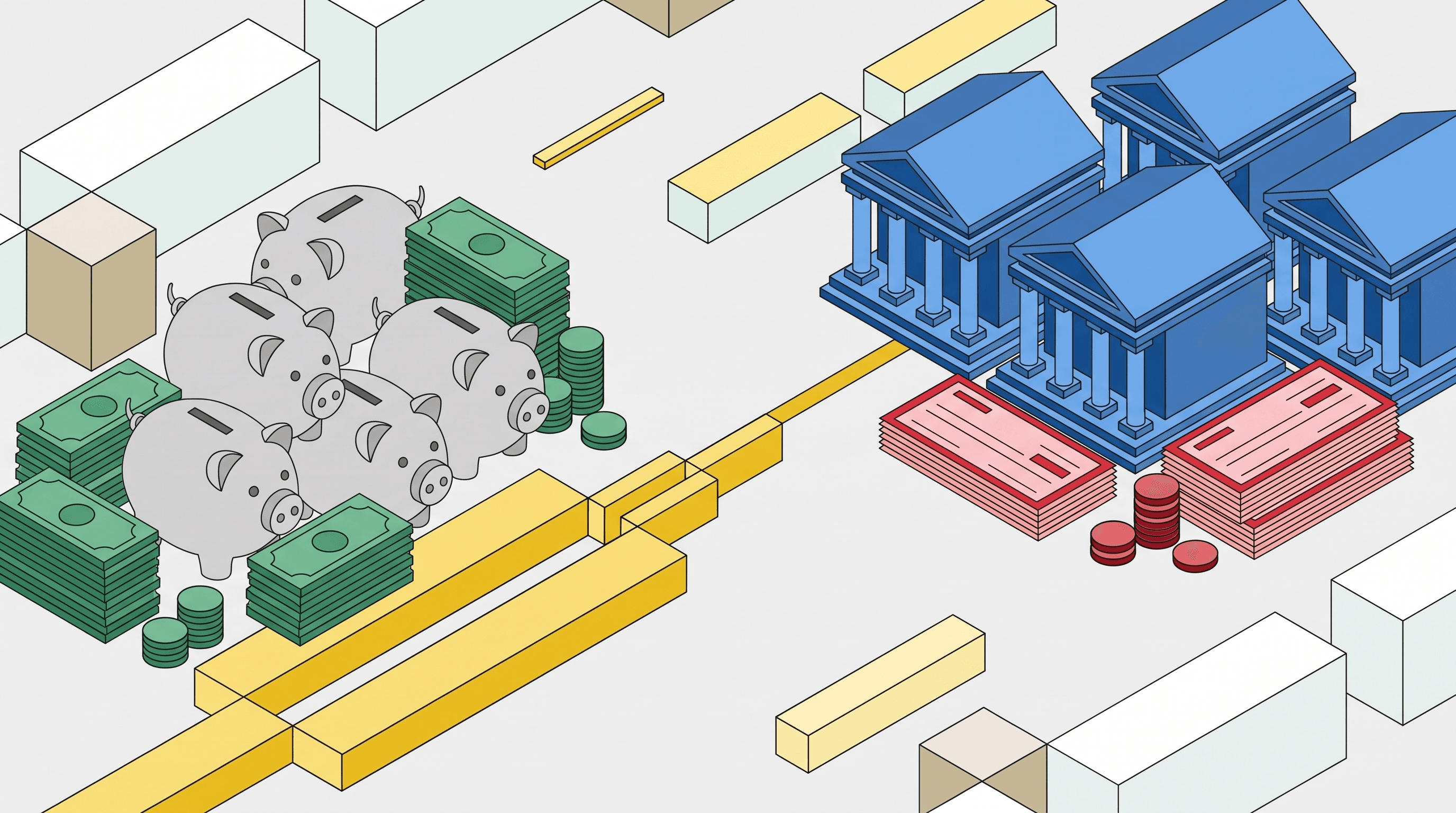
The terms unbanked and underbanked are sometimes used interchangeably, but represent distinct levels of financial access.
Unbanked individuals live in households where no one has a checking or savings account, while the underbanked have an account but still rely on alternative services like check cashing, money orders, or payday loans.
This article covers the demographic profiles, economic impacts, and solutions for these populations, including barriers and pathways to financial inclusion.
Key Takeaways
Unbanked households have no checking or savings account under the survey definition. This does not imply that they use no financial services.
Underbanked definitions depend on the survey and period and include account holders using specified nonbank services.
Compare the account’s fees, eligibility, access and protections; an account alone does not resolve every financial-access barrier.
Unbanked vs Underbanked: What They Mean in Today’s Financial System
Understanding these categories is essential for identifying gaps in financial infrastructure and ensuring systems serve every segment fairly.
Why These Terms Matter for Financial Inclusion
Distinguishing these groups helps identify where the traditional system fails. Accurate labels enable targeted solutions addressing root causes like geographic gaps or high fees.
Institutional strategies focus on promoting stable, long-term banking relationships. Monitoring these metrics helps track progress for historically underserved communities.
How the FDIC Defines Unbanked and Underbanked Households
The FDIC uses household-level criteria to monitor inclusion. An unbanked household has no member with a checking or savings account, while underbanked households have accounts but still use nonbank products like money orders, check cashing, or payday loans.
Note: The FDIC measures households, while the Federal Reserve measures unbanked status at the individual level.
What It Means to Be Unbanked
Core Definition and Characteristics
Unbanked status in the FDIC household survey means that no household member has a checking or savings account at a bank or credit union. Household and individual measures should not be combined. Related reading: bank or credit union
How Unbanked Individuals Manage Money Without Banks
Unbanked households can use cash, prepaid products, mobile services and other nonbank channels. Their access and preferences vary.
Cash-Based Transactions and Informal Financial Tools
Cash is one option for households without checking or savings accounts, alongside other permitted nonbank payment and saving services.
Use of Money Orders, Prepaid Cards, and Check Cashing Services
To handle essential transactions, households use Alternative Financial Services (AFS) as substitutes for traditional banking.
They rely on nonbank money orders to pay bills, check cashing services to access wages immediately, and prepaid cards as bridges for online payments and transactions that require plastic.
Key Reasons People Remain Unbanked
Income Limitations and Minimum Balance Barriers
Income, account fees and balance requirements can affect whether an account is affordable. Survey findings should be quoted with their year, population and precise question.
Distrust of Financial Institutions
Distrust and privacy concerns can affect account use. A survey response does not establish one cause or priority for every household.
Lack of Documentation or Access to Banking Infrastructure
Physical and legal barriers also play a role. Banking deserts (areas with no physical branches within a specific radius) force reliance on AFS. Furthermore, strict identification requirements can exclude those without standard government-issued IDs.
What It Means to Be Underbanked
Core Definition and Financial Profile
Underbanked status generally refers to account-holding households using specified nonbank services during a defined survey period. Use the exact survey definition rather than treating every nonbank transaction as underbanking.
How Underbanked Households Use Both Banks and Alternatives
Underbanked households often adopt a hybrid approach: they use bank accounts to receive paychecks but turn to nonbank tools to pay bills or access credit, often due to high costs or geographic barriers.
Reliance on Payday Loans, Check Cashing, and Money Transfers
To bridge income gaps between paychecks, they rely heavily on nonbank credit products like payday loans, pawn loans, and auto-title loans. They also use nonbank money orders and international remittances for transactions their bank either cannot handle efficiently or charges high fees to process.
Gaps Between Account Ownership and Full Financial Access
An account or debit card does not by itself establish credit history or loan eligibility. Underbanked households have varied saving and borrowing arrangements.
Common Drivers of Underbanked Status
Unpredictable Income and Fee Sensitivity
Volatile account balances make households vulnerable to expensive overdraft or NSF (non-sufficient funds) fees. When income is unpredictable, flat-fee services like money orders provide cost certainty that traditional banks with their penalty structures cannot always promise.
Credit Limitations and Financial History Challenges
Limited credit history and underwriting requirements can restrict borrowing options. This does not mean every underbanked person is excluded from bank credit.
Limited Access to Suitable Banking Products
Traditional institutions often lack small-dollar credit or low-cost remittance services. Banking deserts also make in-person banking difficult for those needing cash deposits.
Unbanked vs Underbanked: Key Differences Explained
Access to Traditional Banking Services
Unbanked households have no checking or savings account under the FDIC household definition.
Underbanked households have an account and meet the relevant survey’s additional nonbank-service-use criteria.
Level of Dependence on Alternative Financial Services
Nonbank-service use must be measured for a stated population and survey period. Household and adult percentages are not interchangeable.
Some account holders also use nonbank payment or credit services. The purpose and cost depend on the service and circumstances.
Financial Stability and Inclusion Gaps
An absence of a checking or savings account can limit some deposit and automatic-transfer options. Other account or nonbank services may still be available.
Some households use payday, pawn or auto-title credit. Their costs and effects should be assessed separately from payment services such as money orders.
Long-Term Economic Impact Differences
Some nonbank transactions do not build mainstream credit history, while reporting practices differ by product. Use of a nonbank service does not automatically prevent all credit reporting.
Nonbank service costs vary by product, provider, jurisdiction and frequency of use. An average payday-loan fee is not a universal household cost.
Why People Become Unbanked or Underbanked
Financial Barriers in the Banking System
The top reason for remaining unbanked is the inability to meet minimum balance requirements.
For those with volatile or low incomes, the risk of overdraft or NSF fees makes traditional accounts feel like a financial liability rather than a tool for growth.
Institutional and Structural Barriers
Institutions apply identity-verification requirements. Acceptable documents and alternatives vary; lacking one standard identification document does not automatically exclude a person from every account.
Branch closures can reduce local cash and in-person access. Assess the actual service area rather than using an uncited national count as proof of a particular community’s access.
Credit History and Banking Records Issues
Deposit-account consumer reports can affect applications, depending on the record and institution. Denial does not establish a universal or permanent bar; reporting disputes and alternative accounts may be relevant.
This cycle often forces households to rely on high-cost check cashing and money order services for core financial needs.
Trust, Privacy, and Behavioral Factors
Distrust of banks is the second most cited reason, along with privacy concerns and perceived lack of relevant products, suggesting banks don't understand their needs.
Digital Access and Technology Gaps
A digital divide affects those who need in-person services for cash-heavy workflows. The erosion of local branches hits low-income and minority communities hardest.
The Cost of Being Outside Traditional Banking
Fees from Alternative Financial Services
Money-order and check-cashing prices vary. Compare the current provider’s fixed and percentage charges for the intended transaction.
Short-term credit can be expensive and repeat borrowing can add costs. Review the actual APR, fees, repayment obligations and available alternatives.
Hidden Long-Term Financial Costs
Cash and prepaid products have different return, fee and protection arrangements. Using them does not by itself make saving or wealth-building impossible.
Bank On-certified accounts provide a lower-cost alternative to many fee-heavy nonbank services, though the annual cost burden of alternative financial services varies widely by household depending on how often they rely on products such as check cashing, money orders, or payday loans.
Loss of Credit-Building Opportunities
Some financial activities are not reported to credit bureaus. Credit history depends on the specific products and reporting arrangements, not solely on unbanked or underbanked status.
A limited credit history can restrict some borrowing offers. Underwriting and alternative assessment methods vary, so it does not establish that every mortgage or vehicle loan is unavailable.
Real-World Impact of Being Unbanked or Underbanked
Financial Security and Risk Exposure
Operating outside banks means carrying cash, increasing loss or theft risk. Physical cash lacks the federal insurance protections of bank deposits.
Barriers to Saving and Wealth Building
Households without a checking or savings account may have fewer options for interest-bearing deposits and automatic transfers, depending on available alternatives.
Nonbank check-cashing and money-order use does not by itself establish whether a person can use automated saving services.
Challenges in Housing, Employment, and Mobility
Credit scores affect rental applications. Furthermore, excluding individuals from the banking system can make some employment opportunities inaccessible, especially for roles that require direct deposit for payroll.
Reduced Access to Affordable Credit Options
Account access and credit access are related but distinct. Compare actual eligibility, total borrowing cost and repayment risk rather than assuming every unbanked person uses high-cost credit.
Trends Reshaping Banking Access
Declining Unbanked Populations in Recent Years
Unbanked trends require the same survey definition and population across periods. A change in a household measure should not be described as the same change among all adults.
Even so, progress has been uneven. Millions remain outside the banking system, especially in lower-income, rural, and historically underserved communities.
Growth of Mobile and Digital Banking Adoption
Smartphones can support access to digital services, but identity checks, connectivity, accessibility, fees and support still matter.
The Role of Financial Technology in Inclusion
Fintech platforms and neobanks offer no-fee accounts with easier onboarding. While these apps improve liquidity through faster payment access, users must navigate potential risks such as algorithmic bias or high-cost expedited fees.
Persistent “Financial Deserts” in Underserved Communities
Branch access varies by community. Assess the relevant locations, cash services and digital alternatives rather than assuming every branch closure creates a new banking desert.
Solutions to Bridge the Banking Gap
Low-Fee and No-Minimum Bank Accounts
Bank On-certified accounts (safe, affordable checking and savings accounts designed for unbanked and underbanked consumers) have emerged as a standardized safety net.
Bank On certification has defined account standards. Confirm the current standards and the particular account’s fees, opening requirements and overdraft policy.
Program account totals and deposits require a dated report and definition. They do not by themselves show that every account holder was previously unbanked.
Credit Union and Community Banking Alternatives
Community Development Financial Institutions (CDFIs) and credit unions offer relationship-based service, integrating banking with financial coaching and tax assistance.
By offering low fees and flexible ID requirements, these community-focused models significantly boost account openings among priority populations.
Second-Chance Banking Programs for Re-Entry
Second-chance accounts (Fresh Start/Opportunity programs) help those flagged in ChexSystems. They offer account upgrades after positive history and support re-entry services for formerly incarcerated individuals.
Improving Financial Education and Awareness
Success often depends on connecting banking to municipal outreach. For example, Bank On Boston unifies banking access with public social services and financial coaching to reach every resident through a coordinated network of support.
Use of Alternative Credit Data for Inclusion
To build broader economic literacy, institutions are increasingly using alternative data to build credit bridge scores. Using non-traditional information, such as utility bills and rent payments, helps individuals establish the credit history required for full financial inclusion.
Transitioning From Unbanked or Underbanked to Fully Banked
Choosing the Right Type of Bank Account
Compare opening requirements, recurring charges, overdraft policy, cash access and deposit protections. If relying on Bank On certification, confirm the current account and standards.
Preparing Documentation and Meeting Requirements
Many inclusive institutions now accept alternative IDs like ITINs (Individual Taxpayer Identification Numbers), municipal IDs, or consular cards to verify identity.
Some institutions offer second-chance accounts. Upgrade eligibility and timing depend on the specific terms and are not automatically 6–12 months.
Strategies to Avoid Banking Fees
Compare fee waivers and direct-deposit conditions. Balance alerts can help with monitoring, but do not guarantee that every fee is avoided.
You can also utilize digital alerts to monitor balances in real-time, helping you avoid accidental fees before they occur.
Building Long-Term Financial Stability Habits
Some institutions combine account services with coaching or benefits support. Review the actual offer and cost rather than treating a program participation count as proof of financial outcomes.
Conclusion
Closing the gap between unbanked, underbanked, and fully banked populations requires policy innovation, technology, and consumer education.
By understanding barriers like minimum balance requirements and distrust of banks, a more inclusive system can be built that allows every individual to save, spend, and thrive.