For centuries, banks have been the center of finance. Today, a new digital movement is offering financial freedom by removing the need for a central gatekeeper.
DeFi, or Decentralized Finance, is a new financial system built on blockchain technology. It uses code to create accessible and transparent alternatives to services such as borrowing, lending, and trading, all without a bank or middleman.
This article explains what DeFi is, how it works, its key applications, and its risks. Read on to understand how this technology is reshaping the future of money.
Key Takeaways
DeFi is an alternative financial system built on blockchain, using automated code called smart contracts instead of intermediaries like banks.
Key applications include decentralized trading (DEXs), lending, borrowing, and stablecoins.
DeFi offers transparency, user control, and permissionless access, but it also involves significant risks including smart contract bugs and high volatility.
What is DeFi?
Defining Decentralized Finance
DeFi is not a single company or product, but rather a broad ecosystem of financial applications and services built on top of public blockchain networks.
The goal of DeFi is to build a new financial system that is open, permissionless, and transparent. It takes the services we use in traditional finance (TradFi) such as saving, lending, borrowing, and trading and recreates them using code.
The Core Idea: Removing Intermediaries
The most important idea in DeFi is the removal of trusted intermediaries. In traditional finance, you trust a bank to hold your money, a stockbroker to make your trades, and a loan officer to approve your mortgage.
DeFi replaces these human-run intermediaries with automated, self-executing code called smart contracts. Instead of trusting a bank’s ledger, you trust the mathematical certainty of code running on a public blockchain.
This allows for peer-to-peer transactions to happen directly between two people, or between a person and a smart contract, without a central company taking a cut or having the power to block the transaction.
Key Components: Blockchain, Smart Contracts, and Tokens
DeFi has three main components that work together:
Blockchain: This is the foundation. It’s a secure and decentralized public ledger that records all transactions. The Ethereum blockchain was the pioneer of DeFi and is still where many of its applications are deployed.
Smart Contracts: These are the “engine” of DeFi. A smart contract is a program that automatically executes the terms of an agreement, replacing the need for intermediaries.
Tokens: These are the assets used within the DeFi ecosystem including cryptocurrencies like ETH, stablecoins like USD₮, and other digital assets.
How DeFi Works
The Role of Blockchain Networks
The blockchain provides the secure and transparent base layer for DeFi. Because the ledger is distributed across thousands of computers worldwide, no single entity can control it or alter the transaction history.
This immutability is crucial for finance. It ensures that all confirmed transactions are final and that the rules of the system are enforced as written in the code.
Smart Contracts as the Foundation of Trust
Smart contracts are the heart of DeFi. They are the back-end code that powers all decentralized applications.
Think of a smart contract as a digital vending machine. The rules are publicly visible:
IF you deposit 100 USD₮ into a lending protocol’s smart contract...
THEN the contract will automatically start paying you 5% interest and it will issue you a receipt token.
There is no cashier, no bank manager, and no paperwork. The contract simply executes its code. This is how DeFi replaces “trust in people” with “trust in code.”
Wallets, Tokens, and Peer-to-Peer Transactions
To interact with DeFi, you don’t use a bank account. Instead, you use a non-custodial crypto wallet such as MetaMask or Phantom.
A non-custodial wallet means that you, and only you, have control over your “private keys” – the secret password that proves ownership of your funds. This is what enables “self-custody,” as you are truly your own bank.
Your wallet is your passport to the DeFi ecosystem. You use it to hold your tokens and to sign and approve all transactions directly in a peer-to-peer (P2P) fashion.
dApps: The User Interface of DeFi
Connecting to DeFi via Wallets
A dApp, or “decentralized application,” is the user-friendly website or front-end that you interact with. This website connects to the smart contracts (the back-end) on the blockchain.
When you visit a DeFi lending dApp, you aren’t sending your money to the company that built the website. You are using their interface to interact directly with the open-source smart contract.
The first step on any dApp is to click the “Connect Wallet” button. This links your personal wallet to the dApp, allowing it to see your token balances and request your approval for transactions.
Executing Transactions on the Blockchain
When you decide to perform an action such as swapping one token for another or depositing funds to earn interest, you are executing a transaction.
Your wallet will pop up and ask you to “sign” or “confirm” this transaction. This is your digital signature, proving you approve the action.
This confirmation also shows you the “gas fee,” which is the cost you pay to the blockchain network (not the dApp) to process and validate your transaction. Once you approve, your transaction is sent to the blockchain to be confirmed.
The Difference Between DeFi and Traditional Finance
Centralized vs Decentralized Systems
Traditional Finance (TradFi) is centralized. It’s built around individual institutions such as banks and stock exchanges that act as trusted gatekeepers. They have their own private servers and private ledgers.
DeFi is decentralized. The system is built on open-source code and runs on a public blockchain. There is no CEO who can shut it down, and no single point of failure.
Accessibility and Transparency
In TradFi, access is “permissioned.” You must apply for a bank account, be approved for a loan, and provide extensive personal identification (KYC). Many services are limited by your geography.
In DeFi, access is “permissionless.” Anyone in the world with an internet connection and a crypto wallet can use any dApp. It doesn’t matter who you are or where you live – although specific dApps may still choose to block users in certain regions for legal reasons.
TradFi is also opaque. A bank’s internal ledger is a secret. DeFi is fully transparent. Every single transaction and the logic of every smart contract is visible on the public blockchain for anyone to audit.
Control, Privacy, and Ownership
In TradFi, your bank account is “custodial.” The bank holds your money on your behalf and has the right to freeze your account or block transactions. Your financial data is collected and sometimes sold.
In DeFi, your wallet is “non-custodial.” You have 100% ownership and control over your own funds. No one can ever access your money or stop your transactions without your private keys.
This also enables pseudonymity. Your wallet is identified only by a public address (a long string of numbers and letters), not your real-world name and address.
Common DeFi Applications and Use Cases
Decentralized Exchanges (DEXs)
A DEX is an exchange that lets you trade cryptocurrencies directly from your wallet. There is no central entity holding the funds or managing an order book.
Many popular DEXs, such as Uniswap, use Automated Market Makers (AMMs). These are smart contracts that hold large pools of two different tokens, and the price is determined by a mathematical formula based on the ratio of tokens in the pool.
Lending and Borrowing Protocols
These are some of the most popular dApps including Aave and Compound. They are like autonomous money markets.
Users can deposit their crypto assets into a smart contract “pool” to earn interest.
Other users can borrow from that same pool. To borrow, you must provide “over-collateral” – meaning you must lock up assets worth more than the amount you want to borrow. For example, deposit $1,000 of ETH to borrow $700 of USD₮. This ensures the loan is always safely collateralized.
Stablecoins and Digital Collateral
Stablecoins are the lifeblood of DeFi. They are cryptocurrencies pegged to the value of a fiat currency, like the U.S. dollar. USD₮ and USDC are two popular examples.
Stablecoins are essential because they allow users to trade, lend, and earn interest without being exposed to the extreme volatility of assets like Bitcoin or Ethereum. They are the primary “money” used in DeFi.
Yield Farming and Liquidity Pools
Liquidity pools are the smart contracts that hold the tokens on a DEX. Users who deposit their tokens into these pools are called “liquidity providers” (LPs).
LPs earn trading fees from their deposits, but they can also often “farm” extra reward tokens. Yield farming is the practice of actively moving your funds between different protocols to maximize the total interest and rewards (yield) you are earning.
Synthetic Assets and Derivatives
Derivatives are contracts that get their value from an underlying asset. DeFi allows for the creation of “synthetic assets” – tokens that mirror the price of a real-world asset, like a stock (e.g. TSLA) or a commodity (e.g. gold).
This allows users to gain price exposure to real-world assets from within the crypto ecosystem, 24/7, from anywhere in the world.
Decentralized Insurance and Prediction Markets
Decentralized insurance services such as Nexus Mutual allow users to buy cover for their DeFi deposits. Instead of an insurance company, users contribute to a capital pool and vote on claims, collectively insuring each other against specific risks such as smart contract hacks.
Prediction markets such as Polymarket are platforms that let users bet on the outcome of real-world events, like elections or sports games.
Benefits of DeFi
Global and Permissionless Access
One of the most compelling benefits of DeFi is its ability to create a truly global and open financial system. Anyone with an internet connection can access these powerful financial tools, “banking” the unbanked and offering all global citizens a new alternative to traditional finance.
Lower Costs and Faster Transactions
By disintermediating (i.e. removing) the middlemen, DeFi can offer lower fees and faster service. There are no 3-5 day bank settlement times, no wire transfer fees, and no bank branch costs to be absorbed.
It should be noted, however, that this benefit can be offset by high blockchain gas fees during times of congestion, particularly on networks such as Ethereum. Nevertheless, this is a technical challenge that newer, faster blockchains solve.
Transparency and Autonomy
With DeFi, you don’t have to trust – you can verify. You – or any auditor – can look at the code of the smart contract and the public ledger of all transactions. You also have full autonomy and self-custody over your funds.
Innovation Through Open-Source Collaboration
DeFi applications are often called “money Legos” because they are “composable.” This means dApps are open-source and can be easily plugged into each other.
A developer can build a new dApp that combines a lending protocol and a DEX to create a totally new product. This composability leads to incredibly rapid innovation in a way that is impossible in the siloed world of traditional finance.
The Risks and Limitations of DeFi
Volatility and Market Instability
DeFi is not a risk-free environment. The crypto assets such as ETH used as collateral can be volatile. A sudden price crash can cause a cascade of “liquidations” where the protocol automatically sells a user’s collateral to cover their loan.
Security Vulnerabilities and Hacks
A smart contract is only as secure as its code. If there is a bug or an exploit in the code, a hacker can drain the contract of all its funds. Billions of dollars have been stolen from DeFi protocols.
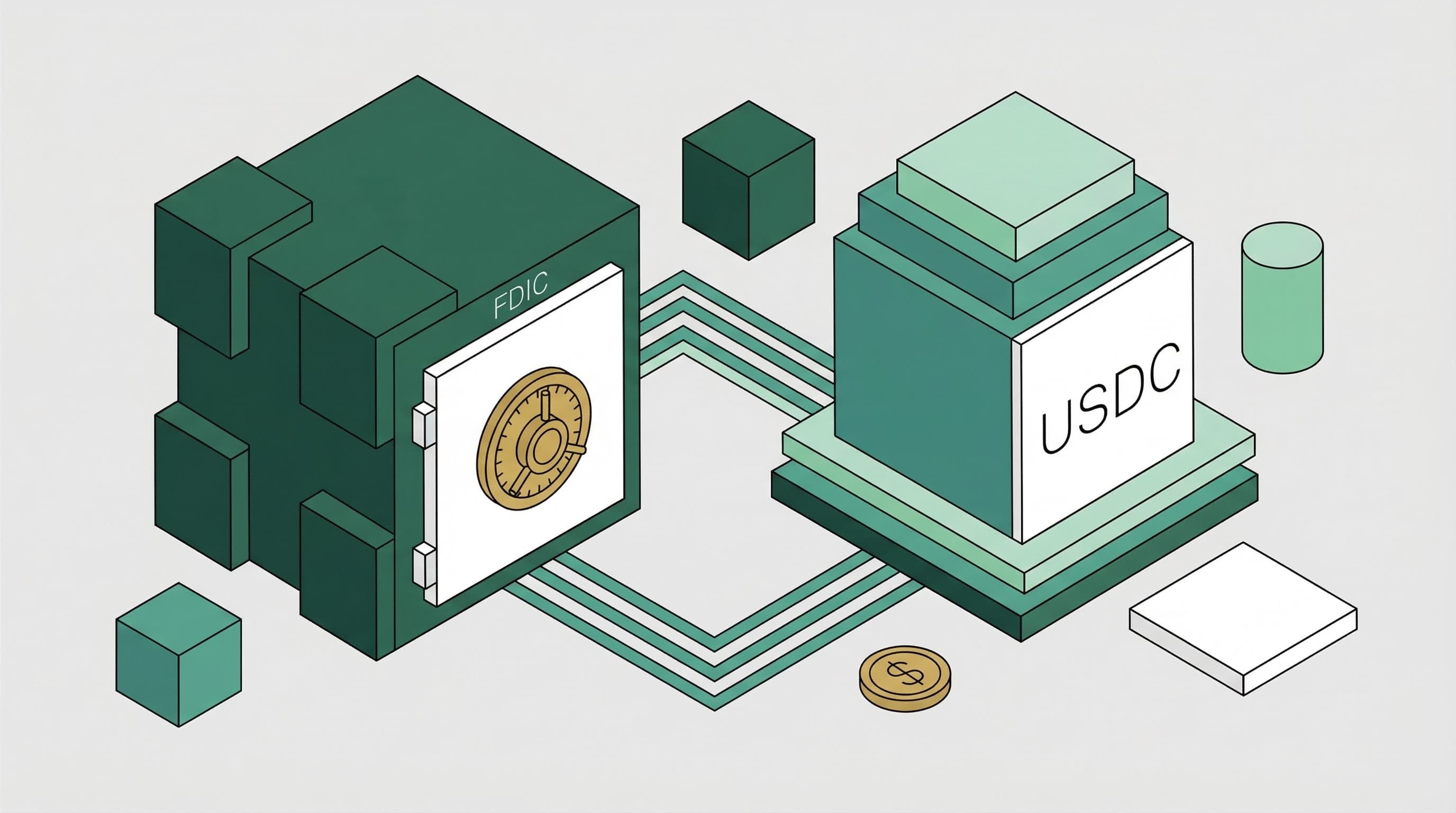
This is the single biggest risk in DeFi. Unlike a bank, there is no FDIC insurance or customer support line to get your money back. When it’s gone, it’s gone.
Lack of Regulation and Legal Uncertainty
The DeFi space is largely unregulated and exists in a legal gray area in many countries. This creates uncertainty for users and businesses. There is little-to-no consumer protection, and scams are not uncommon.
User Responsibility and Private Key Management
The benefit of “being your own bank” is also a huge responsibility. If you lose your private key or seed phrase, you lose access to all your funds, forever. There is no “password reset.”
You are also 100% responsible for your own decisions, for avoiding phishing scams, and for understanding the high risks of the protocols you use.
The Technology Behind DeFi
Smart Contracts and Oracles
As we’ve covered, smart contracts are the “brains” of DeFi. But they have one major limitation: they are “blind” to the outside world. A smart contract on Ethereum cannot, by itself, know the current price of TSLA stock in U.S. dollars.
This is where “oracles” come in. An oracle is a secure third-party service that feeds real-world data like price feeds, weather, or election results onto the blockchain so that smart contracts can use it.
The Importance of Reliable Data Feeds
Oracles are mission-critical infrastructure. If a lending protocol receives an inaccurate price feed from its oracle, it could accidentally liquidate all of its users or become insolvent in seconds.
Therefore, secure and reliable oracles are just as important as secure smart contracts for the entire DeFi ecosystem to function.
Interoperability and Composability in DeFi
Composability, as mentioned (“money Legos”), refers to how dApps can plug into each other, allowing for new products to be created using preexisting markets.
Interoperability refers to the ability of different blockchains to communicate with each other. Ensuring that multiple blockchains, often written in different programming languages, can “talk” to one another is a complex challenge.
“Cross-chain bridges” are protocols built to help users move their assets from one blockchain to another, such as sending USDC from Ethereum to Solana.
Getting Started with DeFi
Choosing a Wallet and Acquiring Cryptocurrency
Get a Wallet: The first step is to download a non-custodial, self-hosted wallet. MetaMask and Rabby are the most popular options for Ethereum-compatible chains.
Buy Crypto: You’ll need the native coin of a blockchain to pay gas fees such as ETH for Ethereum. You can buy this on a centralized crypto exchange such as Coinbase or Binance.
Fund Your Wallet: Withdraw your crypto from the exchange and send it to your new, personal wallet address. You are now ready to interact with DeFi.
Exploring dApps and DeFi Platforms
Start small and simple. It’s wise to begin with well-established protocols that have been battle-tested for years, such as Uniswap (for trading) or Aave (for lending).
Remember, though, that past performance is not necessarily indicative of future performance, and no DeFi dApp is guaranteed to be immune from bugs and other vulnerabilities.
Read the dApp’s documentation, see what their interest rates and services are like, but don’t feel you have to deposit money right away. Just exploring your options is a good first step.
Managing Risk as a Beginner
The golden rule of crypto and DeFi is: Never invest more than you are willing to lose.
As a beginner, you should avoid complex strategies like yield farming or using leverage. The risk of “impermanent loss” in liquidity pools or liquidation on lending platforms is very high.
Tips for Secure Participation
Never share your private key or seed phrase with anyone.
Bookmark the official website of dApps to avoid search engine phishing scams.
Be skeptical. If an interest rate seems too good to be true (e.g. 1,000% APY), it is extremely high risk.
Start with a small amount of money to test a transaction and see how it works.
The Future of DeFi
Institutional Adoption and Regulation
The next major phase for DeFi will likely involve greater participation from institutions and tighter regulation. Big banks and financial firms are actively exploring how they can use DeFi’s efficiency, but they require a regulated and compliant environment.
This will lead to the rise of “permissioned” DeFi protocols that include KYC and other legal guardrails, running alongside the permissionless world we have today.
Cross-Chain Innovation and Hybrid Smart Contracts
The future of DeFi is multi-chain. Users will move their assets seamlessly between many different, specialized blockchains to find the best services and lowest fees.
Hybrid smart contracts, which combine the security of a blockchain with the power of off-chain data from oracles, will unlock more complex and powerful applications, connecting DeFi to the real world.
The Broader Impact on Global Finance
DeFi’s greatest impact may not be replacing the entire traditional system, but forcing it to get better. The competition from DeFi is already pushing banks to adopt faster real-time payments and lower their fees for international transfers.
Conclusion: Why DeFi Matters
Empowering Financial Independence
DeFi is a powerful experiment in financial independence. It gives individuals the choice and control to manage their own assets and access sophisticated financial tools that were previously reserved for professional investors.
The Path Toward an Open Financial Ecosystem
While it is still new and risky, DeFi is paving the way for a more open and transparent financial system. It is a global layer of finance built for the internet, where rules are code and access is open to all.
The future of this digital economy relies on a stable, reliable medium of exchange. While DeFi explores complex new tools, the most critical piece for real-world adoption is making digital dollar payments simple, fast, and secure – which is exactly what Plasma is developing.
DeFi has only been around for approximately five years, and during that time both the range of services it offers and the user experience it provides have improved dramatically.
Five years from now, there’s a good chance that its active users will number into the billions as institutions and individuals onboard to explore the many opportunities that DeFi has to offer.