How Yield-Bearing Stablecoins Work
The global stablecoin market reached $265.627 billion in total market capitalization as of March 2026, marking a significant evolution in digital finance where stable assets now actively generate returns.
Yield-bearing stablecoins are blockchain-native digital assets that maintain a stable value peg to a reference asset - typically the United States dollar - while simultaneously generating yield through automated capital deployment strategies. These instruments embed yield generation directly into the token's design, allowing users to earn returns without separately deploying their stablecoins into external protocols.
This article will delve into the core concepts, diverse yield generation mechanisms, and underlying smart contract architectures that power yield-bearing stablecoins. You will learn how these innovative assets work, their strategic importance, the risks involved, and their future trajectory in the evolving landscape of decentralized finance.
Key Takeaways
Yield-bearing stablecoins embed native yield, transforming passive stable assets into productive capital.
Diverse mechanisms, from lending protocols to delta-neutral strategies and real-world assets, generate returns.
Sophisticated smart contract architectures and oracle infrastructure enable real-time yield accrual.
These assets face risks from smart contract vulnerabilities, depegging events, and liquidation cascades.
Yield-bearing stablecoins are strategically important for onchain cash management and institutional adoption.
Understanding Yield-Bearing Stablecoins: Core Concepts and Purpose
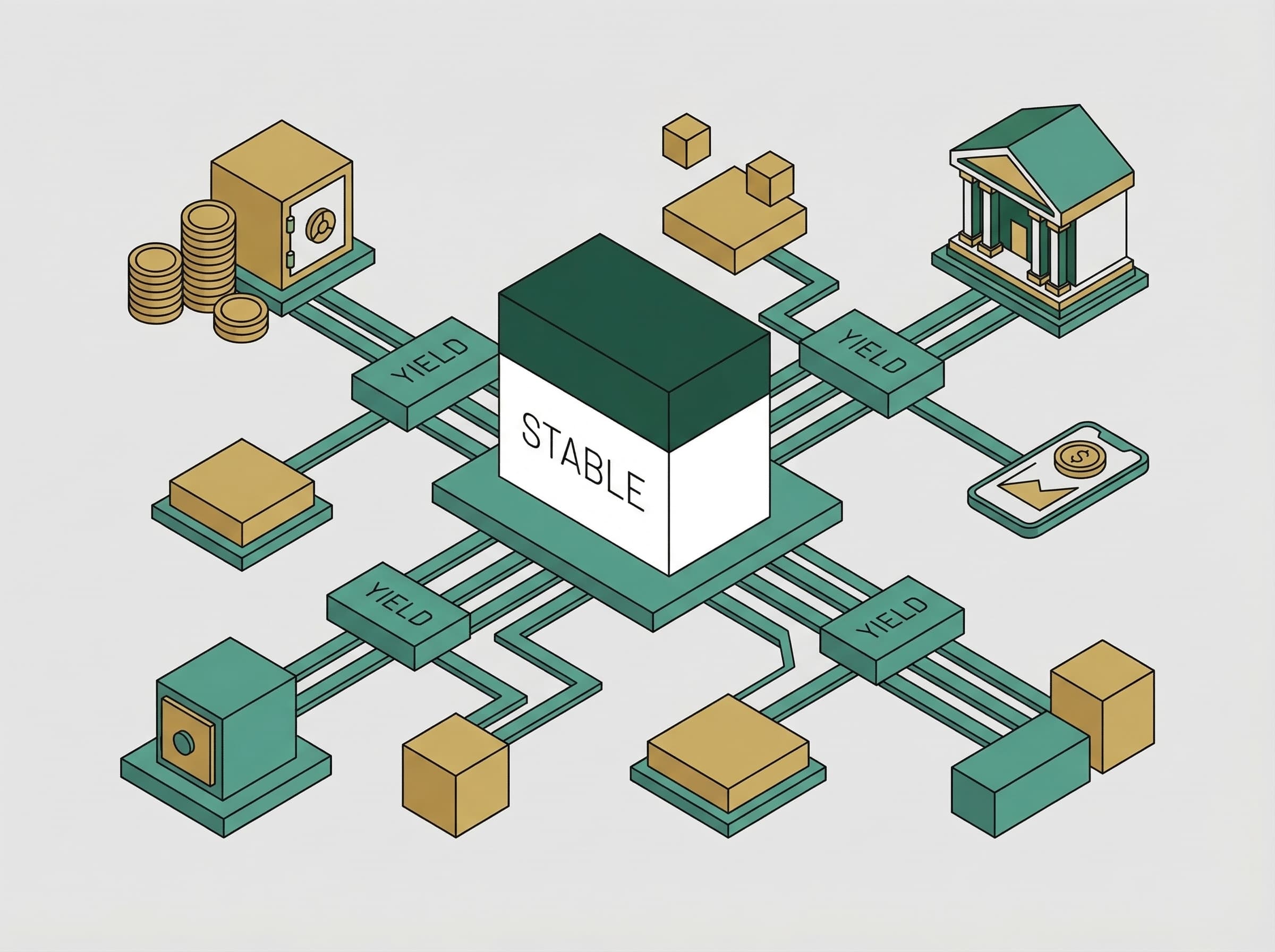
Yield-bearing stablecoins bridge the gap between price stability and capital efficiency in digital assets, transforming passive stores of value into productive capital that earns returns. They fundamentally differ from traditional stablecoins by embedding yield generation directly into their design, enabling automatic compounding of returns either through increasing token balances (rebasing) or growing internal token value (value accrual). This innovation addresses the zero-yield problem of static dollar-denominated assets, offering returns comparable to traditional money market instruments while maintaining 24/7 liquidity and programmable access, making them crucial for modern onchain cash management.
What Defines a Yield-Bearing Stablecoin?
Yield-bearing stablecoins are characterized by their dual functionality: maintaining a stable peg to a reference asset, typically the USD, while actively generating returns for holders through automated strategies. Unlike traditional stablecoins such as USD₮ or USDC, which require users to manually deploy them into external DeFi protocols to earn yield, yield-bearing variants integrate this earning mechanism directly into the token itself. This design ensures that the stablecoin's value automatically compounds, either by increasing the number of tokens in a user's wallet or by appreciating the underlying value of each token, thereby providing a native yield without requiring active management.
Why Are Yield-Bearing Stablecoins Strategically Important?
The strategic importance of yield-bearing stablecoins stems from their ability to offer competitive returns, broadly sitting in the same 3–6% band as traditional money market funds. However, they provide unparalleled advantages such as 24/7 liquidity, programmable access through smart contracts, and independence from relationship-based banking. This capability has transformed onchain cash management into a practical alternative to offchain treasury products. It extends institutional-grade financial services to decentralized networks. Furthermore, their composability allows integration into complex yield strategies, while emerging regulatory clarity, like the GENIUS Act and MiCA, provides clearer pathways for their issuance and adoption, accelerating their role in bridging traditional finance with blockchain infrastructure.
Key Yield Generation Mechanisms
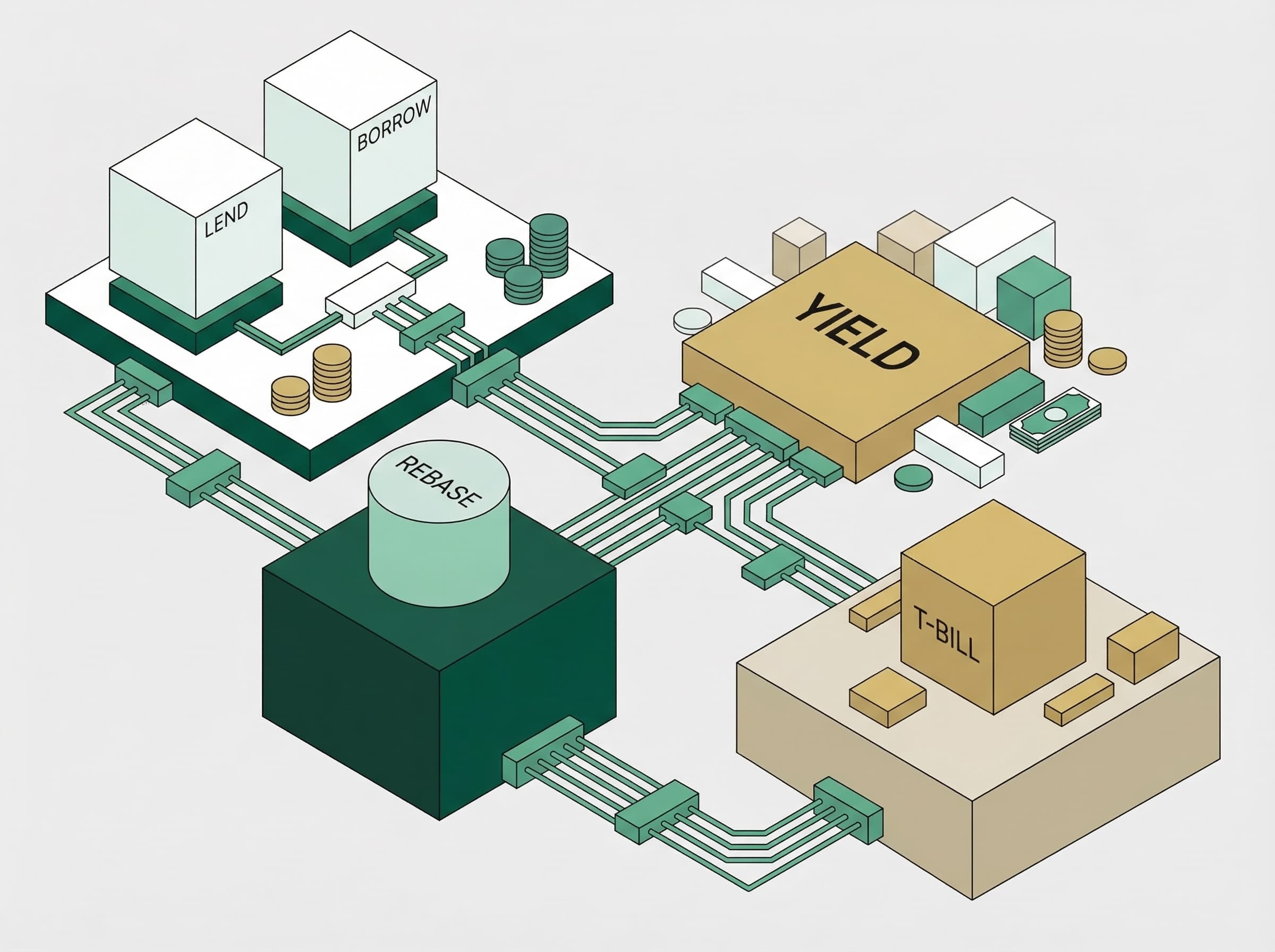
Yield-bearing stablecoins employ a diverse array of sophisticated mechanisms to generate returns, ranging from traditional lending protocols to innovative delta-neutral strategies and integrations with real-world assets. These methods are designed to continuously deploy stablecoin reserves into productive activities, then distribute the earnings back to holders. This ensures that the stablecoin functions not just as a store of value but as a yield-generating asset. The choice of mechanism often dictates the yield profile, risk exposure, and underlying technical architecture of the stablecoin, reflecting a dynamic and evolving landscape of onchain capital efficiency.
Lending-Protocol-Based Yield
The most prevalent yield generation mechanism for stablecoins involves integrating with decentralized lending protocols, where stablecoin deposits earn interest from borrowers. Platforms like Aave and Compound aggregate these deposits into liquidity pools, from which borrowers can draw by providing overcollateralization. The interest rate model, a sophisticated algorithm encoded in smart contracts, dynamically calculates borrowing costs based on pool utilization, ensuring that rates adjust to market demand and supply. Lenders receive their accrued interest through mechanisms like aTokens, which continuously increase in value, or through direct token transfers, with yield deriving directly from economic activity rather than external subsidies. Aave, for instance, achieved $55 billion in total value locked by year-end 2025.
The technical flow involves users depositing stablecoins and receiving aTokens, which represent their principal plus accrued interest. The protocol maintains an "interest index" that continuously accumulates interest based on current borrowing rates and time elapsed. Instead of individual calculations, a user's "principal value" is stored. Later, it is multiplied by the updated index to determine "present value," thereby accruing yield efficiently. This generates "organic yield" directly from borrowing demand, making it theoretically sustainable.
Rebasing, Value-Accrual, and Delta-Neutral Strategies
Beyond lending, yield-bearing stablecoins use rebasing mechanisms where token supply automatically adjusts to reflect accumulated interest, or value-accrual models where the underlying value of each token increases over time. Additionally, sophisticated delta-neutral strategies, such as Ethena's USDe, capture yield by establishing hedged positions in perpetual futures markets, exploiting funding rates paid by leveraged traders while simultaneously earning staking rewards from collateral. This diverse approach allows protocols to generate yield from various sources, including protocol revenue, market inefficiencies, and real-world asset integration, providing flexibility in yield generation beyond traditional lending markets.
Rebasing tokens like Sky's sUSDS implement smart contracts that periodically call a rebase function, updating all token balances proportionally to accumulated yield. Your token balance increases automatically every day without any action, eliminating operational friction. Frax's sfrxUSD uses a benchmark-rate strategy, allocating deposited frxUSD across carry-trade, DeFi protocols, and U.S. Treasury Bill (T-Bill) rates through real-world asset (RWA) integration. This logic automatically reallocates capital to the highest risk-adjusted venue. Solana's interest-bearing token extension tracks accrued interest through index updates without minting new tokens.
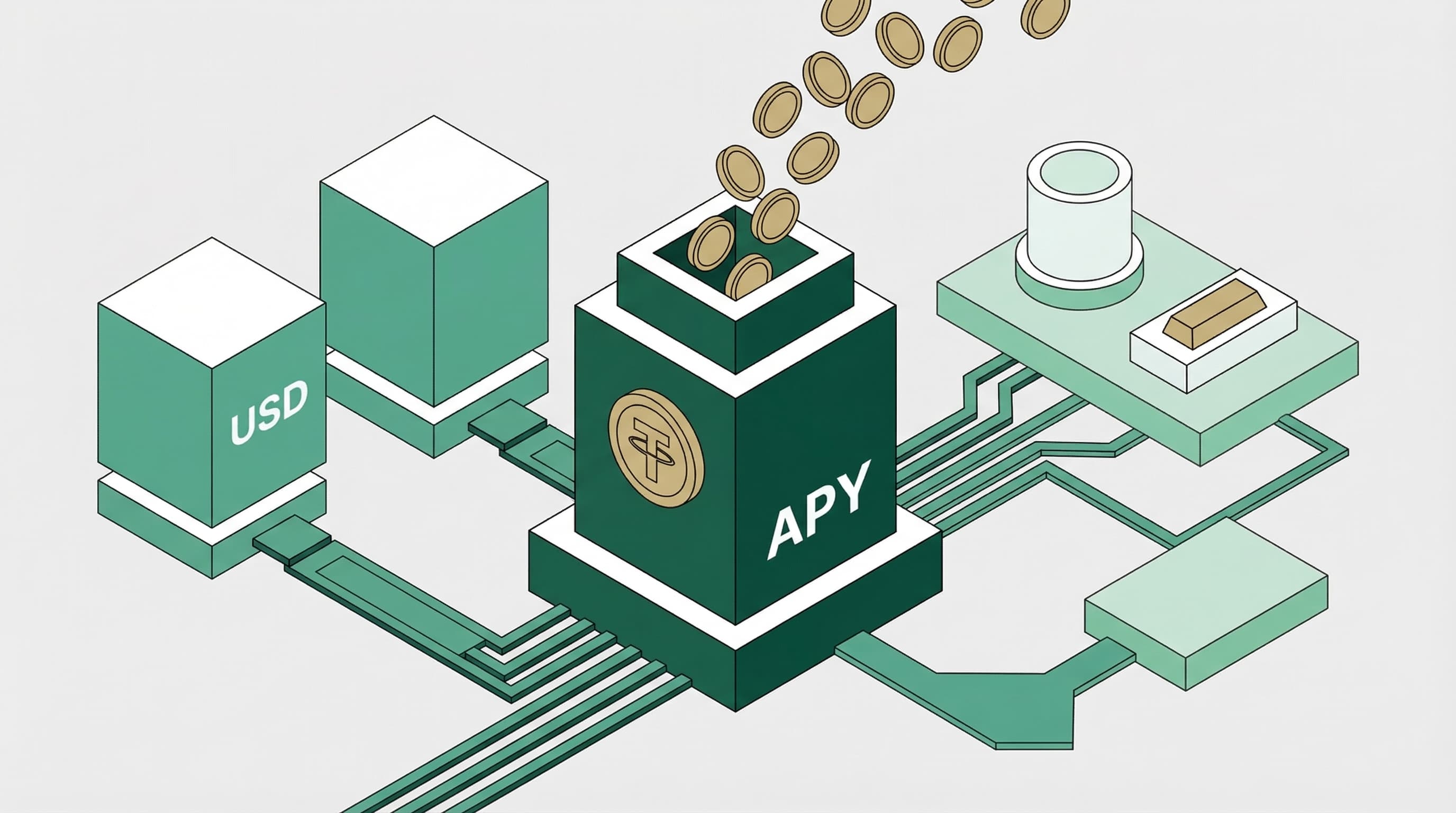
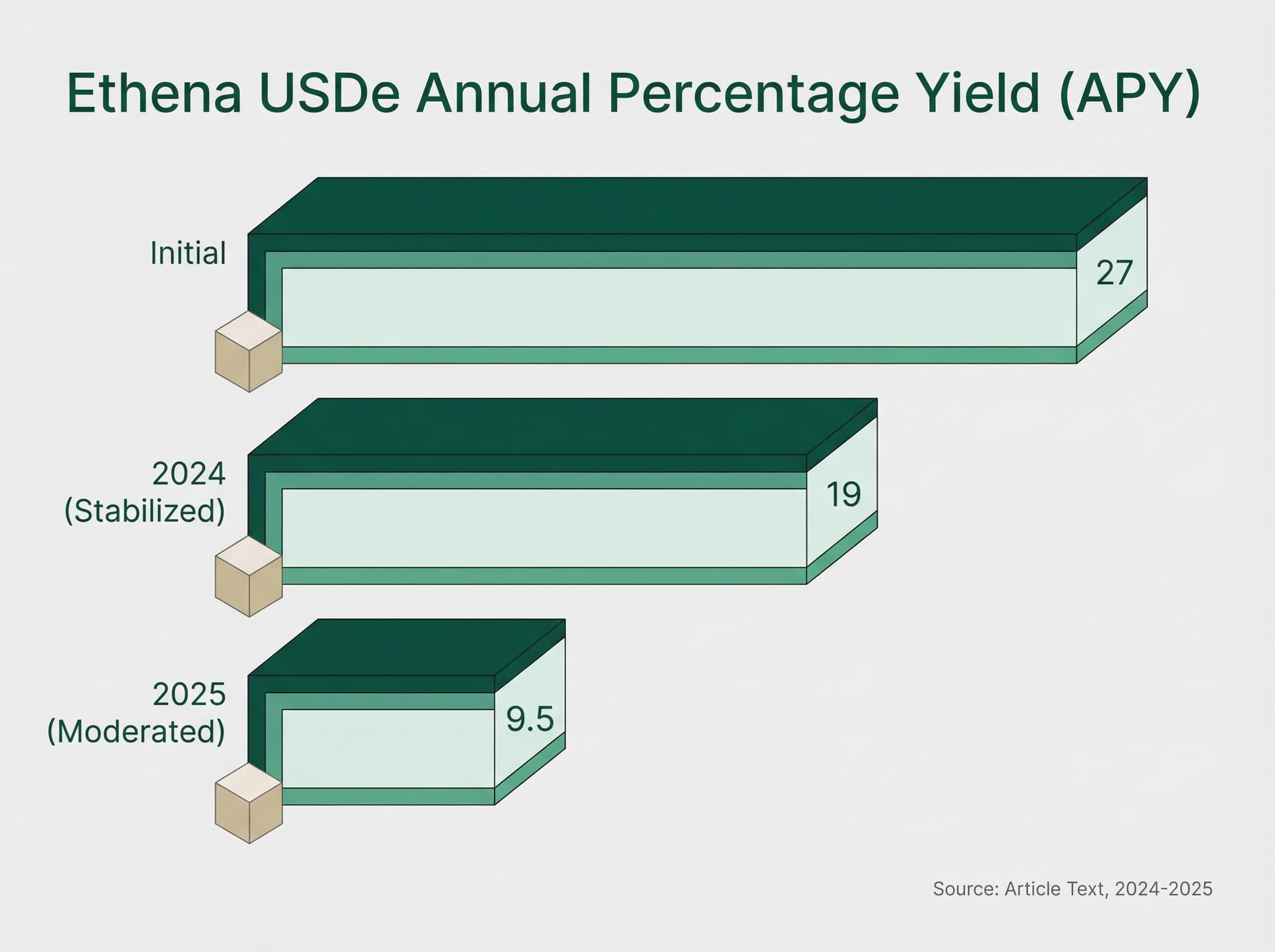
Ethena's USDe operates by holding short perpetual positions on Bitcoin and Ethereum, balanced with equivalent long exposure through staked ETH and yield-bearing stablecoin collateral. This delta-neutral positioning captures funding rates from long traders and ETH staking rewards, which averaged 11% annualized in 2024. USDe's APY started around 27%, stabilized near 19% in 2024, and moderated to 4–15% in 2025. This sophisticated mechanism generates yield from market imbalances, though it introduces risks if funding rates collapse.
An emerging strategy integrates real-world assets like U.S. Treasury Bills. Protocols such as Ondo Finance's USDY tokenize Treasury positions, converting ownership claims into blockchain-based tokens. A custodian purchases T-Bills, which offered approximately 4.14% average yield to maturity as of May 2025. The smart contract then distributes accrued interest to stablecoin holders. This approach offers Treasury-level returns onchain, with tokenized U.S. Treasuries growing over 380% year-on-year by May 2025.
Smart Contract Architectures, Risks, and Future Outlook
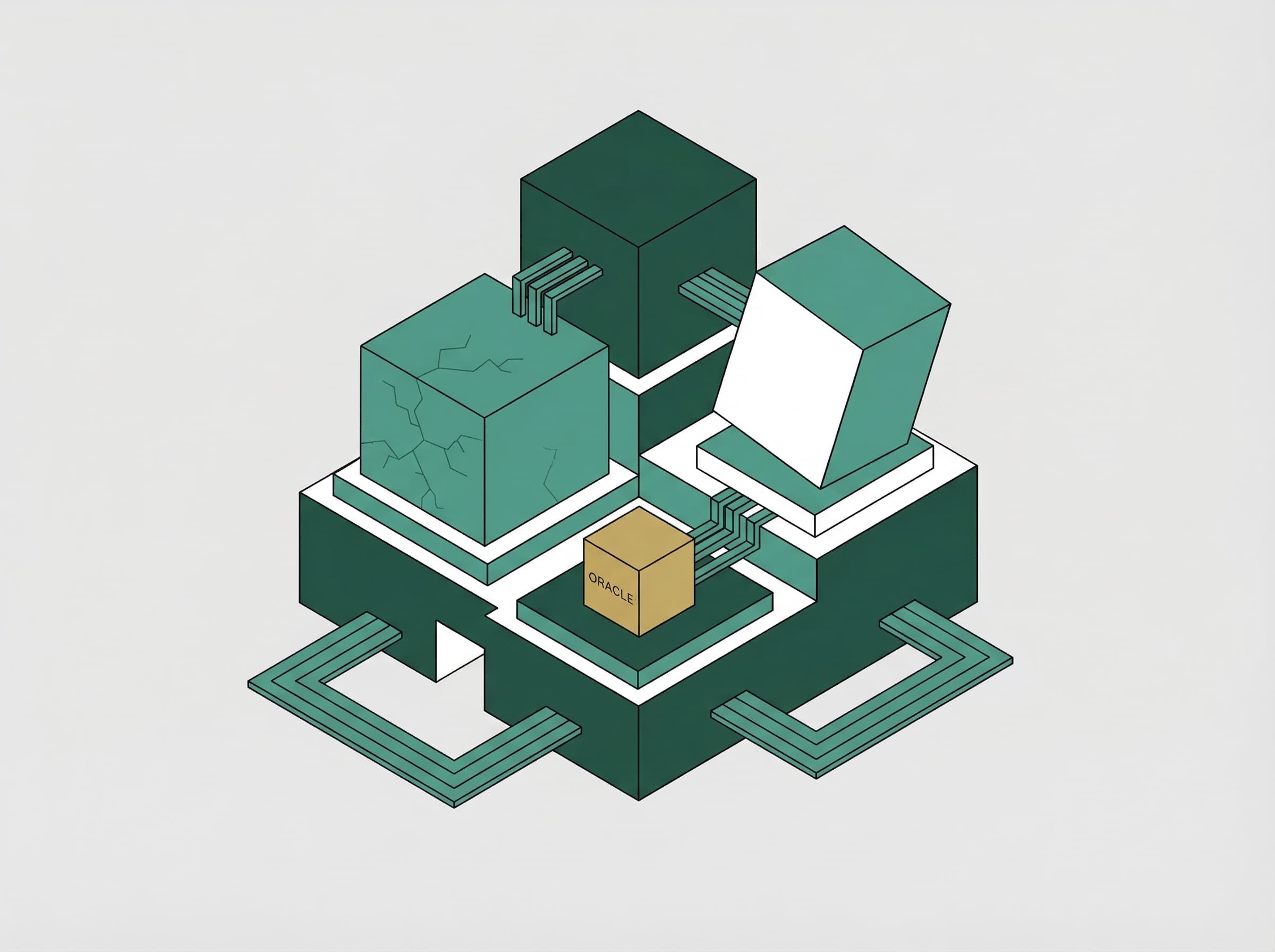
The sophisticated smart contract architectures underpinning yield-bearing stablecoins enable their complex yield generation and distribution mechanisms, but also introduce a unique set of security and systemic risks that demand careful management. From non-standard rebasing designs in Compound V3 to Aave V3's specialized aToken mechanics and the composability offered by ERC-4626, these technical foundations are critical for their operation. However, vulnerabilities in these contracts, coupled with the inherent depeg risks of stablecoins and the potential for cascading liquidations in leveraged strategies, necessitate robust monitoring and risk mitigation. Navigating this intricate balance of innovation and risk will define the future trajectory of these assets.
Technical Implementations and Real-Time Yield Tracking
Yield-bearing stablecoins rely on advanced smart contract designs, such as Compound V3's Comet contract, which behaves like a rebasing ERC-20 token where lender balances continuously increase due to interest accrual. This is managed by baseSupplyIndex variables. When a lender deposits, their USDC balance is divided by the baseSupplyIndex to produce a stored "principal value." Later, this principal is multiplied by the updated baseSupplyIndex to determine their present value, accruing yield. Compound V3 uses fixed-point arithmetic with 15 decimal places for precision.
Aave V3 employs aTokens and debt tokens with detailed risk parameters. The system maintains detailed risk parameters for each asset combination, including loan-to-value ratios and borrow/supply caps. It also uses specialized modes like "isolation mode" and "efficiency mode" for enhanced risk management. A per-user bitmap storage variable dramatically reduces gas costs for validation operations. Aave reached a peak of $75 billion in deposits during 2025, processing over $1.1 billion in liquidations without issue, demonstrating robust smart contract mechanics.
The ERC-4626 standard further enhances composability, providing a standardized interface for tokenized vaults to integrate across DeFi. It allows users to deposit underlying assets and mint vault shares, which represent claims on the vault's growing assets. ERC-4626 is an extension of ERC-20 that adds functionality for users to profit from their stakes, enabling them to withdraw more than their initial deposit. This standard significantly reduces integration effort for aggregators and wallets.
Real-time yield tracking is facilitated by oracle infrastructure like Chainlink's Proof of Reserve. This provides automated, onchain verification of a stablecoin's underlying collateral through decentralized oracle networks. For DeFi-based stablecoins, yield is calculated in real time by smart contract queries of interest rate index values at specific block heights. While onchain queries are precise, most user-facing applications use offchain indexing with cached calculations to avoid gas costs. Ethena, for example, calculates protocol earnings daily and sets a dollar-denominated APY weekly, with payouts to sUSDe holders in small increments over 8-hour intervals to smooth volatility and prevent gaming.
Security, Depeg Risks, and Liquidation Cascades
Yield-bearing stablecoins face significant security challenges, including smart contract vulnerabilities like reentrancy and flash loan attacks, which have resulted in over $1.8 billion drained from DeFi protocols by Q3 2025. Oracle manipulation poses a severe risk, as inaccurate price feeds can lead to collateral overvaluation or unnecessary liquidations. DeFi protocols lost $386.2 million in 41 separate oracle manipulation attacks in 2022. Modern protocols mitigate these through medianized price feeds, time-weighted average prices (TWAP), multi-source aggregation, and circuit breakers.
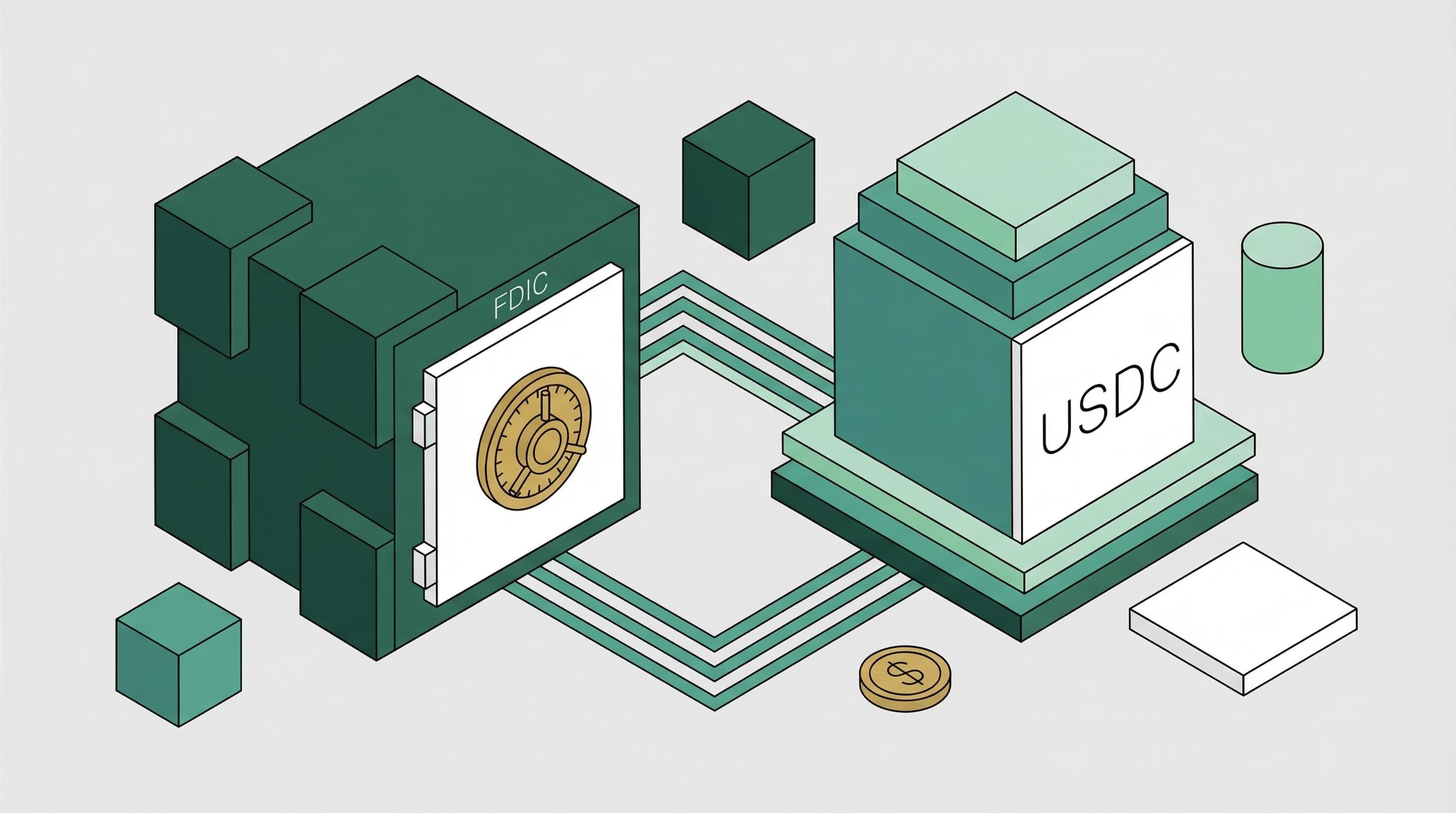
Depeg risk, exemplified by the March 2023 USDC event due to Silicon Valley Bank's (SVB) collapse or the Terra/Luna implosion, is amplified for yield-bearing variants. When SVB collapsed, Circle held $3.3 billion of USDC reserves there, causing USDC to fall as low as $0.87, despite being technically solvent. This highlighted liquidity uncertainty. For yield-bearing stablecoins, a depeg results in dual losses: the stablecoin's value decline plus lost yield. The Terra/Luna collapse of 2022 demonstrated complete failure when an algorithmic stablecoin lacked sufficient collateral.
Furthermore, liquidation cascades in leveraged strategies, such as the "Aavethena" flywheel, can trigger accelerating spirals of value destruction during market stress. Over $4.2 billion of sUSDe was locked in Pendle principal tokens and looped via Aave, accounting for approximately 60% of USDe's $11.3 billion supply. This interconnected yield strategy created systemic risk. The October 2025 market event, which saw USDe yields compress and funding rates collapse, demonstrated how extreme leverage could force cascading liquidations, impairing confidence in the system.
Conclusion: The Evolving Landscape of Digital Cash
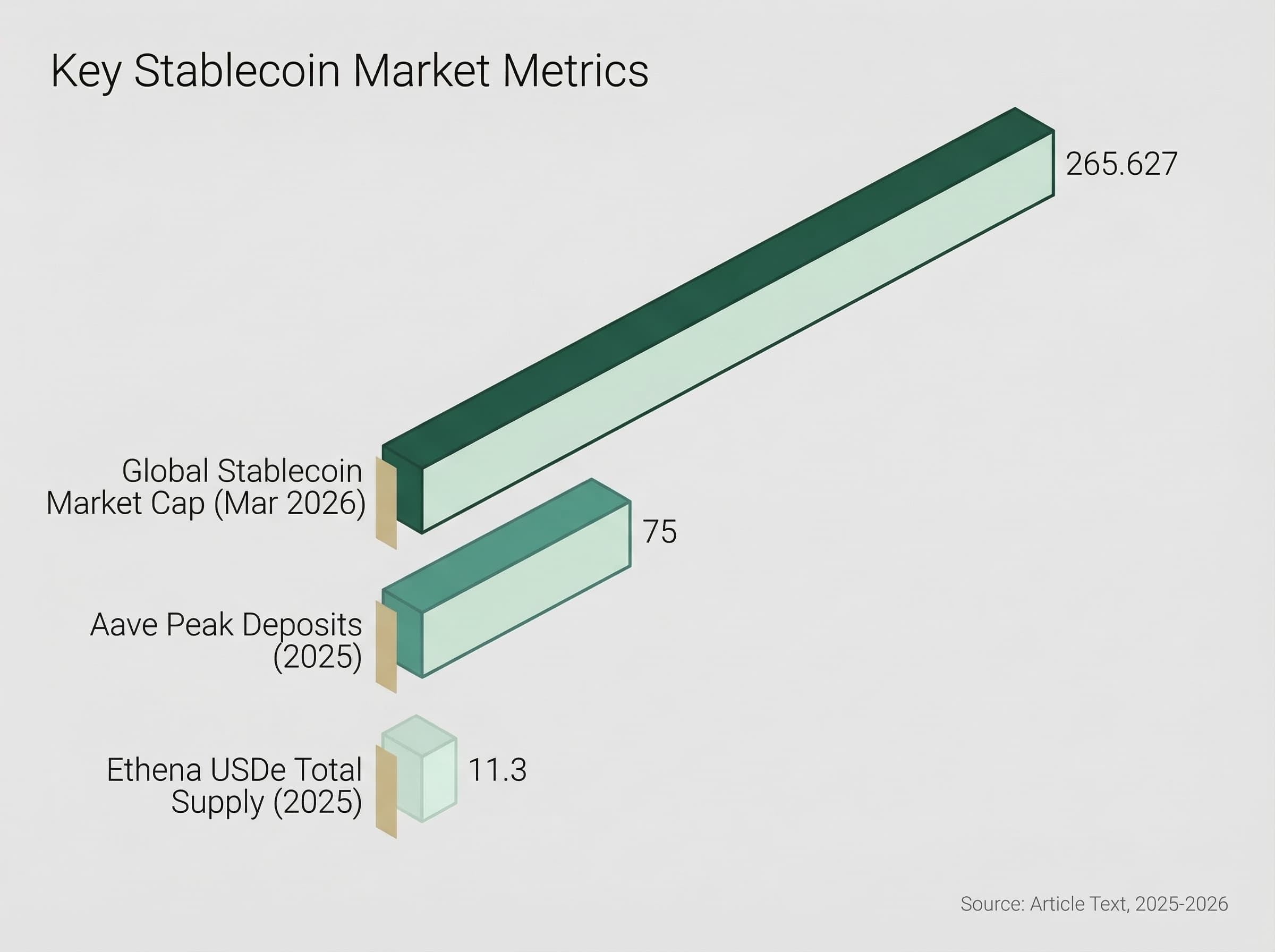
Yield-bearing stablecoins have emerged as transformative infrastructure connecting traditional finance cash management with decentralized finance's programmability and transparency. By March 2026, the global stablecoin market’s $265.627 billion total capitalization confirmed these assets had moved beyond experimental mechanics. Lending protocols like Aave achieved $55 billion in deposits, delta-neutral strategies like Ethena's sUSDe captured funding rate yields, and Treasury-backed approaches pioneered by Ondo Finance integrated real-world assets.
The technical architectures powering yield-bearing stablecoins display remarkable sophistication across multiple implementation approaches. Rebasing mechanisms, like those in Compound V3 and Frax's sfrxUSD, achieve simplicity through algorithmic elegance. ERC-4626 standards have enabled composability, integrating yield-bearing stablecoins as standardized vault components. Chainlink's oracle infrastructure has provided the data layer necessary for tracking reserves and funding rates with cryptographic certainty.
However, the scale achieved by 2026 also introduced new systemic considerations. The concentration of sUSDe in leveraged yield loops demonstrated how sophisticated strategies could amplify both returns and risk. Liquidation cascade mechanics revealed that yield-bearing stablecoins, when used as leverage collateral, could propagate failures throughout DeFi during market stress. Regulatory actions, such as geographic restrictions, indicated that compliance risks would increasingly shape the landscape.
Looking forward, yield-bearing stablecoins are likely to see continued institutional integration, driving further regulatory clarity. Yield optimization will advance through protocol innovation, with systems like Frax's benchmark strategy adapting to capture the highest risk-adjusted returns. Crucially, increased complexity demands more careful risk management and clearer communication, learning from past market events. As the market matures, platforms like Plasma, designed specifically for efficient and secure stablecoin payments, play a crucial role in providing the robust infrastructure needed for these innovative assets to thrive. By offering a high-throughput, low-cost environment, Plasma enables yield-bearing stablecoins to be used not just for yield generation, but as seamless, everyday payment instruments, unlocking their full potential for global commerce.
Ready to get started with Plasma One? Open your account today.