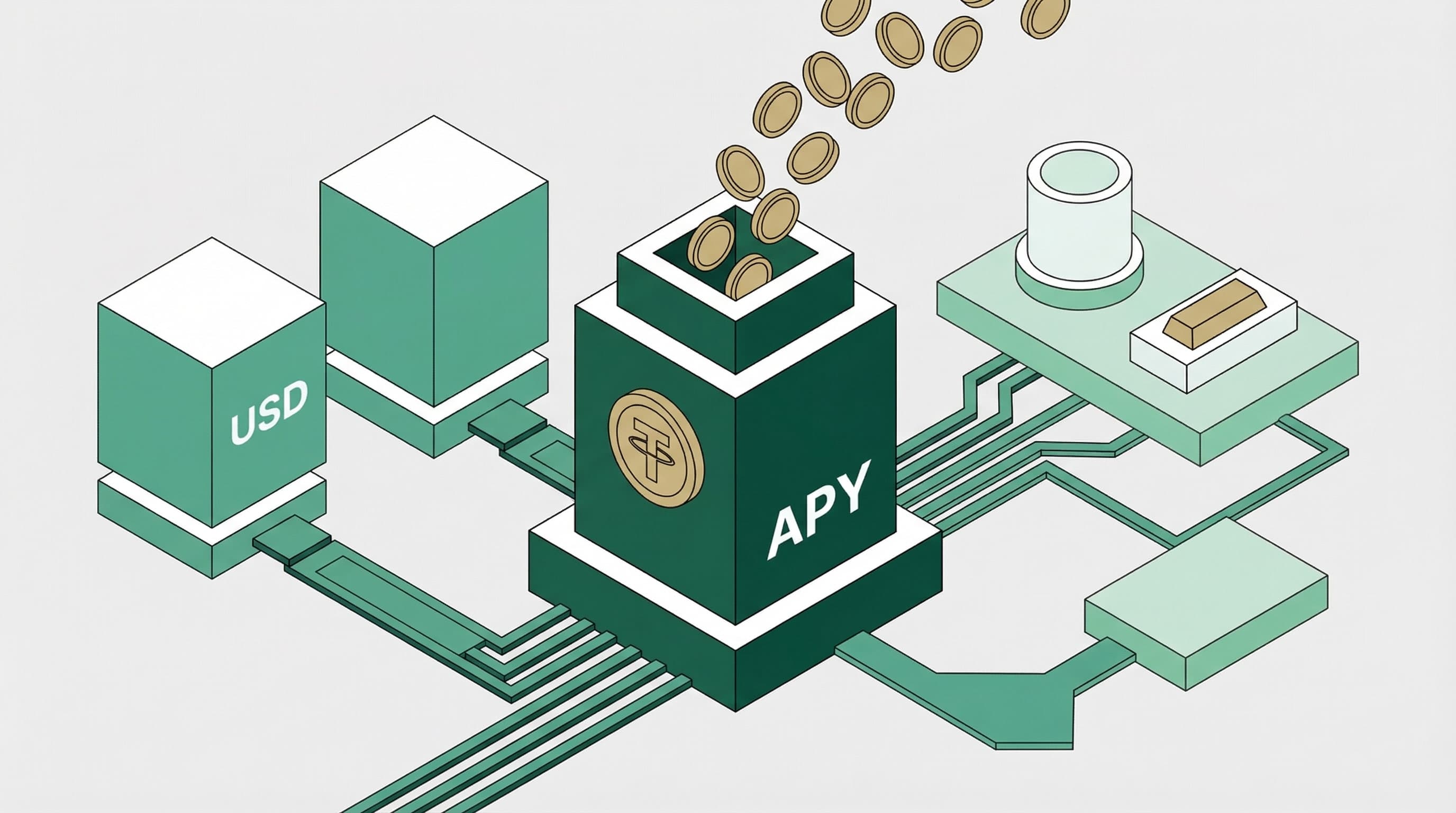
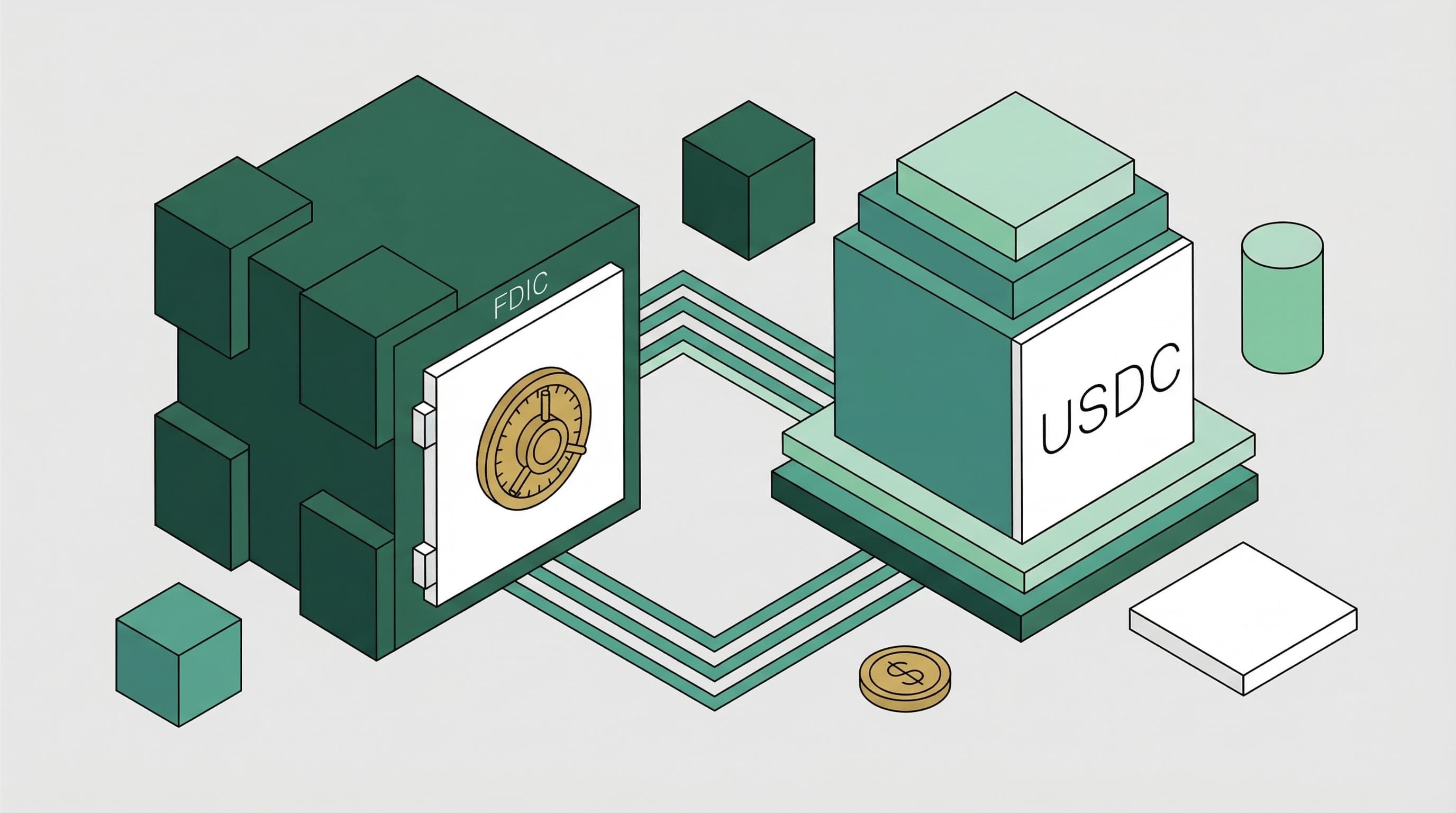
Stablecoins, digital currencies designed to hold steady value, exceed $300B in market cap as of November 2025, making them one of the most used digital assets worldwide.
They are built for price stability, but not all stablecoins work the same way. Stablecoins are distinguished by how they maintain price stability. The six main types of stablecoin are:
Fiat-Backed
Commodity-Backed
Crypto-Backed
Algorithmic
Hybrid
Yield-Bearing
This guide explains how each type works, their benefits and risks, and what sets them apart. By the end, you’ll know how to compare stablecoins and understand their role in today’s digital economy.
Key Takeaways
There are six main types of stablecoins: fiat-backed, commodity-backed, crypto-backed, algorithmic, hybrid, and yield-bearing.
Fiat-backed stablecoins dominate, making up over 90% of circulation as of 2025.
Other models fill niche roles in DeFi, investment, or experimentation, with regulation shaping their future.
The 6 Types of Stablecoins
Fiat-Backed Stablecoins
Overview
Fiat-backed stablecoins solve crypto’s biggest weakness: volatility. By tying their value to currencies like the U.S. dollar or euro, they create a digital asset that stays stable and can be trusted for payments, savings, and trading.
Their strength is clarity and simplicity. Each token is backed 1:1 by reserves in cash or short-term government securities, with issuance and redemption keeping the peg intact. If the price dips, arbitrage restores it. This mechanism is easy to understand, which is why fiat-backed coins are the most widely adopted model.
They also dominate the market. USD₮ and USDC make up ~85% of circulation as of September 2025, the default choice for a digital dollar thanks to their liquidity, regulatory focus, and deep integration into exchanges and payment rails.
Examples
USD₮ (Tether): The largest stablecoin, with reserves disclosed in Tether’s transparency reports.
USDC (Circle): Fully backed by cash and U.S. Treasuries, with regular attestations.
FDUSD (First Digital USD): Rapidly growing stablecoin, widely adopted on major exchanges.
PYUSD (PayPal USD): U.S.-regulated, used in payment integrations.
DAI: Now partially backed by real-world assets in addition to crypto collateral.
Lifecycle
Deposit: A user sends fiat currency (e.g., USD or EUR) to the issuer or custodian, who verifies the funds and records the transaction.
Issuance: The issuer mints stablecoins equal to the deposit and transfers them to the user’s digital wallet.
Circulation: Stablecoins move through exchanges, wallets, and payment systems, enabling fast transfers, trading pairs, and settlements while holding their peg.
Redemption: A user returns tokens to the issuer, who burns them and releases the corresponding fiat currency, preserving the 1:1 peg.
Risks
Fiat-backed stablecoins depend on the banking system. If custodians face insolvency or reserves lack transparency, confidence in the peg can weaken.
They are also exposed to operational risks, such as delays in redemption or reliance on a few banking partners.
To address this, regulators are stepping in. In the United States, the GENIUS Act, signed in July 2025, requires licensing, 1:1 reserves, audits, and consumer safeguards.
In the European Union, they fall under the E-money Token (EMT) category in the MiCA framework, which mandates full reserve backing, issuer licensing, and transparency.
The United Kingdom is also finalizing a payments-focused regime under the FCA’s CP25/14 consultation (May 2025), which will govern issuance and custody of fiat-backed stablecoins.
Pros & Cons
Pros
Simple to understand
Highly liquid and widely integrated
Stronger regulatory clarity in the U.S. and EU
Cons
Centralized issuer control
Exposure to banking/custody risk
Cross-jurisdictional rules still evolving
Forward look: As oversight strengthens, fiat-backed coins may resemble regulated digital money, making them the backbone of global payments.
Commodity-Backed Stablecoins
Overview
Commodity-backed stablecoins link digital money to tangible assets like gold, silver, or oil. This helps solve crypto’s intangible nature, giving users direct exposure to physical value.
Their appeal lies in stability tied to commodities rather than fiat. Investors who see metals or goods as safe stores of value benefit, while commodities themselves become easier to digitize and trade globally.
Though much smaller than fiat-backed coins, gold-backed stablecoins are growing. The market value of tokenized gold reached ~$2.5B in 2025, led by XAUT and PAXG.
Examples
PAX Gold (PAXG): Each token equals one fine troy ounce of gold stored in vaults.
Tether Gold (XAUT): Issued by Tether, backed by physical gold.
Lifecycle
Deposit: Issuers place physical commodities (e.g., gold bars) in secure vaults verified by custodians.
Issuance: Tokens pegged to the stored commodity are minted and sent to the buyer’s wallet.
Circulation: Tokens can be traded or transferred globally as digital representations of the asset.
Redemption: Holders may redeem tokens for the underlying commodity, though redemption is often limited by geography and cost.
Risks
These coins face risks around storage and custody. If vault records are inaccurate or redemption impractical, trust erodes. They also suffer from lower liquidity than fiat-backed coins.
Regulators typically classify them as securities or commodities. In the U.S., the CFTC oversees commodity-linked products, while in the EU, MiCA requires asset-referenced tokens (ARTs) to disclose reserves and redemption rules.
In the United Arab Emirates, the CBUAE Payment Token Services Regulation (PTSR) sets a strict licensing perimeter for payment tokens and bans high-risk designs, providing a useful contrast for asset-linked tokens.
Pros & Cons
Pros
Backed by tangible assets.
Hedge against inflation.
Expands access to commodities.
Cons
Limited redemption in practice.
Lower liquidity than fiat-backed.
Custody and audit costs.
Forward look: Commodity tokens may grow in niche areas like gold trading or Islamic finance, but they’re unlikely to rival fiat-backed stablecoins in payments.
Crypto-Backed Stablecoins
Overview
Crypto-backed stablecoins remove the need for centralized custodians. Instead of banks, users lock crypto like ETH or BTC in smart contracts to mint stablecoins, making the system transparent and verifiable onchain.
Their advantage is decentralization. Collateral is visible on public blockchains, and issuance is governed by code. To offset volatility, these coins are usually over-collateralized, requiring deposits worth more than the stablecoins minted.
As of September 2025, the leading crypto-backed stablecoin is USDS, with a circulating supply of ~$5.3B. It remains a staple in DeFi lending, trading, and as a decentralized alternative to fiat-backed coins.
Examples
USDS (MakerDAO / Sky Protocol): Dollar-pegged, backed by ETH, USDC, and other crypto.
LUSD (Liquity): Fully backed by ETH, maintained through automatic liquidations.
GHO (Aave): Launched in 2023, backed by crypto collateral and governed by Aave DAO.
Lifecycle
Collateral Deposit: Users lock crypto assets (e.g., ETH) into a smart contract.
Issuance: The contract mints stablecoins at a set collateralization ratio.
Circulation: Tokens flow through DeFi protocols, exchanges, or wallets.
Redemption/Liquidation: Users repay stablecoins to unlock collateral. If collateral drops too low, automatic liquidation occurs.
Risks
The main risk is collateral volatility. Sharp price drops can trigger mass liquidations and threaten stability. Complexity also makes these coins harder for newcomers to grasp.
Regulators are watching closely. In the United States, crypto-backed stablecoins may be treated as securities or commodities. In the EU, they often fall under asset-referenced tokens (ARTs) in the MiCA framework, requiring disclosure and reserve standards.
In Japan, the Payment Services Act limits issuance of “electronic payment instruments” to licensed banks, trust companies, or money transmitters. This effectively prevents decentralized crypto-backed stablecoins from being issued domestically without a licensed intermediary.
Pros & Cons
Pros
Decentralized and censorship-resistant.
Transparent collateral visible onchain.
Integral to DeFi ecosystems.
Cons
Vulnerable to crypto volatility.
Over-collateralization reduces efficiency.
Less adoption outside DeFi.
Forward look: Crypto-backed models will likely remain central in DeFi, but broader adoption depends on balancing decentralization with resilience against volatility.
Algorithmic Stablecoins
Overview
Algorithmic stablecoins aim to fix capital inefficiency. Instead of reserves, they use algorithms and smart contracts to expand or contract supply and hold a stable value.
Their appeal is being fully onchain and theoretically scalable without collateral, relying on trader incentives and two-token systems to balance supply and demand.
But they remain unproven at scale. The collapse of TerraUSD in 2022, which erased $40B, exposed their fragility and drew heavy regulatory scrutiny.
Examples
TerraUSD (UST): Pegged to $1 via a mint-burn mechanism with LUNA; collapsed in 2022.
Ampleforth (AMPL): Uses “rebasing,” adjusting supply daily to target $1.
USDD (Tron): Hybrid model with partial reserves and algorithmic incentives.
Lifecycle
Price Monitoring: The protocol tracks the coin’s price vs. the $1 target.
Expansion: If price rises, users mint more tokens to increase supply.
Contraction: If price falls, tokens are burned or swapped to cut supply.
Stabilization: Value depends on market confidence and participation.
Risks
The main risk is loss of confidence. If traders doubt the peg, collapse can spiral quickly, as UST proved. Heavy reliance on incentives makes these coins especially fragile during market shocks.
In the United States, the Lummis–Gillibrand Payment Stablecoin Act (2024) would ban unbacked algorithmic stablecoins. In the EU, MiCA effectively restricts them by requiring fully backed reserves.
In Hong Kong, the Stablecoins Ordinance introduced licensing for fiat-referenced tokens but does not permit algorithmic, unbacked models.
Pros & Cons
Pros
No collateral required.
Theoretically scalable.
Fully onchain and automated.
Cons
Unstable track record (e.g., UST collapse).
Reliant on market confidence.
Under regulatory pressure worldwide.
Forward look: Pure algorithmic stablecoins are unlikely to return at scale, but hybrid experiments may adapt some of their features under stricter oversight.
Hybrid Stablecoins
Overview
Hybrid stablecoins were created to fix the flaws of single models. Collateralized coins need large reserves, while algorithmic ones risk instability. Hybrids combine both, aiming for efficiency and resilience.
Their advantage is flexibility. With partial reserves plus algorithmic adjustments, they reduce reliance on banks while avoiding the fragility of fully uncollateralized systems. This makes them a useful testbed for new designs.
As of 2025, hybrids hold only a small market share, but projects like FRAX and USDD stand out and have drawn regulatory attention after earlier algo failures.
Examples
FRAX: Started as fractional-algorithmic, now mostly collateral-backed.
USDD (Tron): Uses partial reserves with algorithmic incentives.
GHO (Aave): Community-governed coin combining crypto collateral and governance.
Lifecycle
Collateral & Parameters: A mix of reserves and smart contract rules backs the stablecoin.
Issuance: Stablecoins are minted based on reserve levels and algorithmic supply rules.
Circulation: Tokens move across exchanges and DeFi apps, supported by both reserves and code.
Adjustment: If the peg drifts, reserves and incentives work together to restore stability.
Risks
Main risks are complexity and opacity. Users may not fully grasp how reserves and algorithms interact, and limited transparency can erode trust. Resilience under stress remains unproven.
Regulators approach hybrids cautiously. In the U.S., the proposed Lummis–Gillibrand Payment Stablecoin Act (2024) could limit hybrids that rely on algorithmic features. In the EU, they’d likely fall under asset-referenced tokens (ARTs) in MiCA, requiring reserve disclosure and redemption rights.
In the United Kingdom, the FCA’s CP25/14 consultation outlines payments-focused rules, including a ban on pass-through interest, which would push hybrids toward full collateralization if used for UK payments.
Pros & Cons
Pros
Flexible design can adapt to markets.
Potentially more resilient than pure models.
Encourages innovation in stablecoin structures.
Cons
Complexity reduces user trust.
Still partly centralized in practice.
Unclear regulation in major markets.
Forward look: Hybrids may evolve into more regulated, collateral-heavy designs, preserving some algorithmic features while meeting new compliance standards.
Yield-Bearing Stablecoins
Overview
Yield-bearing stablecoins were designed to solve the problem of idle reserves. Instead of sitting passively, reserves are invested in interest-bearing assets like U.S. Treasuries or money market funds, letting holders earn passive income while keeping stability.
The appeal is simple: users hold a digital dollar with built-in yield, no need to move funds into DeFi. Institutions also like them as compliant, interest-generating digital cash.
As of 2025, yield-bearing coins remain niche, but adoption is growing. USDL distributes Treasury yields to holders, while USDY is gaining traction with professional investors.
Examples
USDY (Ondo Finance): Tokenized note backed by Treasuries with automatic yield distribution.
USDL (Mountain Protocol): SEC-compliant stablecoin paying holders yield from reserves.
sUSDS (Sky Protocol): Wrapped USDS earning protocol yield in DeFi.
Lifecycle
Deposit: Users acquire stablecoins from issuers, who invest reserves in yield-bearing assets.
Issuance: Stablecoins are minted, pegged 1:1 to fiat but tied to the yield strategy.
Circulation: Tokens move like other stablecoins, but holders gain from interest accrual.
Redemption: Users redeem tokens for fiat or crypto, with reserves unwound to release principal plus yield.
Risks & Regulation
The main risk is regulatory treatment. Since they pay yield, these tokens may be classified as securities, bringing strict compliance rules.
In the United States, the GENIUS Act of 2025 bans yield-paying stablecoins for payment use. In the EU, MiCA also prohibits interest-bearing models, requiring full reserves without yield.
The UK’s FCA’s CP25/14 consultation also proposes a ban on passing interest to holders of qualifying stablecoins, aligning with the EU stance.
Pros & Cons
Pros
Offers passive income.
Efficient use of reserves.
Attracts institutional interest.
Cons
Risk of being treated as a security.
Complex compliance obligations.
Still limited in retail availability.
Forward look: Yield-bearing models could reshape stablecoins into digital cash accounts, but widespread adoption will depend on regulatory clarity and institutional trust.
Central Bank Digital Currencies (CBDCs)
Central Bank Digital Currencies (CBDCs) are digital forms of money issued directly by central banks, such as China's e‑CNY or pilot versions of the U.S. digital dollar. They are legal tender and fully backed by the state, offering the same stability as physical fiat.
CBDCs, like fiat-backed stablecoins, are designed to maintain a 1:1 peg to national currencies, providing trusted digital alternatives to cash. However, CBDCs are issued and governed by governments, unlike stablecoins created by private firms. While stablecoins flow globally and participate in onchain ecosystems, CBDCs are typically deployed in domestic payment systems under strict regulatory control.
As of 2025, more than 90% of central banks are exploring CBDCs. In India, the e-rupee grew from ₹2.34 billion to ₹10.16 billion in circulation by March 2025, and pilots are underway for cross-border payments.
Several countries, including the Bahamas, Nigeria, and Brazil, have launched or tested active CBDCs. The European Central Bank has entered a preparation phase for a digital euro, advancing its design and rules toward issuance.
Summary
Stablecoins take many forms, each with its own strengths, risks, and regulatory outlook.
Here’s a recap of the six main types and where they fit.
Fiat-backed: The dominant model. Easy to understand, liquid, and widely integrated, but centralized and reliant on banks.
Commodity-backed: Provide exposure to physical assets like gold. Useful for diversification, though adoption in payments is limited.
Crypto-backed: Decentralized and transparent, core to DeFi activity. Their reliance on volatile collateral makes them less stable.
Algorithmic: Designed for scalability without reserves. In practice, they have proven fragile, with high reliance on confidence.
Hybrid: Blend collateral and algorithms for flexibility. More adaptable, but complex structures make them harder to trust.
Yield-bearing: Fiat-based with added interest from reserves. Attractive to institutions, though often treated as securities by regulators. Alongside these private coins, CBDCs add a state-backed alternative, showing how governments adapt stablecoin principles while preserving sovereignty.
Conclusion
Stablecoins are reshaping digital finance, and each design comes with its own trade-offs in backing, stability, and regulation. No single model solves every challenge, which is why the future will likely involve a mix of approaches.