Executive Summary & Quick Verdict
Overall Rating: 3.5 / 5
Best For: Crypto and stablecoin users outside restricted markets who want card spending, Apple Pay or Google Pay support, and integrated bank/e-wallet transfers in one app.
Core Drawback: RedotPay can layer a 1% crypto conversion fee with 1.2% foreign-currency fees, while its standard card application costs $10 virtually or $100 physically.
The Bottom Line: RedotPay is a capable all-round crypto payment app with strong global usability and useful transfer features.
Plasma One is a stronger alternative for users who prioritize a non-custodial account structure and, particularly on Platinum, lower foreign-currency spending costs.
What Is RedotPay?
RedotPay is a stablecoin-focused payments platform operated by the RedotPay group. As of August 2026, it reported more than 8.5 million users across 100 countries. Its main proposition is turning crypto balances into practical everyday money through cards, transfers, fiat accounts, P2P services, and other payment tools.
Users can fund the app with assets including BTC, ETH, BNB, SOL, SUI, TRX, XRP, USD₮ and USDC. RedotPay then converts supported crypto as needed when users spend.
The platform is available across more than 100 countries, although several jurisdictions (including the US) are currently excluded from card issuance.
Card Type: Virtual and physical
Card Network: Visa
Custody Model: Hybrid, custodial accounts plus non-custodial wallet/smart-contract-vault functionality where applicable
Supported Assets: USD₮, USDC, BTC, ETH, BNB, SOL, SUI, TRX, XRP and other supported assets
Key Features & User Benefits
1. RedotPay Pro Cashback & Rewards
RedotPay's main ongoing cashback offer is tied to RedotPay Pro, an optional paid membership.
Pro members earn 3% cashback on eligible Apple Pay and Google Pay purchases, capped at $18 per month. Cashback is paid in USDs, RedotPay's in-app reward token, and can be used for future card purchases rather than withdrawn as cash.
Pro costs $12.90 per month or $129 per year. Monthly subscribers receive a virtual-card fee waiver, while annual subscribers can have the $100 physical-card fee waived, receive up to $1,000 per month of RedotPay ATM-fee waivers, and get an extra 1% APY on eligible RedotPay Earn balances.
2. Supported Currencies & Conversion
RedotPay supports both stablecoins and volatile crypto assets, allowing users to select which assets are prioritized for payments.
For card transactions, RedotPay publishes a 1% crypto conversion fee. Transactions made in a currency different from the card's settlement currency can add a further 1.2% foreign-currency charge.
RedotPay also supports personal funding accounts in USD, GBP and EUR, allowing eligible users to deposit fiat, swap balances, make transfers, spend with their card or withdraw funds.
3. Card Usability & Accessibility
RedotPay's virtual and physical cards work across more than 130 million merchants, subject to merchant and regional restrictions. Physical cards can also be used for ATM withdrawals.
Both card types can be connected to Apple Pay and Google Pay where supported, giving users contactless mobile-wallet spending without relying solely on the physical card.
ATM usage is less attractive from a cost perspective. Standard withdrawals are charged at 2%, with USD-card withdrawals increasing to 3% on amounts above $10,000 per month. FX and ATM-operator charges may add further cost.
4. Earn and Global Transfers
RedotPay extends beyond card spending with Earn and international-transfer features.
Earn currently supports USD₮ and USDC with variable returns and a 100 USD₮/USDC minimum per subscription. Funds can be used for card spending, although Earn is only available in selected regions and is not a bank deposit.
Users can also convert crypto into local currency and send it to supported bank accounts or e-wallets. RedotPay additionally provides USD, GBP and EUR funding accounts and P2P services in more than 100 countries.
Fee Structure & Limits
Fee / Limit | RedotPay | Industry Average |
Card Issuance Fee | Virtual: $10; physical: $100 | Virtual: $0–$25, typically $0. Physical: $0–$100+, typically $0–$50. |
Monthly / Annual Fee | $0 base; Pro: $12.90/mo or $129/yr | Usually $0 on entry tiers. Paid entry-tier exceptions start around $25/year. |
Foreign Exchange Fee | 1.2% | 0%–3%, typically around 1%. |
Crypto Conversion Fee | 1% | Stablecoins: 0%–0.5%, typically 0%–0.1%. Other crypto: ~0.5%–1%, typically around 0.9%. |
ATM Withdrawal Fee | 2%; USD card 3% above $10k/month | 0%–3%, typically around 2%. Many cards include ~$100–$200/month free; some instead charge a ~$1–$3 flat fee. |
Daily Spending Limit | $100,000 per transaction; $1,000,000 daily. Users can set lower limits in-app. | About $5,000–$50,000, typically $10,000–$25,000. Some cards use higher or dynamic limits. |
Fees, rates and limits as of September 2026. Terms vary by region and may change.
Pros & Cons of RedotPay
Pros
Strong global usability: Cards work across more than 130 million merchants, with services available in over 100 countries.
Broad payments ecosystem: Card spending sits alongside fiat funding accounts, P2P, Earn and bank/e-wallet transfers.
Apple Pay and Google Pay support: Mobile-wallet integration makes RedotPay practical for everyday contactless spending.
Cons
High card application costs: A standard virtual card costs $10 and a physical card costs $100.
Layered transaction fees: Crypto conversion, FX and ATM fees can stack depending on how and where the card is used.
Custody complexity: The platform supports non-custodial wallet functionality, but its custodial account model still places assets under third-party custody and permits freezes for compliance purposes.
Where RedotPay Falls Short
RedotPay's biggest weakness is not a lack of functionality; it is the cost and complexity attached to that functionality.
A user paying in a non-card currency can face a 1% crypto conversion charge plus a 1.2% foreign-currency fee. ATM users face another 2% under standard pricing, while simply obtaining the physical card costs $100 unless that fee is waived through an annual Pro subscription.
Its custody structure also requires attention. RedotPay offers non custodial wallet functionality, but its custodial accounts place assets with a custodian and allow the Group to instruct assets to be frozen, converted or transferred when required for settlement, security or compliance.
Key Takeaway: RedotPay packs a lot of payment functionality into one app, but users need to weigh that convenience against card costs, conversion fees and a more complicated custody model.
Why Choose Plasma One Over RedotPay?
RedotPay is a stronger competitor than a basic custodial crypto card, so Plasma One's advantage is not that RedotPay lacks modern payment functionality.
The clearer distinction is how Plasma One structures custody, card fees and access for users who want a stablecoin-first account.
1. Non-Custodial by Default
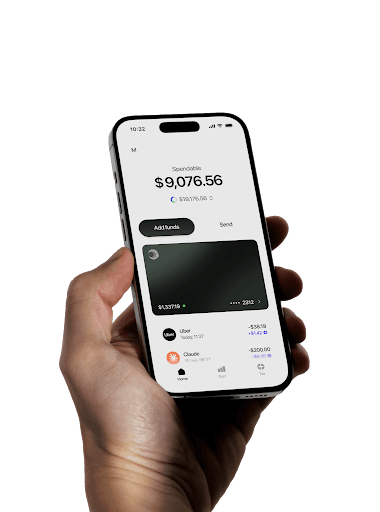
Plasma does not custody the stablecoins held in a Plasma One account. The assets are owned and custodied by the user, making an non-custodial setup the standard account structure rather than one of several possible wallet arrangements.
RedotPay supports non-custodial wallet functionality, but its standard custodial account places assets with a third-party custodian and allows those assets to be pooled for settlement and liquidity purposes.
For users who want a simpler distinction between their wallet assets and the card provider, Plasma One has the cleaner structure.
2. Lower FX Markups on Higher Plasma One Tiers
RedotPay charges 1.2% for foreign-currency transactions, alongside its 1% crypto conversion fee where applicable.
Plasma One's estimated foreign-currency card cost is about 2% on Lite and 1.5% on Core after typical Visa network fees. Platinum adds no FX fee and uses the Visa exchange rate.
Platinum has a clear cost advantage over RedotPay's 1.2% foreign-currency fee. Core can also be cheaper when RedotPay's additional 1% crypto conversion fee applies, while Lite is broadly comparable in that scenario.
3. Plasma One Currently Serves Eligible US Users
As of September 2026, RedotPay's restrictions still include the US. The company obtained its first US money-transmitter license in August 2026 and said it was preparing to launch its product in the country, but had not yet launched US cards.
Plasma One, by comparison, is already available in 27 US states alongside its wider international footprint.
For eligible US stablecoin users, that is a practical distinction rather than a theoretical product advantage.
RedotPay vs Plasma One at a Glance
Feature | RedotPay | Plasma One |
Custody Model | Hybrid: custodial account + non-custodial wallet option | Non-custodial (you own and custody your stablecoins) |
Yield / Return on Balance | Variable Earn on USD₮/USDC; Pro adds +1% APY | Up to 6% via opt-in Earn; variable, not guaranteed |
FX / Conversion Fees | 1% crypto conversion; 1.2% FX | Lite: ~2% total (1% Plasma + ~1% Visa); Core: ~1.5% total (0.5% Plasma + ~1% Visa); Platinum: 0% FX fee, Visa exchange rate applies |
Staking / Lock-In Required | None; Pro subscription optional | None on Lite; Core: $199/year or 20,000 XPL locked for 12 months; Platinum: 100,000 XPL locked for 12 months |
Regional Availability | 100+ countries; US card issuance unavailable | Most countries, excluding 7 restricted countries; 27 US states |
On / Off-Ramp | USD/GBP/EUR funding + bank/e-wallet payouts | In-app bank off-ramps (rails vary by region); USD ACH withdrawal 0.10% to 0.75% by tier plus ACH fee |
Fees, rates and limits as of September 2026. Terms vary by region and may change.
Final Verdict: Is RedotPay Worth It?
RedotPay is worth considering for users who want more than a simple crypto card.
Its combination of broad asset support, Visa spending, Apple Pay and Google Pay, fiat funding accounts, P2P, international transfers and Earn functionality makes it a versatile option for users operating across crypto and traditional payment rails.
The biggest question is whether that functionality justifies the costs. A $100 physical card, 1% crypto conversion, 1.2% foreign-currency fee and standard ATM charges can make RedotPay relatively expensive for frequent international spending.
Plasma One is the stronger alternative for users who place more value on a non-custodial setup as the default account model, lower FX markups on higher tiers, and access in supported US markets.
How to Switch to Plasma One Today
Download the App: Install the Plasma One app, confirm your country is supported, and complete identity verification.
Fund Your Wallet: Your non-custodial wallet is created in the app. Fund it with supported stablecoins.
Start Earning & Spending: Opt into Earn if you want yield on eligible balances, and spend with your Plasma One Visa card where supported.