Executive Summary & Quick Verdict
Winner: ether.fi Cash. Its non-custodial Vault, Core cashback and spendable yield-bearing assets suit eligible crypto users.
Choose Oobit if: You want simple BTC, ETH and stablecoin spending from the Oobit app or a connected wallet, without borrowing.
Choose ether.fi Cash if: You want 3% Core cashback on the first $2,000 of monthly USD spend, DeFi yield, Direct Pay and optional borrowing.
The bottom line: Oobit favors simple crypto payments; ether.fi offers greater flexibility and sustained rewards. Plasma One adds non-custodial stablecoin spending and optional Earn without borrowing.
Oobit vs ether.fi Cash at a Glance
Feature | Oobit | Ether.fi Cash |
Card Network | Visa | Visa Signature |
Custody Model | DePay spends from a non-custodial external wallet; balances held in the Oobit app are custodial | Non-custodial Vault controlled by the user |
Yield / Return on Balance | No standard yield on idle card balances publicly disclosed | Variable yield through Liquid and onchain lending products |
FX / Conversion Fees | 1% card-payment fee (minimum $0.25 in most markets); non-USD purchases may add a 1.5% conversion fee | No FX on USD; 0% FX on EUR (beta); other currencies: FX base rate plus up to 0.5% (Core) or 0.25% (Luxe); no added margin on Pinnacle/VIP |
Crypto Conversion Fee | Separate crypto swaps cost 0.95% (3% when swapping into OOB); no separate conversion spread published for card payments | Direct Pay spends stablecoins and similar assets 1:1; no conversion spread published |
Staking / Lock-In Required | No token lock for basic card use; promotional rewards depend on eligible spending assets | No lock for Core; Luxe and Pinnacle via annual fee, points, Liquid holdings or ETHFI staking (no lockups); VIP via Liquid holdings or ETHFI staking only |
Regional Availability | 80+ countries; Oobit says its app is available in all 50 US states; eligibility varies by region | Available in supported jurisdictions on ether.fi’s published list; US physical card availability: 30 states plus DC; subject to KYC and eligibility |
Fees, rates and limits as of November 2026. Terms vary by region and may change.
Oobit vs ether.fi Cash: Key Differences
1. Fees & Costs
Oobit has no card issuance or monthly fee. Purchases cost 1%, usually with a $0.25 minimum. Non-USD payments may add 1.5% for conversion.
Separate swaps cost 0.95%, and ATM withdrawals cost 2.5% plus any ATM operator fees.
Ether.fi Core is free, with one virtual card included in most regions. Certain countries charge $10 for that card.
Other-currency purchases include a base FX rate plus up to 0.5% on Core or 0.25% on Luxe. Higher tiers add no margin; EUR purchases have 0% FX markup in beta.
2. Yield, Cashback & Rewards
Oobit advertises 5% cashback on USD₮ or USDC payments (capped at $200 of spend a month) and 10% token rewards on OOB payments. Rewards can only be spent on in-app Tap to Pay payments and cannot be withdrawn or transferred. Its rewards terms and FAQ give different OOB spending caps.
Ether.fi’s Core schedule lists 3% cashback on the first $2,000 of monthly USD spending, versus the first $800 in USD-equivalent EUR spending. Cashback converts to ETHFI after clearing and enters a seven-day lock.
3. Custody, Security & Control
Oobit's DePay pays from a connected non-custodial wallet, with funds staying in that wallet until payment. Balances held in the Oobit app are custodial.
Ether.fi describes its Cash Vault as non-custodial, with transactions authorized by the user under the vault’s signature rules.
Ether.fi says the private key is generated and secured within Turnkey’s Trusted Execution Environments.
4. Usability & Regional Availability
Eligibility differs from card acceptance. Oobit lists residency exclusions for card issuance, including India and Turkey. It stopped new sign-ups and card issuance in Brazil on October 31, 2026.
Ether.fi says Cash requires account verification and that physical delivery is unavailable in some eligible regions.
Its physical-card list covers only specified US states.
Pros & Cons Comparison
Oobit
Pros:
Oobit says funds stay in the wallet until payment.
Pays with BTC, ETH and stablecoins, with Apple Pay and Google Pay support.
Supported assets can reach bank accounts via payment networks in Europe, the United States and Mexico.
Cons:
Standard purchases cost 1%, with a $0.25 minimum in most markets.
Reward caps apply; published OOB caps conflict.
Oobit excludes residents of listed countries from card issuance.
ether.fi Cash
Pros:
Core has no membership fee and pays 3% ETHFI cashback on the first $2,000 of monthly USD spend.
Direct Pay can spend stablecoins and yield-bearing Liquid assets such as liquidUSD.
EUR purchases have 0% FX (in beta), and Visa Signature benefits apply on all levels.
Cons:
Cashback is paid in ETHFI, whose value fluctuates, after a seven-day lock.
Borrow Mode charges variable interest and carries liquidation risk.
US physical card availability covers 30 states plus DC.
Where Both Cards Fall Short
Availability needs a local check. Oobit excludes residents of certain countries from card issuance.
Ether.fi says physical-card delivery varies by region and eligibility requires account verification.
Rewards need a cost check. Oobit’s rewards terms and FAQ give different OOB caps.
Ether.fi’s stated cashback rate applies to an initial spending band. Standard Oobit purchases carry a fee in most markets. Ether.fi lists different foreign-exchange margins by tier.
The Dilemma: Oobit is simpler but has fees and capped rewards. Ether.fi offers stronger cashback and yield features, with more DeFi complexity.
Why Choose Plasma One Over Oobit and ether.fi Cash?
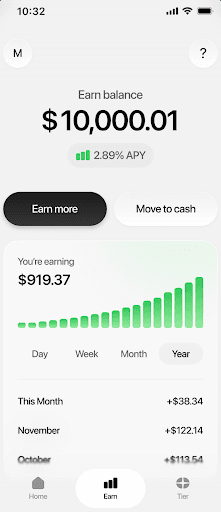
Plasma One combines non-custodial stablecoin spending, optional Earn and 0% FX on Premium and Platinum, without a card borrowing mode.
1. Optional Stablecoin Yield Without a Card Loan
Plasma Earn offers variable yield through third-party DeFi, which is not guaranteed. Funds must return to Cash before spending; principal is at risk.
Oobit has no standard idle-balance yield. Ether.fi can spend liquidUSD directly, so Plasma is not always more capital-efficient.
Plasma separates spending from Earn without a collateral-backed credit position.
2. 0% FX on Premium and Platinum
Premium includes 0% FX on up to $3,000 of card spend a month, which also covers Visa's roughly 1% network fee. Platinum has unlimited 0% FX.
Oobit charges 1% per card payment, and non-USD payments may add 1.5%. Ether.fi Core adds up to 0.5% to the FX base rate outside USD and EUR.
Standard pays a 1% Plasma FX markup plus the Visa FX fee (about 1%). Premium costs $600 a year or a 20,000 XPL lock for 12 months, and ether.fi offers 0% FX on EUR purchases in beta.
3. Non-Custodial Control With a Simpler Spending Model
Plasma does not custody users' stablecoins. Oobit connected wallets and ether.fi Vaults also preserve user control.
Plasma combines Cash, optional Earn and Visa spending without a multi-asset swap workflow or Borrow Mode.
Plasma supports in-app bank on/off-ramps with tiered fees. Standard, and Premium spend above $3,000 a month, carry FX costs, so total cost matters.
Three-Way Head-to-Head Matrix
Feature | Oobit | Ether.fi Cash | Plasma One |
Card Network | Visa | Visa Signature | Visa |
Custody Model | DePay external wallet is non-custodial; in-app account balances are custodial | Non-custodial Vault controlled by the user | Non-custodial (you own and custody your stablecoins) |
Yield / Return on Balance | No standard yield on idle card balances publicly disclosed | Variable yield through Liquid and onchain lending products | Variable yield via opt-in Earn |
FX / Conversion Fees | 1% card payment (minimum $0.25 in most markets); non-USD payments may add a 1.5% conversion fee | No FX on USD; 0% FX on EUR (beta); other currencies: FX base rate plus up to 0.5% (Core) or 0.25% (Luxe); no added margin on Pinnacle/VIP | Standard: 1% Plasma markup plus Visa FX fee (~1%); Premium: 0% FX on the first $3,000 of card spend per month; Platinum: 0% FX fee, Visa exchange rate applies |
Staking / Lock-In Required | No token lock for basic card use; cashback depends on eligible payment assets | No lock for Core; Luxe and Pinnacle via annual fee, points, Liquid holdings or ETHFI staking (no lockups); VIP via Liquid holdings or ETHFI staking only | Standard: no XPL lock, regional pricing; Premium $600/yr or 20,000 XPL locked for 12 months; Platinum $2,500/yr or 100,000 XPL locked for 12 months |
Regional Availability | 80+ countries; Oobit says its app is available in all 50 US states; eligibility varies by region | Available in supported jurisdictions on ether.fi’s published list; US physical card availability: 30 states plus DC; subject to KYC and eligibility | Most countries; 7 unsupported and ID-document restrictions in others. 31 US states |
On / Off-Ramp | Bank payouts from 0.4%, varying by destination and currency | Bank deposits and withdrawals (e.g. ACH, wire, SEPA, Faster Payments, PIX); per-method fees published | In-app bank on/off-ramps (USD, EUR, GBP, MXN, BRL, COP); tiered fees apply |
Fees, rates and limits as of November 2026. Terms vary by region and may change.
Final Verdict: Which Should You Pick?
Ether.fi Cash wins on sustained rewards and flexibility. Its 3% Core band covers more spend than Oobit's smaller stablecoin reward allowance, though Oobit's 5% stablecoin rate is higher within its $200 monthly cap, and its spendable yield-bearing assets add value Oobit does not offer.
Choose Oobit for simple BTC, ETH and stablecoin payments without loans. Expect payment fees and cashback caps.
Choose ether.fi Cash for Core cashback, optional yield and borrowing, if you accept ETHFI and DeFi risks.
Choose Plasma One for non-custodial stablecoins, tiered cashback and optional Earn without card borrowing.
How to Get Started With Plasma One
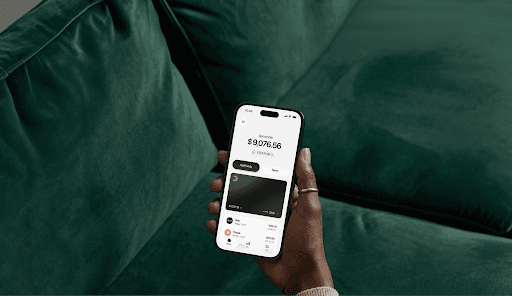
Download Plasma One: Install the app, check your country and ID eligibility, and complete verification to access a virtual card.
Deposit Stablecoins: Fund your non-custodial Cash balance, then optionally allocate eligible assets to Earn.
Start Spending: Add your card to Apple Pay or Google Pay where supported and pay where Visa is accepted, subject to local fees and limits.