Executive Summary & Quick Verdict
Winner: Oobit. External-wallet spending, a published payment fee and stablecoin cashback suit everyday users.
Choose Oobit if: You prefer non-custodial wallet payments without exchange deposits.
Choose Bybit Card if: You prefer physical cards, Earn integration, tiered rewards or lower costs on euro spending with the Bybit EU card.
The Bottom Line: Oobit favors wallet control; Bybit offers more features with complex regional fees. Plasma One is a strong alternative that combines non-custodial stablecoin spending with optional Earn.
Oobit vs Bybit Card at a Glance
Feature | Oobit | Bybit Card |
Card Network | Visa | Mastercard in Europe and several regions; Visa in selected markets, including Brazil and parts of Asia Pacific |
Custody Model | DePay spends from a non-custodial external wallet; balances held in an Oobit account are custodial | Card spends from a Bybit-managed Funding Account or eligible Easy Earn balance |
Yield / Return on Balance | No standard yield on idle card balances publicly disclosed | Optional variable yield through Flexible Easy Earn and Auto-Earn; not guaranteed on ordinary card balances |
FX / Conversion Fees | 1% card-payment fee (minimum $0.25 in most markets); non-USD purchases may add a 1.5% conversion fee | Bybit EU: 0.5% FX; many other regions: 2%, with regional exceptions up to 7% |
Crypto Conversion Fee | Separate crypto swaps cost 0.95% (3% when swapping into OOB); card payments use a displayed conversion quote | Bybit EU and most listed regions: 0.9% on crypto-funded card spending; Argentina: 0.5% |
Staking / Lock-In Required | No token lock for basic card use; promotional rewards depend on eligible spending assets | None for basic card access; higher cashback tiers depend on spending or VIP qualification |
Regional Availability | 80+ countries; Oobit says its app is available in all 50 US states; eligibility varies by region | Separate programs in supported EU/EEA, Australian, Latin American and Asia-Pacific markets; not available in the US or UK; country-specific restrictions apply |
Fees, rates and limits as of November 2026. Terms vary by region and may change.
Oobit vs Bybit Card: Key Differences
1. Fees & Costs
Oobit charges 1% per card purchase, with a $0.25 minimum in most markets. A virtual card has no standard issuance fee. Oobit uses USD as its base currency, so international purchases may involve further conversion costs.
Bybit EU charges 0.5% FX and 0.9% crypto conversion. Several other markets charge 2% FX plus 0.9% conversion, with exceptions.
Bybit generally has no annual or virtual-card issuance fee. Physical cards and ATM withdrawals can cost extra.
Oobit's pricing is simpler: 1% per payment, plus up to 1.5% on non-USD purchases. Bybit EU can cost less, with 0.9% conversion on crypto-funded spend and 0.5% FX only on non-EUR purchases.
2. Yield, Cashback & Rewards
As of November 2026, Oobit's 5X program offers 5% rewards on eligible USD₮ or USDC purchases, limited to the first $200 of qualifying monthly spending. Other token promotions have separate rates and limits.
Points redeem for USDC in the EEA or USD₮ elsewhere. Rewards can't be withdrawn or transferred and can only be spent on Tap to Pay payments in the Oobit app.
Bybit's global program advertises 2% to 10% cashback, subject to spending, VIP status and monthly caps. Bybit EU starts at 1% with no monthly cap. Reward points can convert to eligible tokens.
Since October 5, 2026, Bybit's global program has paid cashback only on crypto-funded purchases.
Bybit Auto-Earn provides variable Flexible Easy Earn, with optional card deductions. Returns are not guaranteed.
Oobit favors modest stablecoin spending; Bybit favors flexible Earn and tiered rewards.
3. Custody, Security & Control
Oobit's DePay connection lets users authorize spending from an external non-custodial wallet. Assets remain in that wallet until the payment is approved and settled through Oobit's payment infrastructure.
Balances held in Oobit’s built-in account are custodial: Oobit holds them for the user.
Bybit Card draws on a Bybit-managed Funding Account or eligible Flexible Easy Earn positions. Users rely on Bybit and card partners for account access, conversions and settlement.
Oobit offers more control; Bybit is simpler for exchange users. Neither removes compliance or payment-partner risks.
4. Usability & Regional Availability
Oobit supports virtual Visa purchases using supported crypto assets, including BTC, ETH, USD₮ and USDC. Eligible users can connect wallets such as MetaMask or Trust Wallet and pay through Apple Pay or Google Pay.
Oobit supports transfers and bank payouts. Enrollment depends on residency and verification.
Bybit Card supports physical and virtual formats in eligible markets. Its dashboard lets users prioritize supported spending currencies, and its wider platform includes trading, crypto deposits, conversions and Earn.
Bybit operates different Mastercard or Visa programs by region, so card type, FX pricing and mobile-wallet support are not globally uniform.
Bybit restricted UK-registered accounts from October 21, 2026, so applicants must check residency rules.
Pros & Cons Comparison
Oobit
Pros:
External non-custodial wallet spending without advance card loading
Virtual Visa card and support for major cryptocurrencies
Straightforward published 1% payment fee
Eligible stablecoin cashback and rewards points
Cons:
$0.25 minimum payment fee makes small purchases more expensive
Cashback is capped and rewards have redemption restrictions
No comparable standard yield product on idle balances
Bybit Card
Pros:
Virtual and physical card options in eligible markets
Flexible Earn integration with optional automatic card deductions
Tiered cashback and loyalty benefits for qualifying users
Integration with crypto trading, funding and conversion tools
Cons:
Managed spending balance reduces direct user control
Crypto conversion and regional FX charges can accumulate
Rewards, networks and card eligibility vary substantially by region
Where Both Cards Fall Short
Both depend on card and settlement partners, with identity checks and transaction restrictions.
Neither offers unconditional headline rewards. Oobit's stablecoin cashback is capped; Bybit's higher rates depend on membership or spending conditions, and its global program pays only on crypto-funded purchases.
Conversion costs and eligibility differ by country. Merchant acceptance does not guarantee card issuance.
The Dilemma: Oobit favors wallet control but has capped rewards and no Earn. Bybit offers broader features but requires managed balances and regional fee checks.
Why Choose Plasma One Over Oobit and Bybit Card?
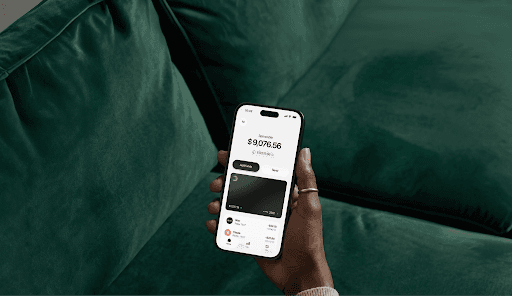
Plasma One combines non-custodial stablecoin spending, Visa payments and optional Earn without an exchange Funding Account.
1. Non-Custodial Stablecoins With Built-In Spending
Plasma One does not custody users' stablecoins. Cash funds eligible card purchases without an exchange account.
Oobit also supports non-custodial wallets. Plasma integrates Cash and card spending rather than linking an external wallet.
Bybit manages the spending balance; Plasma favors users who want direct stablecoin control within their card account. Wallet protection still depends on securing access credentials.
2. Optional Stablecoin Earn, Separate From Spending
As of November 2026, Plasma One Earn offers variable, non-guaranteed yield on eligible stablecoins through third-party DeFi protocols. Assets must be moved back to Cash before card spending, and principal may be lost.
Oobit lacks comparable idle-balance yield. Bybit Earn connects to your Funding Account or Unified Trading Account.
Plasma separates Earn from Cash. Users can decide when to allocate funds to DeFi and when to keep funds available for purchases. Earn still carries protocol and market risk.
3. Defined Cashback Tiers and Bank Transfers
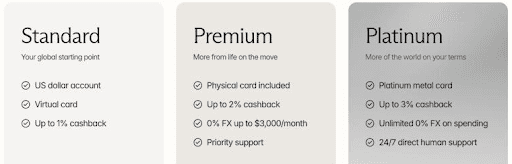
Plasma One Standard earns 1% XPL cashback on the first $500 of eligible monthly spending. Premium earns 2% on the first $1,000 and Platinum 3% on the first $3,000 before rates step down.
Oobit can pay more on limited spending. Bybit advertises higher tiers, but caps apply and its global program pays only on crypto-funded purchases.
Standard has no membership fee or XPL lock; Premium costs $600 a year or a 20,000 XPL lock for 12 months, and Platinum costs $2,500 a year or a 100,000 XPL lock for 12 months. Plasma also supports in-app bank on/off-ramps with applicable fees. XPL rewards carry token-price risk.
Three-Way Head-to-Head Matrix
Feature | Oobit | Bybit Card | Plasma One |
Card Network | Visa | Mastercard in Europe and several markets; Visa in selected regions | Visa |
Custody Model | DePay external wallet is non-custodial; in-app account balances are custodial | Bybit-managed Funding Account; eligible Easy Earn can fund spending | Non-custodial (you own and custody your stablecoins) |
Yield / Return on Balance | No standard yield on idle card balances publicly disclosed | Optional variable Flexible Easy Earn through Auto-Earn; rates not guaranteed | Variable yield via opt-in Earn |
FX / Conversion Fees | 1% card payment (minimum $0.25 in most markets); non-USD payments may add a 1.5% conversion fee | Bybit EU: 0.5% FX; many other regions: 2% FX; regional exceptions and 0.9% crypto conversion apply | Standard: 1% Plasma markup + Visa FX fee (~1%); Premium: 0% FX on the first $3,000/month of card spend (Visa fee included), then 1%; Platinum: 0% FX fee, Visa exchange rate applies |
Staking / Lock-In Required | No token lock for basic card use; cashback depends on eligible payment assets | None for basic card access; higher rewards need qualifying spend or VIP status | Standard: no XPL lock, regional pricing; Premium $600/yr or 20,000 XPL locked for 12 months; Platinum $2,500/yr or 100,000 XPL locked for 12 months |
Regional Availability | 80+ countries; Oobit says its app is available in all 50 US states; eligibility varies by region | Region-specific EU, Australia, Latin America and Asia-Pacific programs; not available in the US or UK | Most countries; 7 unsupported and ID-document restrictions in others. 31 US states |
On / Off-Ramp | External-wallet DePay, crypto transfers and bank payouts; fees vary by destination | Crypto and fiat funding via Bybit; card transactions convert from Funding Account or eligible Earn | In-app bank on/off-ramps (USD, EUR, GBP, MXN, BRL, COP); tiered fees apply |
Fees, rates and limits as of November 2026. Terms vary by region and may change.
Final Verdict: Which Should You Pick?
Oobit wins for eligible wallet-first spenders. Its 1% payment fee is simpler than Bybit’s regional schedule, although FX costs remain.
Choose Oobit for external-wallet spending and capped stablecoin cashback on eligible payments, without moving assets into an exchange Funding Account.
Choose Bybit for physical-card access, optional Earn and higher cashback potential, after checking regional costs.
Choose Plasma One for non-custodial stablecoins, defined cashback bands and optional Earn in one account.
How to Get Started With Plasma One
Download Plasma One: Install the app, check country and identity-document eligibility, and complete verification.
Deposit Stablecoins: Fund your non-custodial Cash balance and optionally move eligible stablecoins into Earn.
Start Spending: Activate your Visa card, add it to a supported mobile wallet, and pay wherever Visa is accepted, subject to regional rules and fees.