Managing wealth across borders often requires infrastructure that goes beyond local options. International banking can provide a useful framework for those living and working in a globalized economy.
An offshore bank account is one you open in a country or region other than where you live, and the target market for this type of account is typically expats and international entrepreneurs.
You will learn how digital platforms have expanded these possibilities globally and how to navigate modern compliance standards. Read on to learn how to select the right jurisdiction for your financial needs.
Key Takeaways
Offshore accounts can provide multi-currency access and lower international transaction fees for expats, digital nomads, and global business owners.
Modern international banking involves transparency and reporting under the Common Reporting Standard to stay compliant with global tax authorities.
Opening an account typically involves choosing a jurisdiction based on regulatory stability and providing documentation such as proof of address and source of wealth.
What Is an Offshore Bank Account?
The term “offshore” became associated with financial activity conducted outside a client’s home jurisdiction, including in island financial centres such as the Channel Islands.
Today, it generally refers to banking with a financial institution in a jurisdiction outside where the account holder resides, regardless of whether that jurisdiction is literally offshore.
How an Offshore Bank Account Works
Some offshore banks operate under restricted international licences that limit business with local residents.
The account and bank are principally regulated in the host jurisdiction, while the holder may also have obligations under home-country law.
Offshore Banking vs Domestic Banking: What's the Difference?
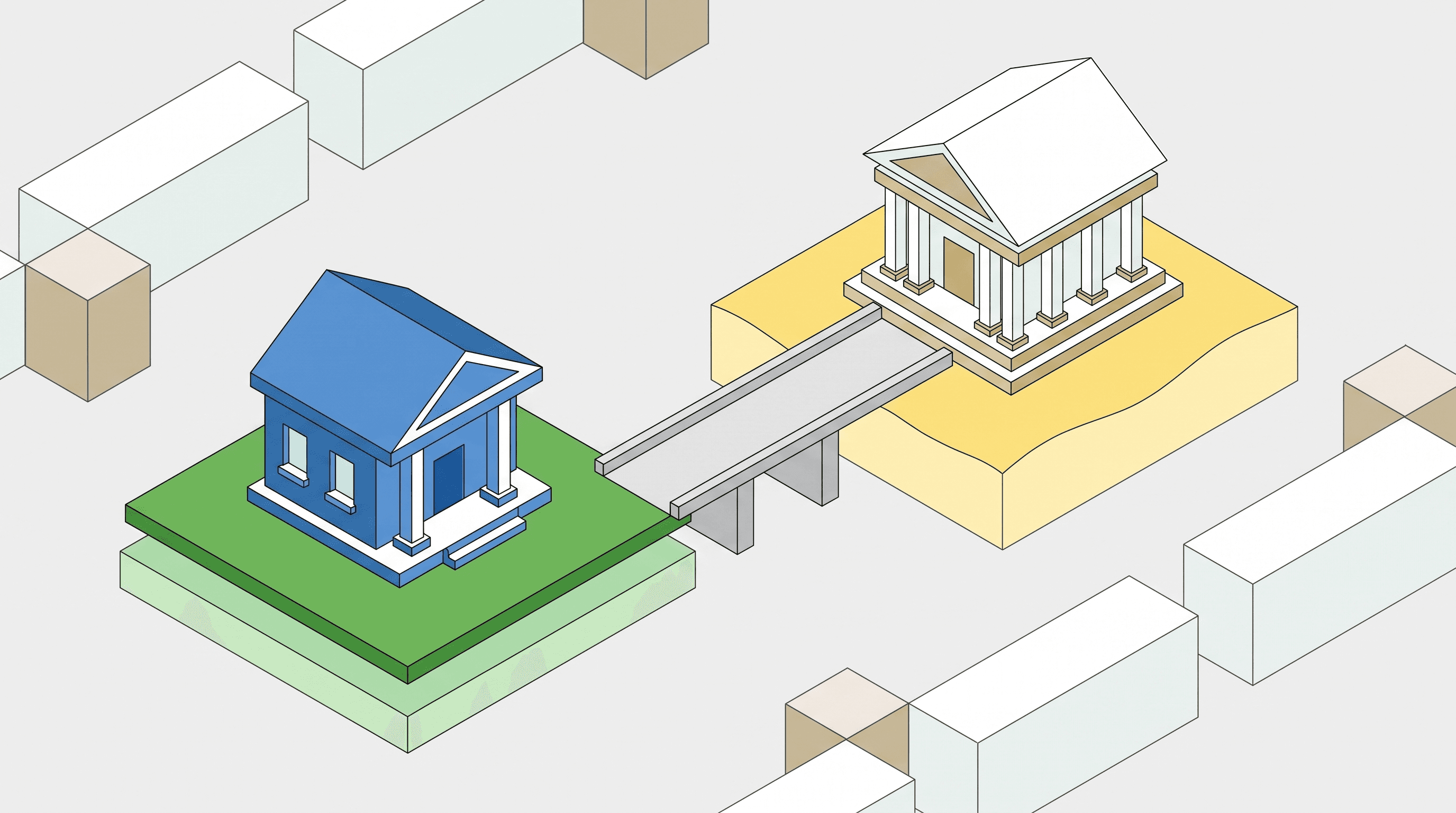
Domestic banking serves local needs, while offshore accounts are established in international financial centers to facilitate cross-border transactions.
This structure can allow individuals to manage wealth across different regulatory environments with more flexibility, using tools that standard domestic banks typically do not offer.
Who Really Needs an Offshore Bank Account?
Expats and People Relocating Abroad
Many expats and internationally mobile high-net-worth individuals may need accounts that support cross-border financial obligations.
An offshore account can serve as a centralized financial base that centralizes cross-border finances, although it can create additional reporting obligations.
Digital Nomads and Remote Workers
Remote professionals may use international or multi-currency accounts to receive income, pay expenses, and manage fiat balances across countries. These accounts can also provide a stable holding currency for income that may originate from clients across several different countries.
International Business Owners and Freelancers
Entrepreneurs often use these accounts to manage international payments and reduce their exposure to currency risk when operating in global markets. Having a dedicated offshore account can help business owners separate personal and corporate finances across borders with more clarity.
Frequent International Travelers
Frequent travelers can benefit from holding stable currencies in centralized hubs to avoid the high fees associated with constant currency conversion. A single multi-currency account may reduce the need to carry multiple local bank cards or rely on unfavorable exchange rates at airports.
People With Overseas Property, Investments, or Income
Some high-net-worth investors use offshore accounts to diversify their holdings across jurisdictions and manage international assets.
Offshore accounts can make it easier to receive rental income, pay foreign taxes, and manage maintenance costs without moving money through multiple intermediaries.
Families Supporting Relatives in Another Country
Families may use international payment or remittance services to reduce some cross-border transfer costs and delays.
This setup can be especially valuable in regions where local banking systems are unreliable or subject to strict capital controls.
Who Probably Doesn't Need an Offshore Bank Account
Individuals with purely domestic financial lives and no international assets will likely find that local banking services meet their current needs. For these individuals, the added cost and administrative burden of maintaining an offshore account likely outweigh any potential benefit.
Why People Open Offshore Bank Accounts
Manage Money Across Multiple Countries
Offshore accounts can provide a buffer against domestic banking instability, such as currency collapse or bank insolvency. By holding assets in a stable foreign jurisdiction, you keep your wealth outside the immediate impact of local economic crises.
Hold and Transact in Multiple Currencies
These accounts allow you to hold balances in various currencies, such as euros or Swiss francs, alongside the dollar.
Some providers offer rates closer to the mid-market rate with lower or more transparent markups than traditional banks.
Reduce Foreign Exchange Costs
Digital cross-border services are often cheaper than cash-based remittance channels, though offshore bank-account fees can vary substantially by provider and jurisdiction.
This efficiency can help maintain the value of your capital when moving money across borders.
Simplify International Payments and Transfers
Centralizing your finances in a global hub can make cross-border payments more predictable and faster.
This streamlined approach may reduce the administrative burden for those who receive income or pay expenses in multiple jurisdictions regularly.
Access International Banking and Investment Services
Offshore jurisdictions may provide competitive interest rates for those looking to hold funds in time deposits.
These institutions often offer specialized investment products that may not be available through your local domestic bank.
Common Misconceptions About Offshore Banking
Is Offshore Banking Legal?
Holding an account in a foreign jurisdiction is not inherently illegal or suspicious. Many law-abiding citizens and businesses use offshore banking for legitimate reasons.
Offshore Banking vs Tax Evasion
Maintaining an offshore account is not a shortcut to avoiding tax or regulation.
Under the Common Reporting Standard (CRS), more than 100 jurisdictions automatically exchange financial account information annually, per the OECD's 2023 update to the standard. CRS has substantially reduced the scope for undeclared cross-border accounts in participating jurisdictions.
Are Offshore Bank Accounts Only for the Wealthy?
While often associated with high-net-worth individuals, digital platforms have expanded access to multi-currency and stablecoin services for some eligible users.
Fintech platforms have lowered entry barriers considerably, allowing freelancers and small business owners to open accounts with minimal deposits and no in-person visits.
Separating Fact From Popular Myths
Popular culture still associates offshore banking with hidden accounts and secret transactions, but the reality is generally more ordinary.
Today's offshore clients include retirees managing foreign pensions, professionals receiving income from multiple countries, and families supporting relatives abroad.
How to Open an Offshore Bank Account
Choose the Right Country and Financial Institution
Selecting a jurisdiction typically involves balancing regulatory stability with your specific needs for currency access and international transfer efficiency.
Well-known offshore jurisdictions such as Switzerland, Singapore, and the Cayman Islands each offer differing combinations of regulation, taxation, privacy, and currency access that must be assessed separately.
Compare Eligibility Requirements
Entry barriers vary significantly, as some institutions require zero minimum deposit while others demand substantial capital commitments.
Premium banking tiers may offer additional benefits like dedicated relationship managers, preferential exchange rates, and reduced fees on international transfers, but often require maintaining balances upward of $100,000, as seen with premier offerings from banks like TD and HSBC.
Prepare the Required Documentation
Identity and Proof of Address
Standard protocols typically require a valid government ID and recent utility bills to confirm your residency status. Some jurisdictions may request a reference letter from your current bank, particularly if you are opening an account without an in-person visit.
Tax Identification and Compliance Documents
Institutions often request your tax identification number to support adherence to global transparency and reporting standards.
Under frameworks like FATCA and the OECD's CRS, banks are obligated to collect and report tax residency information to relevant authorities, making accurate disclosure important.
Source of Funds or Source of Wealth
Banks may request documents appropriate to the stated source of funds.
For entrepreneurs and business owners, additional documentation such as company financial statements, sale agreements, or investment portfolios may be needed to demonstrate the legitimate origin of larger deposits.
Complete Verification and Account Opening
While traditional banks may require certified true copies of documents, digital platforms often allow for onboarding in as little as about 20 minutes, depending on provider.
The process may involve document upload, electronic or video identity checks, and a review period that varies by provider.
Fund and Start Using the Account
Once the compliance review is complete, you can typically activate the account by sending an initial wire transfer to meet the minimum balance.
After activation, you can start executing international transfers, setting up multi-currency subaccounts, and integrating the account with your broader financial management strategy.
What to Consider Before Opening an Offshore Bank Account
Tax Reporting and Disclosure Obligations
U.S. persons are generally required to file an FBAR if the total value of their foreign accounts exceeds $10,000 at any time during the year, per FinCEN reporting requirements.
Non-willful reporting penalties may accrue per report rather than per account, and willful violations can cost up to 50% of the balance, per IRS penalty guidelines.
Banking Fees and Minimum Balance Requirements
Institutions have increasingly adopted de-risking strategies, leading to closer scrutiny and the potential for account closures if criteria are not met. Maintaining certain minimum balances is often needed to avoid steep monthly maintenance fees or service restrictions.
Deposit Protection and Regulatory Safeguards
It is important to distinguish between legal asset protection and the illegal act of hiding funds from authorities. Check if the jurisdiction offers deposit insurance similar to domestic standards to help keep your capital secure during institutional insolvency.
Currency Risk and Exchange Rate Fluctuations
Holding assets in foreign currencies can introduce exchange rate volatility, which may erode the value of your savings. Even a well-structured offshore account can lose purchasing power if the local currency weakens against your home currency during a period of economic instability.
Accessibility, Digital Banking, and Customer Support
Consider the ease of remote management and whether the bank provides reliable English-language support. Modern infrastructure may allow for instant transfers and clear digital interfaces to manage your international wealth without physical travel.
Choosing the Right Offshore Bank Account
Evaluate the Bank's Reputation and Regulation
Selecting a jurisdiction depends on balancing financial stability and regulatory oversight. Singapore is known for its strict financial regulation under the Monetary Authority of Singapore (MAS) and offers a stable, English-language banking environment.
The Channel Islands and Switzerland also remain popular choices due to their long-standing reputations for privacy laws and economic security.
Compare Supported Currencies and International Payment Features
For entrepreneurs and small businesses, banks and payment providers in Hong Kong and Singapore may offer multi-currency and cross-border payment services.
These regions can be particularly useful for those requiring multi-currency support and streamlined international payment features to manage cross-border trade.
Review Fees, Account Requirements, and Minimum Deposits
High-net-worth individuals often look to Switzerland or the Cayman Islands for asset protection, though these locations tend to demand higher minimum deposits and may require in-person visits.
For those seeking lower entry costs, digital platforms in major hubs now offer online setup with no physical branch requirement.
Consider Ease of Account Management and Online Access
Modern offshore banking emphasizes digital accessibility to help users manage their wealth from anywhere in the world. Choosing a jurisdiction with a strong fintech ecosystem can allow for more flexible account management than traditional, paper-heavy systems.
Offshore Bank Account Alternatives
Multi-Currency Accounts
Digital platforms can offer a streamlined way to hold and exchange multiple currencies without the complexity of traditional offshore banking.
Some providers, such as OFX, allow users to maintain balances in over 30 foreign currencies with no monthly fees. Some services include cards for spending directly from supported fiat currency balances.
International Bank Accounts
Modern payment services provide local account details in various jurisdictions, such as the United States, Europe, and the United Kingdom, without requiring local residency.
While these platforms are not banks and do not offer traditional deposit insurance, they protect user capital by safeguarding funds in segregated accounts at top-tier financial institutions. This model helps keep user assets separate from the provider's operational capital.
Option | Licensed bank deposit? | Multi- currency | Deposit insurance | Local account details | Best suited for |
Foreign/ offshore bank | Usually | Often | Depends on jurisdiction | Usually | Long-term banking and larger balances |
Multi-currency fintech | Not always | Yes | Often no traditional coverage | Often | Daily transfers and currency management |
International business account | Depends on provider | Usually | Varies | Often | Cross-border company payments |
Domestic international account | Yes | Sometimes | Domestic scheme may apply | Domestic | Simpler international needs |
Global Business Accounts for Companies Operating Internationally
For businesses, specialized global accounts offer a way to manage international cash flow by providing dedicated details for major currencies like USD, EUR, and GBP.
These platforms support holding more than 40 different currencies, per Wise's published coverage. This infrastructure can allow companies to receive payments like a local in up to nine specific currencies, based on Wise's published coverage.
Is an Offshore Bank Account Right for You?
Deciding to open an account abroad is a strategic choice that emphasizes financial diversification and operational efficiency over simple secrecy.
For the modern expat or entrepreneur, these accounts can serve as a useful tool for managing a global life, provided they are approached with a focus on the right country, structure, and compliance.
The transition from traditional banking to digital alternatives often depends on whether you require the deep institutional roots of a legacy bank or the flexibility of fintech platforms.
Success in international finance now calls for transparency. Foreign accounts are generally legal when opened and used in compliance with applicable tax, reporting, sanctions, and exchange-control laws.
By comparing traditional banks with fintech or digital-dollar tools, you can choose an option that better fits your cost, access, compliance, and risk needs. This approach may help you stay organized and prepared as your financial needs evolve.
If you are looking for a straightforward way to manage your finances across borders, Plasma One offers a dedicated app and card designed for saving, spending, and earning with digital dollars in one place.