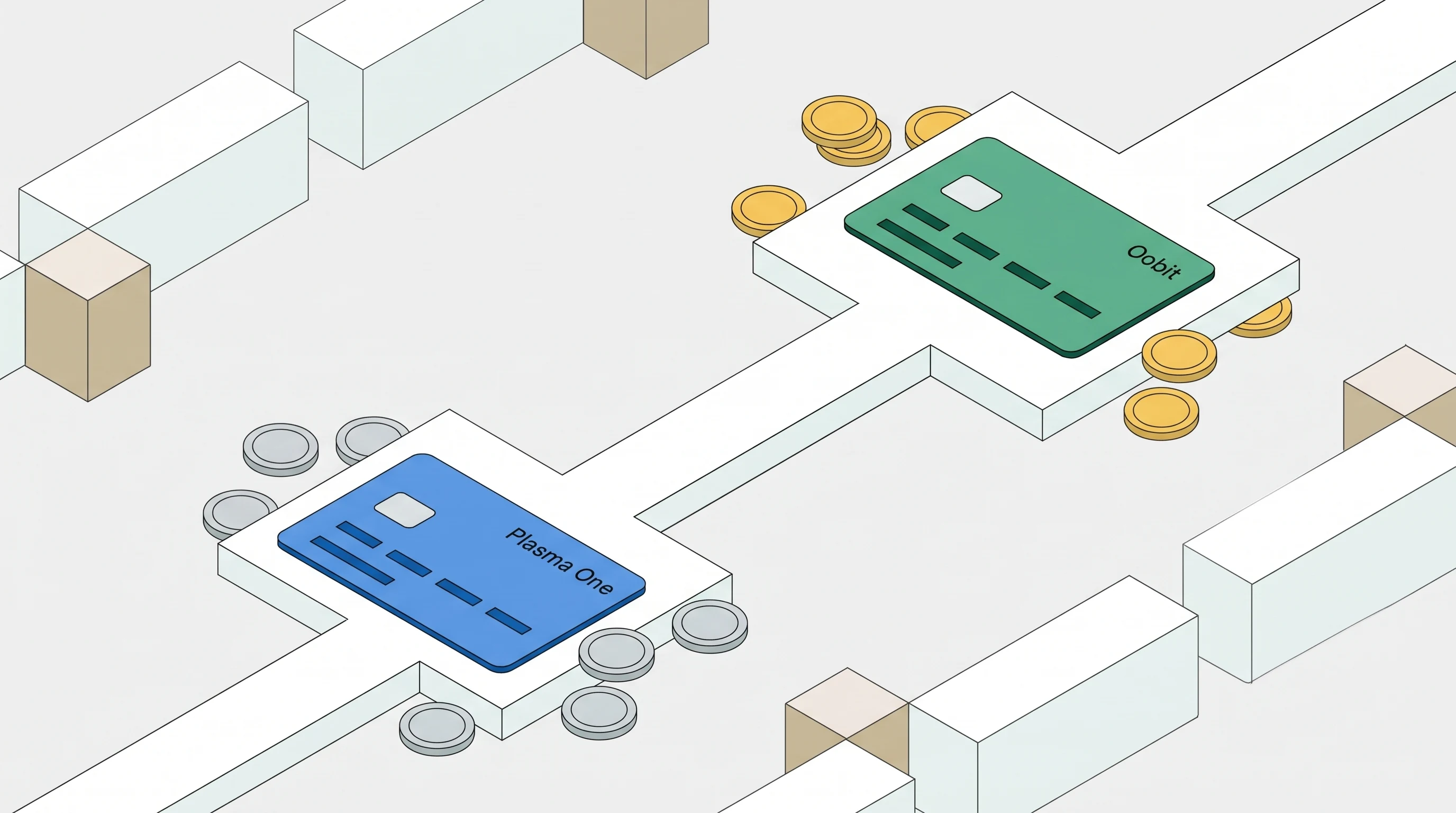
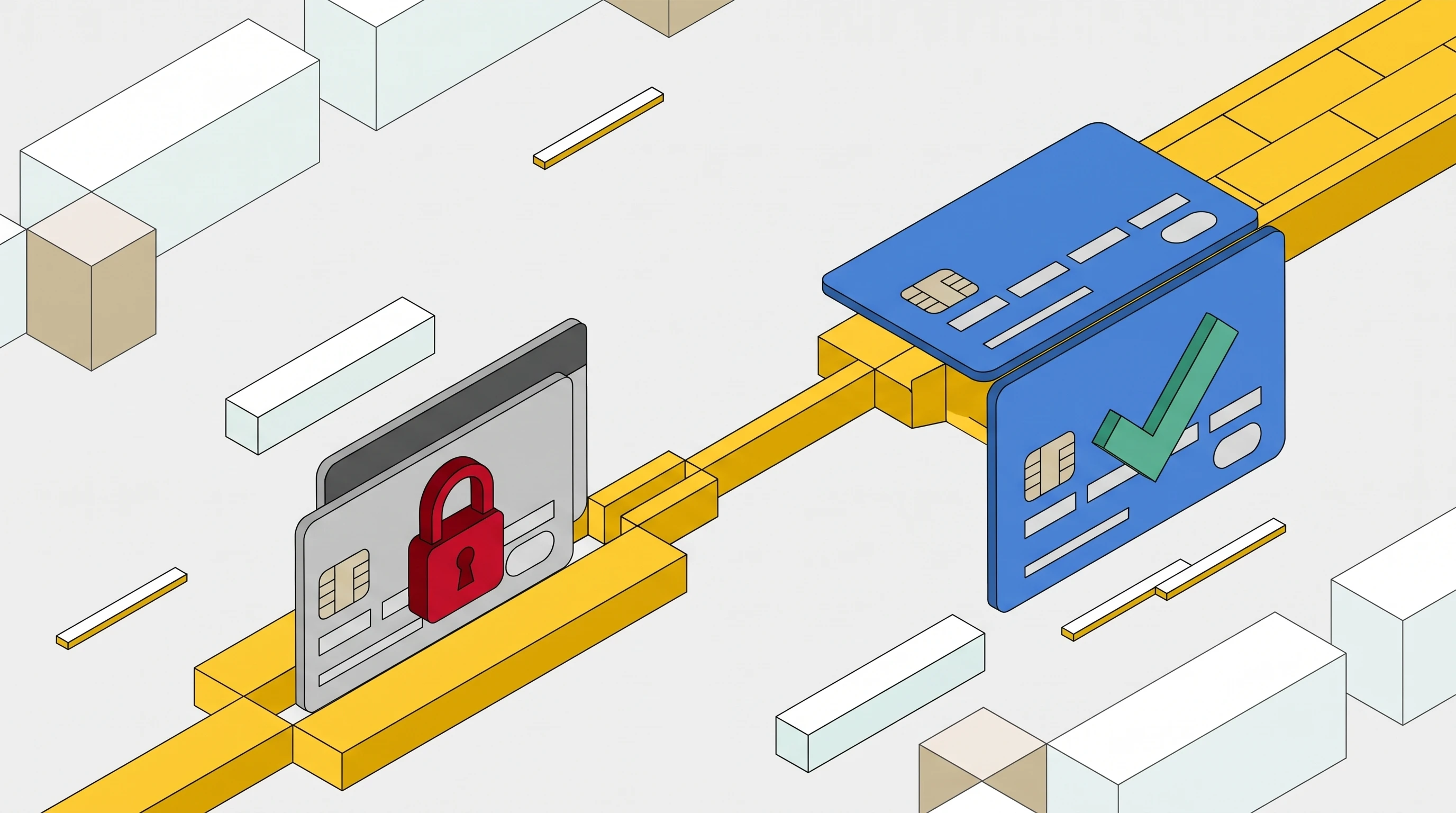
Stablecoin payments use tokens designed to track a reference asset, commonly the U.S. dollar. They move through a blockchain and can be combined with services that accept or pay out bank money. The peg is a design objective, rather than a guarantee of value.
On a blockchain, a token transfer can update ownership in one transaction. A full payment may also require a fiat deposit, identity checks, conversion, provider crediting, and a bank payout. Those steps do not become atomic merely because the token transfer is onchain.
In this piece, we will look at how stablecoin payments work, how they compare to legacy payment rails, why people and businesses choose them for everyday transfers, and the risks and open questions that still shape their future.
Why Stablecoins Are Transforming Payments
Stablecoins are changing how businesses and individuals move money. They can offer a practical alternative when traditional payment systems are slow, costly, or hard to access.
Stablecoins aim to track a reference currency or other asset while operating on a blockchain. Their market price can deviate, and their risks differ from holding the reference asset directly.
When reliable off-ramps are available, this can create a more seamless payment experience, letting users convert stablecoins back to fiat through exchanges, cards, or bank transfers.
The Problems with Legacy Rails
SWIFT primarily carries financial messages. ACH is a clearing and settlement network with its own processing rules. Wire-transfer services can include real-time gross settlement, such as Fedwire.
Settlement arrangements depend on the payment rail and participating institutions. They can involve central-bank money or balances on correspondent-bank accounts, with different schedules, costs and operating rules.
With SWIFT-messaged cross-border payments, banks may settle on correspondent accounts separately from the message. Timing depends on the payment route, participating institutions, operating hours and compliance checks; it is different from Fedwire’s real-time gross settlement.
Bank-route charges can include sending, receiving, conversion and intermediary costs. The actual amount, currencies, institutions and fee option determine the quote and recipient amount.
An onchain transfer records a supported token movement under the network’s rules. The full payment can also require funding, conversion, custody checks or a bank payout, each with separate costs and availability conditions.
ACH processes payment instructions in batches. Settlement follows the applicable network schedules, and the receiving institution’s posting rules affect when the recipient can use the funds.
Standard and Same Day ACH have different eligibility, submission deadlines and availability rules. Ask the sending provider for the actual delivery estimate rather than inferring it from the ACH label.
These multi-step processes create friction for eCommerce, gig workers, and any use case that needs fast settlement. Limited tracking tools also create a transparency gap, so businesses may not know where a payment sits until it arrives.
This uncertainty and cash flow risk is hard for modern businesses and individuals to manage. It is one reason why some choose stablecoins and other onchain rails for cross-border payouts, treasury flows, or frequent small transfers.
Stablecoin Advantages
Compared with the multi-step messaging and clearing flows in legacy rails, stablecoins can offer a simpler path from instruction to final settlement.
A supported onchain transaction records a token transfer under the network’s rules. Confirmation, finality and provider crediting are separate concepts, and there is no universal full-payment completion time.
A blockchain can process supported transfers outside bank opening hours. Funding, compliance review, conversion and local payout may still have operating windows or holds, so network operation alone does not guarantee predictable salary or remittance arrival.
Compare total costs for the same route and recipient amount, including network fees, conversion, funding and payout. A network fee alone is not comparable with a full bank-transfer or remittance quote. A comparison tool’s inputs and timestamp must also be checked. Related reference: Remittance Race
Stablecoins can also expand reach in markets where banking access or cross-border rails are limited. For people who find it hard to receive international wires or card payouts, accepting a stablecoin into a mobile wallet can be simpler. In well-served corridors, though, traditional bank transfers may be just as accessible in practice.
For migrant workers, lower fees and faster settlement can translate into more money arriving at home. The ILO estimates there were 167.7 million international migrant workers in 2022, many of whom send regular remittances.
A study of onchain activity must distinguish remittances from trading, exchange transfers and other token movements. Use corridor- and provider-specific evidence when assessing a remittance route.
A stablecoin transfer can update token ownership on one ledger. Its finality, fees, provider access, and conversion or payout steps must still be evaluated for the full payment route.
The State of Stablecoins in 2025
Stablecoins have moved from a niche crypto tool to a mainstream financial asset in under a decade. They now sit at the intersection of trading, savings, and global payments.
Interpreting Adoption Data
Raw token-transfer volume can include exchange movements, trading and transfers between accounts controlled by the same entity. It is not automatically the value of consumer or business payments.
Active addresses are not unique people. One user can control several addresses, while an intermediary address can serve many customers.
Provider surveys describe the respondents, questions and collection period. They do not by themselves establish adoption across every financial institution or the value of actual payments.
A card program can use a supported stablecoin to settle some institutional obligations while its merchant receives fiat. Network, program and merchant arrangements determine the actual settlement currencies.
Regulatory Landscape
Regulation is catching up with usage. Policymakers now treat payment stablecoins as part of the core financial system, rather than a side-experiment.
In the United States, the GENIUS Act created a federal framework for payment stablecoins in July 2025.
The U.S. GENIUS Act establishes a regime for covered payment-stablecoin issuers, with defined reserve, authorization and disclosure provisions. Enactment in July 2025 is distinct from its operative date; the October 2026 OCC rule identifies 18 January 2027 as the Act’s effective date. Coverage depends on the actual issuer, token and activity. Related reference: are stablecoins securities?
MiCA applies across the European Union, including rules for asset-referenced tokens and e-money tokens from 30 June 2024. The wider cryptoasset-service framework generally applied from 30 December 2024, with specified transitional arrangements. Its stablecoin scope is not limited to euro-denominated tokens or the euro area.
Globally, standard-setters have issued high-level frameworks for stablecoins. The Financial Stability Board finalized recommendations on global stablecoin arrangements in 2023 and reviewed implementation progress in 2025, highlighting both advances and remaining gaps.
Many jurisdictions are now building their own regimes on top of this. The U.K., Hong Kong, and others are consulting on or implementing stablecoin rules that treat them as potential payment instruments, while also addressing financial-stability and consumer risks.
For a visual overview of GENIUS and many other regimes, our interactive Stablecoin Regulation Map summarizes the key rules by country.
Key Use Cases for Stablecoin Payments
Businesses may evaluate stablecoins for payment and treasury workflows. Any improvement in cost, timing or cash flow depends on the full funding, transfer and payout arrangement.
Below are some of the most common use cases today.
Cross-Border Payments and Remittances
Cross-border payments are one of the clearest fits for stablecoins. They can be cheaper, faster, and more predictable than many legacy options, for both businesses and individuals.
Some remittance providers now use stablecoins or other onchain assets inside their own systems. They keep the user experience in local currency, while using stablecoins in the background to lower costs and speed up settlement.
A remittance may use a stablecoin for one stage. Compare the sender’s full cost, recipient amount, time to usable funds and error or recovery process for the actual corridor and provider.
B2B Transactions and Supplier Payments
A supplier payment can use an onchain transfer outside bank operating hours, but the supplier may still depend on conversion and a local payout before it can use the funds.
Compare the actual funding and payout times, recipient amount and fees. A faster token transfer does not by itself establish a working-capital benefit for the supplier.
Onchain records can help reconcile a transfer, but the business still needs to link the address and transaction to the correct invoice, counterparty and accounting records.
eCommerce and Retail
In eCommerce and retail, stablecoins give another way to pay and get paid. Payment providers and platforms have started to integrate stablecoin options, often next to cards and bank transfers.
A merchant may accept a direct token payment or use a provider that converts the receipt to fiat. A direct onchain transfer generally lacks a card-network chargeback process, while refund, contractual and statutory rights can still apply.
Around the world, there are pilots at online stores, marketplaces, and even small physical merchants. These experiments test whether onchain payments can reduce fees and speed up settlement without adding complexity for users.
Payroll and Treasury Management
Payroll has become a popular use case, especially for remote and globally distributed teams. Some workers choose to receive part of their salary in stablecoins so they can hold or spend stablecoins directly.
For cross-border pay, verify lawful availability, payroll and tax obligations, conversion, funding and recipient access. A stablecoin route does not guarantee that every worker receives the full usable amount on time.
Treasury and finance teams also use stablecoins as a liquid onchain asset for operating expenses. Specialized providers now offer custody and treasury services built around stablecoins, tailored to both domestic and international firms.
Risks and Challenges of Stablecoin Payments
Stablecoins offer clear benefits, but they also come with risks and open questions.
These need to be managed carefully for sustained growth and wider adoption.
Regulatory Uncertainty
Stablecoin rules are still developing country by country. Some jurisdictions move quickly, while others are only starting to design frameworks.
Regimes like the GENIUS Act in the U.S. and MiCA in the EU bring important clarity. At the same time, global standards are not yet fully aligned, especially for cross-border use.
This patchwork can create confusion for international businesses and may slow large-scale deployments, even when the underlying technology is ready.
On/Off-Ramp Frictions
One major friction point is the on and off-ramp between fiat and stablecoins. Users often need to go through exchanges, payment providers, or banks to move in and out.
These steps can be slow, costly, and subject to local rules and cut-off times. In some markets, they can offset part of the speed and cost advantages that stablecoins offer onchain.
Innovation here is ongoing, from cards and neobanks to improved local payout networks. Lower-friction ramps are key if stablecoin payments are to reach more everyday users and businesses.
Counterparty and Market Risks
Using a fiat-backed stablecoin always involves issuer risk. Users rely on the issuer to hold and manage reserves and to honour redemptions at par.
If reserves are incomplete, low-quality, or poorly managed, the token can lose its peg. The collapse of TerraUSD in 2022, an algorithmic stablecoin, is a widely cited example of how quickly confidence can break when the design is fragile.
Many leading issuers now provide regular reserve reports and third-party attestations. These steps help, but they do not fully remove counterparty or market risk, especially in stress events.
Cybersecurity and Fraud
The broader crypto ecosystem remains a target for fraud, phishing, and hacking. Attackers focus on users, wallets, exchanges, and smart contracts rather than the stablecoin token alone.
Common threats include fake websites, approval scams, and social-engineering attacks that trick users into signing malicious transactions.
Monitoring can identify some known suspicious patterns. An unflagged address is not proof that a transaction or counterparty is legitimate, and security controls do not eliminate loss.
Some users and businesses now run pre-transaction wallet checks, using analytics services to see whether an address is linked to known illicit activity before sending funds.
Integration Barriers
For many firms, the main challenge is not the concept, but integration work. Accepting or sending stablecoins often requires new software, APIs, controls, and staff training.
Smaller companies may find this complex and resource-intensive, especially when they must also meet compliance and reporting obligations.
Specialized payment and treasury providers are emerging to bridge this gap, packaging stablecoins into more familiar tools. Even so, integration remains a barrier in regions with limited infrastructure or unclear local rules.
The Future of Stablecoin Payments
Smart contracts already extend stablecoins beyond simple peer-to-peer transfers. They are used to automate payroll, support supply chain and trade finance, run onchain treasuries, and help issue or settle tokenized assets.
Each new use case highlights how programmable stablecoins can support financial workflows that are difficult or expensive to run on legacy rails.
Public and private experiments are also converging. Many central banks are exploring central bank digital currencies (CBDCs) as a sovereign form of digital money for households and businesses.
A future ecosystem could be hybrid, with CBDCs used for high-level public money functions, while stablecoins remain flexible tools for cross-border commerce, platforms, and user-facing applications.
Some observers see this mix as a way to improve efficiency and financial inclusion. Others are concerned about privacy and financial surveillance, especially if CBDCs enable very granular tracking of payments.
How these technologies evolve will depend on policy choices, regulation, and market trust. For now, stablecoins already act as a bridge between legacy finance and internet-native money, and their role in payments continues to expand.
Summary
Stablecoin payments use a different transfer process from bank or card payments. Compare the actual route, total costs, time to usable funds, reconciliation, and protections before judging which works better for a particular use.
At the same time, regulatory uncertainty, on/off-ramp frictions, and integration work remain real constraints.
Even so, for cross-border payouts, B2B flows, eCommerce, and payroll, stablecoins are already becoming a useful complement to traditional payment systems in an increasingly digital economy.