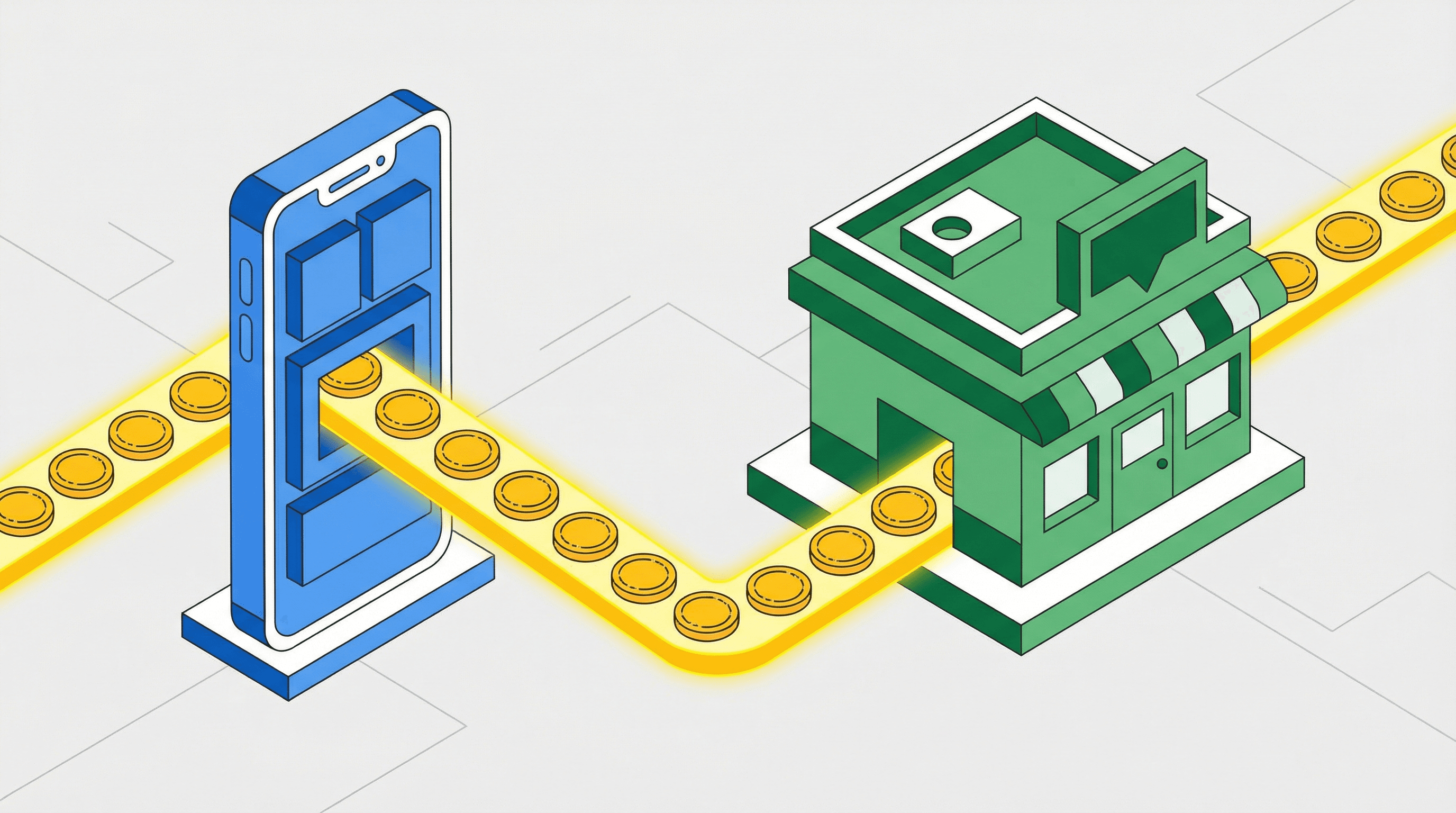
Stablecoins are moving from crypto-native circles into everyday checkout, as major payment platforms and merchant tools add stablecoin options and more shoppers hold digital dollars.
Using stablecoins for ecommerce can speed up global checkout and payouts in digital dollars while reducing some fee and FX friction. It works best with strong UX, reliable infrastructure, and tight controls for custody, compliance, reserves, and security.
This guide explains what stablecoins are, why ecommerce teams are testing them, and what it takes to integrate stablecoin payments without adding risk or hurting conversion.
Key Takeaways
Stablecoins can reduce friction in cross-border ecommerce by simplifying settlement and reducing dependency on banking cutoffs.
Integration choices, custody, and user experience determine whether stablecoin checkout helps or hurts conversion.
Compliance, reserve transparency, and security controls are the difference between “added payment method” and operational risk.
What Stablecoins Are and Why They Fit Ecommerce
Core Characteristics That Matter for Online Commerce
A merchant cares about price stability because the checkout total should not change between cart and confirmation.
Merchants also care about settlement finality, meaning when a payment is considered completed and available for treasury or payouts.
Stablecoins can support programmable money, where wallets, smart contracts, and APIs automate routing, fee logic, escrow, or revenue splits.
For many designs, stablecoins also depend on issuer redemption, meaning the token’s value is anchored by the ability to redeem for fiat through the issuer or market structure.
Stablecoins vs Traditional Crypto Payments in Ecommerce
Traditional crypto payments can introduce FX-like volatility, even within a single checkout session, which complicates pricing and refunds.
Stablecoins can reduce pricing friction by keeping the customer-facing amount close to a dollar value while still using blockchain rails.
From a customer perspective, stablecoins can still feel like crypto UX, so the checkout experience must minimize wallet confusion, network selection, and failed transactions.
Types of Stablecoins Relevant to Merchants
Fiat-Backed Stablecoins for Payments and Settlements
Fiat-backed stablecoins aim for cash-like behavior by holding reserves in cash, cash equivalents, or short-term instruments, depending on issuer structure.
USD₮ is widely used for onchain liquidity, and its issuer publishes periodic reserve information and attestations for transparency checks.
Merchants should treat issuer claims as operational inputs, not marketing, and document how redemption, reserves, and counterparty exposure map to their risk policy.
Crypto-Backed and Algorithmic Models: Limits for Ecommerce Use
Crypto-backed models can introduce collateral volatility, because the backing assets may move sharply during market stress.
Algorithmic models can introduce mechanism fragility, because stability depends on incentives and market behavior that may fail under extreme conditions.
For most online merchants, these designs are better treated as edge cases unless you have a clear treasury mandate, strong disclosures, and a technical team that can monitor peg conditions in real time.
How Stablecoins Improve Ecommerce Payment Flows
Reducing Transaction Fees and Payment Friction
Card payments bundle multiple fees and intermediaries, which is convenient but can be expensive for some business models.
Stablecoin payments can reduce intermediary layers in certain flows, especially when the same asset can move from customer wallet to merchant wallet to payout destination.
Savings are not automatic because you may add new costs, like on-ramp fees, gateway fees, compliance services, and customer support for wallet issues.
The best approach is fee benchmarking by corridor and order size, then testing stablecoin checkout only where it improves unit economics without harming conversion.
Faster Settlement and Improved Cash Flow for Merchants
Many stablecoin transfers can settle in minutes, and some systems offer near-instant confirmation for practical ecommerce needs.
Faster settlement can improve cash timing, especially for merchants that operate with thin inventory cycles, frequent supplier payments, or creator payouts.
Stablecoins can also help with weekend operations, since blockchains do not stop for holidays, and some settlement programs emphasize seven-day availability.
Eliminating Chargebacks and Payment Reversals
Stablecoin transfers are often push payments, meaning the customer initiates the transfer rather than the merchant pulling funds from an account.
Push payments can reduce chargeback exposure because there is no card-network dispute process that automatically reverses funds weeks later.
That does not remove the need for a refund policy, so merchants still need clear customer support, refund tooling, and fraud controls for stolen credentials or account takeover.
Supporting 24/7 Global Transactions
Ecommerce is global, but bank rails and settlement windows still reflect local business hours.
Stablecoins can support always-on settlement in a single unit of account, which can simplify operations for teams that sell across time zones.
This is one reason regulators and central banks track payments modernization, including discussions that compare stablecoins, CBDCs, and other settlement upgrades.
Using Stablecoins for Cross-Border Ecommerce
Removing FX Costs and Currency Conversion Complexity
If you price in USD but sell globally, you often pay conversion spreads at multiple points, including customer conversion, processor conversion, and payout conversion.
Stablecoins can reduce double conversion when a customer already holds digital dollars and pays directly in a dollar-denominated stablecoin.
You can still offer local pricing while using stablecoin settlement, but the accounting model should clearly separate “customer currency” from “settlement currency” in your ledger.
Stablecoins as a Universal Settlement Currency
A practical framing is universal settlement, where you use stablecoins as a common asset for treasury and payouts, even if customers pay in many local methods.
This can reduce treasury fragmentation, because you avoid holding many small balances across banks and PSPs, then paying to sweep and reconcile them.
For high-volume corridors, this can also reduce delay risk, because settlement timing becomes more predictable than waiting for multiple banking partners to clear.
Reaching Customers in Underbanked Markets
In some markets, customers can access mobile wallets more easily than international cards, and stablecoins can fit into that wallet-first behavior.
Stablecoins can also be relevant when traditional transfers are high cost, which is part of why remittance pricing remains a policy focus.
As of March 2025, the global average cost to send remittances was 6.49%.
For ecommerce, the lesson is cost sensitivity, so stablecoin checkout tends to work best when it materially improves the customer’s total cost or reliability.
Stablecoins at Checkout: Customer-Facing Use Cases
Stablecoin Payments in Modern Checkout Experiences
A common approach is wallet checkout, where the customer pays from a self-custody wallet and the merchant receives stablecoins directly or via a gateway.
Another approach is hosted stablecoin pay, where the gateway handles wallet prompts, confirmations, pricing displays, and risk checks, then delivers local currency to the merchant.
Large platforms are now enabling stablecoin acceptance in mainstream merchant stacks, including Shopify merchants in multiple countries through Stripe and USDC support.
Incentives, Rewards, and Cashback Using Stablecoins
Stablecoins can support instant rewards because you can deliver value onchain at purchase completion rather than batching points later.
This works well for affiliate and creator models, where incentives can be split across parties in real time with clear onchain receipts.
It can also support cashback experiments, but you need to treat incentives as marketing spend with clear terms and fraud controls.
Wallet-Based Payments vs Embedded Payment Flows
Wallet-based checkout gives users more control, which appeals to crypto-native customers and some cross-border users.
Embedded flows aim for familiar UX, where the customer sees a normal payment page while the backend uses stablecoins for settlement or treasury.
Your choice should depend on your audience, because crypto-native customers accept wallet steps, while mainstream shoppers often abandon if the flow feels unfamiliar.
Stablecoins Beyond Checkout: Ecommerce Operations
Supplier, Creator, and Marketplace Payouts
Marketplaces often pay thousands of parties, and stablecoins can simplify payout logic when recipients prefer digital dollars.
Creators and contractors may value faster access, especially when they are paid across borders or outside banking hours.
You still need identity and tax workflows, so the stablecoin transfer should be integrated into your payout system, not handled manually.
Treasury Management and Internal Fund Transfers
Some merchants use stablecoins as working capital, holding digital dollars between pay-in and pay-out rather than holding multiple bank balances.
This can reduce idle capital, but it introduces new controls, including wallet governance, signer policies, and counterparty monitoring.
Treasury teams should define redemption plans, meaning how you exit back to bank money under normal conditions and under stress.
Loyalty Programs and Programmable Rewards
Stablecoin loyalty can offer portable value, where rewards can be redeemed outside your store if you design them that way.
Portable rewards can improve customer trust, but they also increase fraud incentives, so you need throttles, monitoring, and abuse prevention.
A safer pattern is closed-loop rewards at first, then expanding portability only after you have a clear compliance and risk posture.
Smart Contract–Based Settlement for Ecommerce Platforms
Smart contracts can automate revenue splits, escrow, and conditional releases, which is attractive for marketplaces and B2B platforms.
Automation can reduce manual reconciliation, but it can also lock funds if there is a bug, so audits and staged rollouts matter.
In practice, most teams start with simple flows, then add programmability once they have stable operations and strong monitoring.
Technical Foundations for Using Stablecoins in Ecommerce
Wallet Infrastructure and Custody Models
Self-custody gives you direct control, but it also makes you responsible for key security, signing processes, and incident response.
Custodians can reduce operational load, but you take on vendor risk and must validate controls, insurance posture, and withdrawal policies.
Many merchants adopt hybrid custody, where a custodian holds most funds and a small operational wallet supports refunds, testing, or daily flows.
Payment Gateways and API-Based Integrations
Gateways reduce integration effort by handling wallet prompts, confirmations, pricing displays, and conversion to local currency.
They also help with merchant reporting, including settlement files, refund tools, and reconciliation exports that fit existing finance workflows.
A major signal is that large payment providers now support stablecoin rails for merchant ecosystems, including Shopify merchants via Stripe’s USDC rollout.
Blockchain Networks and Scalability Considerations
Networks differ in throughput and fees, so stablecoin checkout depends on the chain you choose for confirmation speed and reliability.
Proof of Stake networks can support high capacity with lower energy use than Proof of Work, though design details and decentralization vary by chain.
UX Considerations for Stablecoin-Enabled Stores
Customers need clear pricing, which means showing the stablecoin amount, the network, and the confirmation step without jargon.
You should also build error recovery, such as detecting wrong-network transfers, showing status updates, and offering fast support if a payment is delayed.
The simplest merchant strategy is segmented rollout, starting with a stablecoin option for specific regions, order sizes, or customer cohorts, then expanding based on conversion and support metrics.
Compliance, Risk, and Trust Considerations
Regulatory Expectations for Stablecoin Payments
In the EU, MiCA and related rules define issuer and service expectations, including requirements for certain stablecoin categories and service providers.
MiCAR became applicable to issuers of ARTs and EMTs on June 30, 2024, with CASP application on December 30, 2024.
The EBA also notes authorization expectations for issuers of asset-referenced tokens and e-money tokens, alongside technical standards and guidance.
For merchants, the practical outcome is compliance by design, including KYC/AML controls where required, sanctions screening, record retention, and clear customer terms. If you sell across regions, the Regulation Map can help you quickly compare high-level requirements by jurisdiction before you scope implementation.
Reserve Transparency and Issuer Credibility
Issuer transparency matters because reserve quality and redemption mechanics affect your ability to manage refunds, treasury exposure, and operational continuity.
Tether publishes reserve information and attestations, including figures as of September 30, 2025, for assets and liabilities supporting USD₮.
You should also review issuer reporting hubs and document what you rely on, such as reserve composition, attestation frequency, and redemption eligibility.
Policy bodies have flagged financial stability concerns tied to stablecoin growth, including tensions between par convertibility promises and risk-taking incentives.
Security Risks and Consumer Protection Challenges
Stablecoin payments reduce chargebacks, but they increase key security importance, because stolen keys can mean irrecoverable loss.
Customer support needs new playbooks, including how to handle wrong-address transfers, delayed confirmations, and refund processing back to wallets.
At scale, you also need fraud monitoring, including device fingerprinting, transaction screening, and velocity controls, especially if you offer incentives or instant digital delivery.
Platform and Enterprise Adoption Signals
Ecommerce Platforms Enabling Stablecoin Payments
Stripe announced support for Shopify merchant acceptance of USDC across many countries, aiming to let merchants receive local currency deposits or USDC to wallets.
Shopify also provides documentation for USDC payments via Shopify Payments, which can help merchants understand eligibility and setup steps.
These integrations reduce the need for custom crypto checkout, which is one of the biggest barriers for ecommerce teams without dedicated blockchain engineers.
Payment Processors and Fintech Infrastructure Providers
PayPal launched PYUSD in August 2023 and described checkout use and 1:1 redeemability features, showing stablecoins inside a mainstream wallet context.
Visa announced USDC settlement expansion in December 2025 and cited annualized volume and seven-day availability as drivers for institutional settlement modernization.
These moves suggest a path where stablecoins become back-end settlement, even when customers still pay with cards or bank methods on the front end.
Retailers Exploring Branded or Closed-Loop Stablecoins
Some firms consider closed-loop credits or branded tokens because they want faster settlement, lower cross-border costs, or programmable rewards.
From a merchant standpoint, the key question is interoperability, meaning whether the token can move across wallets and services, or only inside a single platform.
Policy analysis also highlights spillover risk, so branded stablecoins should be evaluated like any other money-like instrument, with clear reserves, controls, and consumer disclosures.
The Role of Stablecoins in AI-Driven and Automated Commerce
Stablecoins as a Payment Layer for AI Agents
AI agents need bounded authority, meaning spending limits, vendor allowlists, and auditable logs tied to a wallet or smart contract.
Stablecoins can support fine-grained controls, such as per-transaction caps or escrow releases, which helps merchants manage automation safely.
The merchant opportunity is faster operations, like auto-reordering inventory or paying logistics partners when tracking events confirm delivery.
Machine-to-Machine Payments in Ecommerce Workflows
Machine-to-machine payments work best when settlement is predictable, because automation depends on reliable state transitions.
Stablecoins can support event-driven payouts, where funds move when conditions are met, such as shipment confirmation or service-level compliance.
As adoption grows, expect new standards for wallet identity, compliance signaling, and dispute resolution that mirror existing commerce requirements.
Future Outlook for Using Stablecoins for Ecommerce
Stablecoins are likely to grow in ecommerce where they deliver clear ROI, such as cross-border checkout, marketplace payouts, and faster settlement.
As of January 2026, the total stablecoins market cap sits at $308B, which helps explain why mainstream platforms are testing stablecoin rails.
Merchant readiness will depend on infrastructure maturity, including better wallet UX, smoother on-ramps, clearer refunds, and compliance tooling that feels like standard payments ops.
CBDCs may compete in some contexts, but stablecoins already act as private digital dollars in many onchain ecosystems, with policy debates focused on risks, sovereignty, and regulation.
For ecommerce economics, the long-term impact is settlement compression, where money movement becomes faster and more programmable, reducing working-capital drag and making global commerce feel more local.
Disclaimer: This article is for educational purposes. It is not legal, tax, or investment advice.