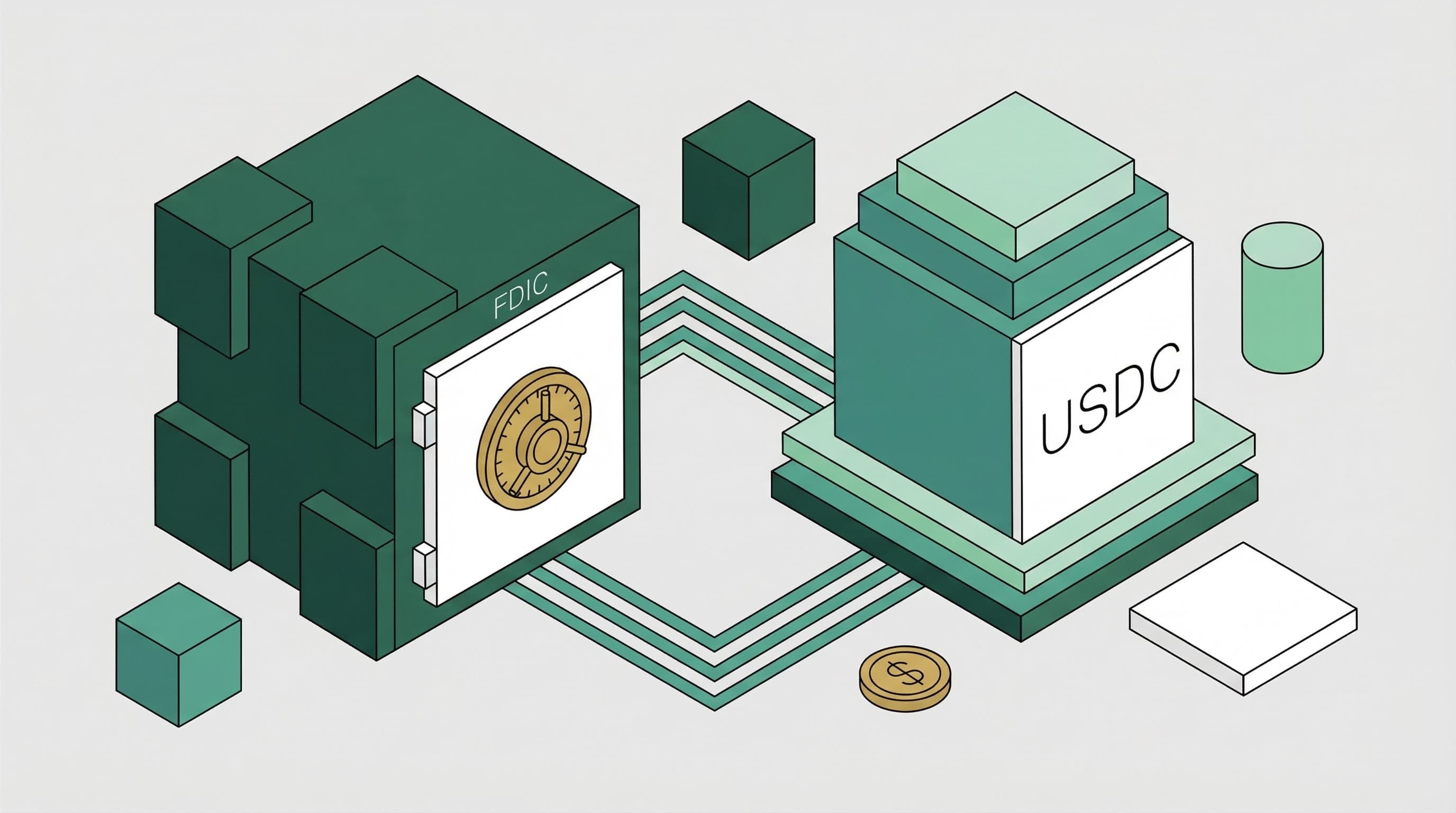
Stablecoins power much of crypto’s dollar liquidity, but stablecoin designs differ, especially in regards to who holds the keys.
Centralized vs decentralized stablecoins differ by issuer: centralized tokens rely on offchain reserves, while decentralized tokens use onchain collateral and smart-contract rules.
In this article, you will learn the differences between centralized vs decentralized stablecoins, how stablecoin pegs hold, where risks concentrate, and how to pick a stablecoin for trading, DeFi, or payments.
Key Takeaways
Centralized stablecoins scale fast because issuers manage reserves and redemption, but users take issuer and custodial risk.
Decentralized stablecoins reduce reliance on a single company by using onchain collateral and rules, but they introduce collateral volatility and liquidation risk.
Many users may end up using both models, matching the stablecoin design to custody needs, compliance constraints, and DeFi strategy.
Centralized vs Decentralized Stablecoins: Core Differences
As of January 2026, total stablecoin market cap is about $308 billion, showing how important stablecoins are in crypto markets. Size does not equal safety, and the key differences come from how each design manages risk and trust. Both aim for a stablecoin peg, but they rely on different mechanisms and assumptions.
Centralized stablecoins are issued by a legal entity and typically backed by offchain reserves; decentralized stablecoins are minted by smart contracts and typically backed by onchain collateral and rules, though many designs still depend on centralized components.
What Centralized Stablecoins Are
Issuance and Reserve Model
Centralized issuers mint tokens when approved customers deposit dollars and burn tokens on redemption. Redemption ties the token to $1, but limited access can make the price depend more on exchanges. USD₮ is an example of a centralized stablecoin used widely in this model.
Issuers often hold cash and short-dated government securities with custodians. Reserve quality affects redemption speed, but banking access and legal terms still matter.
Off-Chain Backing and Custodial Reserves
Backing assets sit offchain in bank accounts or custody arrangements. This adds dependency on institutions and laws, so disruptions can delay redemptions even if the token trades near $1.
Disclosures help, but uncertainty remains. Attestations vary in scope and timing, so users should compare reporting frequency and the credibility of assurance.
Control and Governance Structure
Centralized stablecoins often have admin controls like pausing transfers or blocking addresses. This supports compliance, but reduces censorship resistance regardless of the underlying chain’s consensus.
Key decisions are centralized, including banking partners and reserve rules. Users do not vote like in a DAO, which can speed action but concentrates risk.
Role of Issuers, Banks, and Regulators
Centralized issuers connect crypto markets to regulated finance. Regulation shapes access through AML (anti-money laundering), sanctions, and disclosure requirements, with supervisors focusing on reserves and resilience.
In June 2024, the EU’s MiCA framework began applying regulations to some stablecoin types, including authorization and disclosure expectations for issuers of e-money tokens and asset-referenced tokens. Rules vary by jurisdiction and can affect listings and custody support.
Common Use Cases and Adoption Drivers
Centralized stablecoins lead on many exchanges due to deep liquidity and familiar dollar pricing. Liquidity tends to reinforce dominance. Tether stated circulating USD₮ supply was over $174 billion as of September 30, 2025, which illustrates how quickly demand can scale when distribution is wide.
They are also used for payments and treasury needs requiring fast dollar settlement. Speed helps cross-border transfers, but depends on reliable minting, redemption, and banking rails.
What Decentralized Stablecoins Are
Decentralized stablecoins are DeFi stablecoins minted by smart contracts, usually against onchain collateral. No single issuer holds bank reserves, and many designs use overcollateralization to handle volatility. USDS for example, is minted through an onchain protocol using collateral and rules.
Users hold a token backed by collateral and incentives, not a legal claim on a company. The peg relies on liquidation rules, fees, and arbitrage, plus reliable oracles and liquidity.
Onchain Issuance via Smart Contracts
Users lock collateral and mint stablecoins as debt. Minting can be permissionless, but cross-chain use can add bridge and deployment risk.
Rules are visible in code, yet outcomes depend on prices from oracles. If oracles fail, the system can misprice risk and trigger harmful liquidations.
Overcollateralization and Protocol Rules
Overcollateralization means posting more collateral value than stablecoins minted. Buffers help, but sharp drops or thin liquidity can erase them before liquidations complete.
Protocols set collateral ratios, fees, and allowlists. These parameters are policy choices, so loose settings raise fragility and strict settings can limit adoption.
Governance Without Central Issuers
Many decentralized stablecoins use governance tokens to adjust risk settings. Governance can be messy if voter incentives differ from stablecoin users.
DAOs can still be concentrated, so decentralization is a spectrum. Check who can upgrade contracts, change parameters, or trigger emergency actions.
DAOs, Immutable Code, and Protocol Parameters
Some projects aim for immutable code to reduce admin abuse, but that can block needed fixes. Others use upgrades with timelocks and multisigs, which can add safety but reintroduce trusted roles.
Parameters reflect assumptions about liquidity and correlations, and model risk is real. Strong designs plan for crashes, oracle outages, and liquidation congestion.
Primary Use Cases Within DeFi
Decentralized stablecoins are used in lending, trading, and onchain strategies. Composability is the key benefit, especially for self-custody users who want to stay onchain.
Demand can be cyclical, and incentives can inflate supply in booms and shrink it in stress. That is why collateral and liquidation design matter.
How Centralized Stablecoins Maintain Their Peg
Minting and Redemption Processes
Direct minting and redemption are usually limited to approved customers. Limited access can concentrate arbitrage among a small group, while most users rely on exchanges and brokers.
Redemption terms matter most in stress. Clear legal terms reduce panic, while unclear terms can accelerate sell-offs.
Because redemption access and legal terms can change by jurisdiction, it helps to view stablecoin rules side by side. The stablecoin regulation map provides a quick, high-level view of how key markets approach stablecoin regulation and issuer obligations.
Reserve Management and Auditing Practices
Issuers reduce run risk by holding liquid assets and publishing reserve reports or attestations. Transparency helps, but quality varies, so users should look for frequent reporting and credible assurance.
For example,Tether publishes periodic reserve reports and transparency updates for USD₮. Users should read the details because reserve composition, counterparties, and reporting scope influence how quickly assets can be liquidated to meet redemptions.
On 31 October 2025, Tether reported “excess reserves” as a buffer alongside its reserve disclosures, which is relevant to stress scenarios.
Dependency on Legacy Financial Infrastructure
Centralized stablecoins depend on banks, custodians, payment systems, and settlement. Banks are a chokepoint, so freezes or degraded rails can disrupt redemptions.
Policymakers warn about run risk and spillovers. Large redemptions can force reserve asset sales, which is why liquidity and operational readiness matter.
How Decentralized Stablecoins Maintain Their Peg
Collateral Types and Risk Profiles
Collateral can include volatile crypto assets and other onchain tokens. Correlation is a major risk because many assets fall together, so protocols use conservative ratios that can reduce efficiency.
Liquidity matters as much as volatility because liquidations need buyers. Thin markets can cause slippage even when oracles function normally.
Crypto-Backed vs Hybrid Models
Pure crypto-backed models minimize offchain trust, but inherit crypto volatility. Hybrid models may improve stability but add new dependencies.
Labels can mislead, so inspect the backing. A “decentralized” stablecoin that relies on centralized collateral can inherit fiat-backed style risks.
Liquidation Mechanisms and Incentives
Liquidations sell collateral when positions fall below thresholds. This keeps debt backed and helps defend the peg, often through auctions or automated sales.
Liquidations rely on keepers, blockspace, and timely oracle updates. Congestion can turn small gaps into large losses, so safeguards matter but add trade-offs.
Market Dynamics and Price Stability Controls
Decentralized stablecoins rely on arbitrage across DEX pools and lending markets. If liquidity fragments across chains, arbitrage weakens and off-peg periods can last longer.
Protocols may add variable rates, supply caps, or incentives. These tools can help or hurt depending on timing, so treat them as levers, not guarantees.
Centralized vs Decentralized Stablecoins: Risk Trade-Offs
Counterparty and Custodial Risk
Centralized stablecoin users face issuer, custodian, and legal risks. Even strong reporting cannot prevent banking disruptions or disputes that delay redemptions.
Decentralized stablecoin users face smart-contract and governance risks. Bugs and bad integrations can drain funds, and audits do not remove all risk.
Market Volatility and Collateral Risk
Crypto collateral can drop fast and together, straining overcollateralized designs. If prices fall faster than liquidations execute, the system can become undercollateralized.
Centralized stablecoins can face stress when reserves are questioned or hard to access quickly. Fear of delayed redemption can trigger runs.
Systemic Risk and Single Points of Failure
Centralized stablecoins can become systemic if a few tokens dominate trading and settlement. Disruptions can ripple across exchanges, lending, and payments, and redemptions can pressure reserve markets.
Decentralized systems can also have single points like oracles, multisigs, or key liquidity pools. Map dependencies to understand what must work for the peg to hold.
Transparency and Trust Assumptions
Proof of Reserves vs Onchain Verifiability
Proof of reserves is evidence that an issuer holds backing assets, but it can be incomplete if liabilities or constraints are missing. It works best with strong redemption rights and credible assurance.
Onchain verifiability lets anyone inspect collateral and protocol state, but it cannot prevent losses from crashes or failed liquidations. Combine onchain checks with stress scenarios.
User Trust in Institutions vs Trust in Code
With centralized tokens, you trust banks, regulated entities, and contracts. Law is the fallback, but it can be slow and jurisdiction-specific.
With decentralized tokens, you trust smart contracts, governance, and incentives. Code can fail or change through upgrades, so governance and security practices matter.
Censorship Resistance and User Control
Wallet Freezing and Blacklisting Capabilities
Some centralized stablecoins can block transfers to or from certain addresses. This supports compliance and fraud response, but it can also affect users caught by mistakes or broad actions.
Freezes can happen due to errors, upstream exposure, or policy shifts. Users should treat this as a core design trade-off.
Permissionless Access and Self-Custody
Decentralized stablecoins are often accessible to anyone with a wallet. This expands reach and supports DeFi workflows without issuer approvals.
Permissionless access shifts responsibility to users. Wallet security, contract risk, and liquidation rules become your problem, especially when using leverage.
Regulatory Exposure and Compliance Considerations
How Regulations Shape Centralized Stablecoins
Many frameworks emphasize governance, reserve quality, redemption, and risk management. Issuers are targeted because regulators can supervise legal entities, which can raise standards but increase compliance burdens.
In June 2024, MiCA introduced regulations affecting certain stablecoins in the EU. Rules change across regions, so compliance status is time-sensitive. For a quick way to compare how major jurisdictions approach stablecoin rules, the stablecoin regulation map can help place these differences in context.
Legal Ambiguity Around Decentralized Models
Decentralized stablecoins can be hard to classify when no issuer promises redemption. Legal claims may not exist like they do for issuer-backed tokens, so regulators may focus on control points like front ends or keyholders.
Even if contracts are permissionless, enforcement can move to exchanges and custodians. These chokepoints can limit access and liquidity.
Economic Design and Monetary Implications
Centralized Stablecoins as Digital Bank Liabilities
Centralized fiat-backed stablecoins can resemble fully backed private liabilities. Redemption supports stability, and the main value is fast settlement and global reach.
As of January 5, 2026, Circle reports USDC in circulation at about $75.8 billion. Scale increases scrutiny of reserves, disclosures, and operational resilience.
Decentralized Stablecoins as Digitally Native Money
Decentralized stablecoins are native to smart contracts, from issuance to risk controls. They support programmable money inside DeFi without issuer approvals.
Weak spots appear in extreme markets. When liquidity dries up or prices gap down, liquidation capacity and market structure can matter as much as code.
Choosing Between Centralized and Decentralized Stablecoins
Liquidity, Scale, and Payment Efficiency
Centralized stablecoins usually offer the deepest liquidity and broadest exchange support, which can reduce slippage and make large trades easier. They also tend to integrate more smoothly with business workflows that require compliance and reporting.
Decentralized stablecoins can be efficient inside DeFi and across onchain apps, but liquidity may be more fragmented and can vary by chain and venue.
Financial Sovereignty and Protocol-Level Transparency
If you want more censorship resistance and self-custody, decentralized stablecoins reduce reliance on an issuer, but increase contract and collateral risk. You should also watch governance and collateral changes.
If you want clearer accountability and common compliance features, centralized stablecoins may fit better. The trade is more exposure to blacklisting and jurisdictional rules.
Matching Stablecoin Design to User Priorities
Traders often want liquidity, tight spreads, and smooth deposits and withdrawals. Fiat-backed stablecoins are common here, but disclosures and terms still matter.
DeFi users often want composability and permissionless access. Decentralized stablecoins can reduce issuer controls, but increase liquidation and oracle risk.
The Long-Term Coexistence of Stablecoin Models
Both models solve different problems, so both are likely to persist. A mixed stablecoin landscape is more realistic than a single winner.
Centralized stablecoins persist because they integrate with regulated finance and scale through major platforms. They often bridge bank dollars and onchain settlement.
Decentralized stablecoins persist because they enable permissionless finance. They provide self-custody, composable units that are hard to replace inside DeFi.
Policymakers increasingly treat stablecoins as payment and stability infrastructure. Rules will evolve as more jurisdictions set standards and respond to stress events.
For users, multiple digital dollar options will likely coexist. Learn the mechanics, monitor risks, and pick the stablecoin that matches the task.
Disclaimer: This article is for educational purposes. It is not legal, tax, or investment advice.