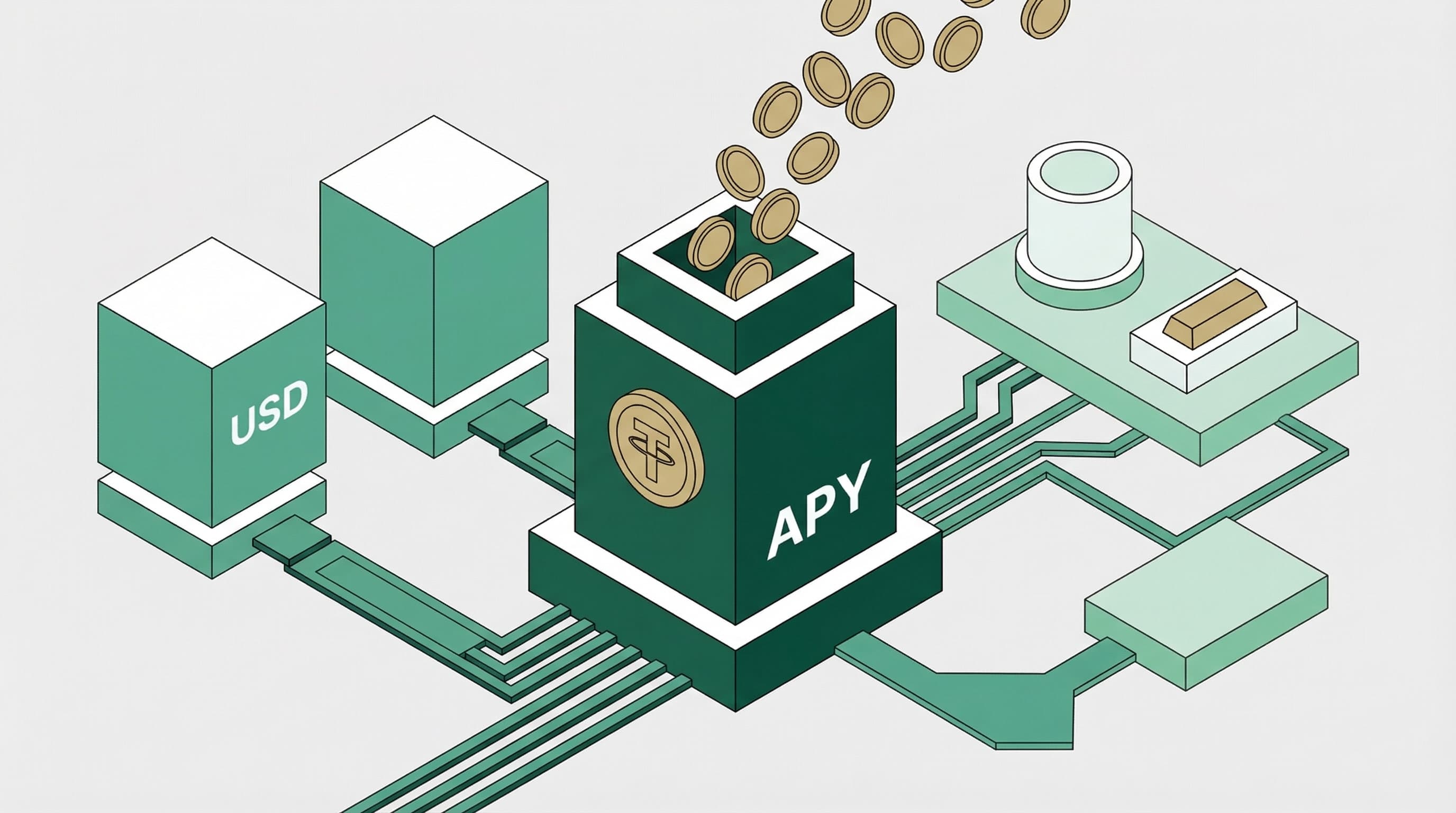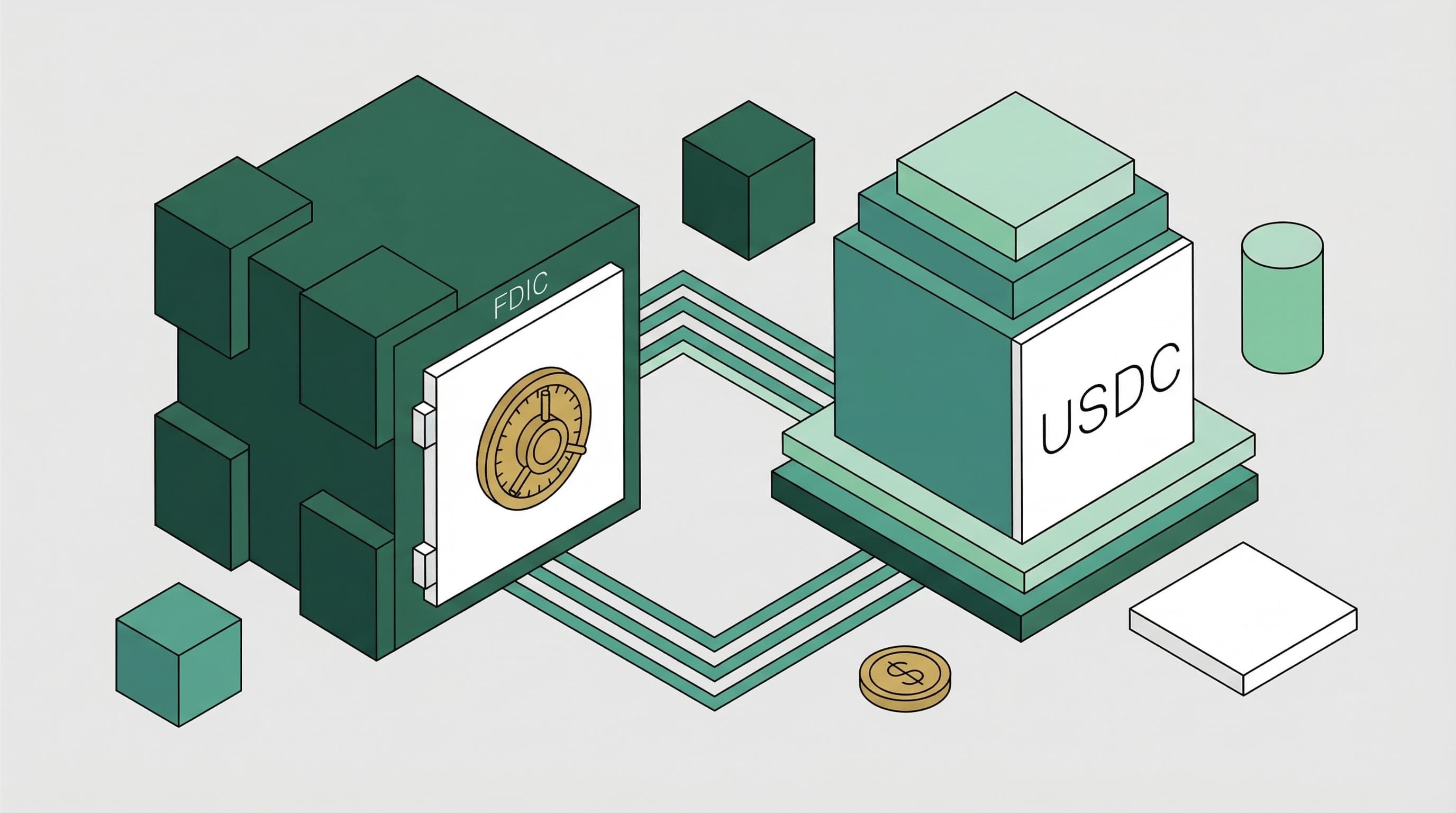
Stablecoins offer access to fiat-pegged currencies such as the U.S. dollar on blockchain rails. One of the most ambitious attempts at maintaining this stability is the algorithmic stablecoin.
Algorithmic stablecoins aim to maintain a stable value by dynamically adjusting their supply through algorithms and smart contracts, without relying solely on collateral assets. This approach contrasts with traditional stablecoins that hold fiat reserves in banks or other assets.
Read on to learn how algorithmic stablecoins function, their key benefits and risks, and their troubled history. Algorithmic stablecoins may have fallen out of favor but they provide a fascinating case study in stablecoin innovation.
Key Takeaways
Algorithmic stablecoins use automated supply adjustments to achieve price stability, offering a decentralized alternative to collateral-backed models.
While they align with crypto's non-custodial ethos, they carry risks such as de-pegging and reliance on market confidence.
Innovations in DeFi and regulatory developments will shape their future, with potential for greater stability through hybrid approaches and specialized infrastructure.
Understanding Algorithmic Stablecoins
What Algorithmic Stablecoins Are
Algorithmic stablecoins are digital assets engineered to hold a consistent value, usually pegged to the U.S. dollar. This is achieved through programmatic rules rather than direct backing by reserves. In other words, these stablecoins are backed by code instead of collateral.
Unlike traditional money, which achieves price stability through government backing or commodity reserves, these stablecoins employ algorithms to monitor market conditions and automatically alter the token's supply.
For instance, if the price rises above the peg, the algorithm might increase the supply to dilute value and bring it back in line. Conversely, if the price drops below the peg, supply is reduced to create scarcity and support the value.
This self-regulating system is executed via smart contracts on blockchain networks like Ethereum, ensuring transparency and automation without human intervention.
The goal is to create a stable medium of exchange that embodies the principles of decentralization while minimizing the need for external custodians.
How They Differ from Other Stablecoins
Algorithmic stablecoins distinguish themselves from other stablecoin categories through their reliance on code rather than tangible assets.
Fiat-backed stablecoins such as USD₮ or USDC maintain stability by holding equivalent reserves in U.S. dollars or dollar-denominated assets in audited bank accounts. This model offers high reliability but introduces centralization risks, as users must trust issuers and regulators.
Crypto-backed stablecoins, like DAI from MakerDAO, are over-collateralized with other cryptocurrencies such as ETH that’s locked in smart contracts. They achieve decentralization but require excess collateral to buffer against volatility, which can be capital-intensive.
Hybrid models blend elements of both, incorporating partial collateral with algorithmic adjustments for added flexibility.
Algorithmic stablecoins aim for pure decentralization by eschewing collateral entirely or using it minimally, focusing instead on market dynamics and incentives. This makes them more innovative but potentially riskier, as their stability hinges on algorithmic precision rather than asset reserves.
How Algorithmic Stablecoins Work
Supply Adjustment Mechanisms
At the core of algorithmic stablecoins is the supply adjustment mechanism, which responds to price deviations from the target peg. These mechanisms can involve expanding or contracting the total circulating supply based on real-time market data.
For example, if demand pushes the price above $1, new tokens are minted and distributed to holders or sold on the market to increase supply and lower the price. If the price falls below $1, tokens are burned or bought back, reducing supply to drive the price up.
This elastic supply model mimics central bank monetary policies but operates autonomously onchain, ensuring rapid responses without intermediaries.
The Role of Smart Contracts and Algorithms
Smart contracts are the backbone of algorithmic stablecoins, automating the rules that govern stability. These self-executing contracts encode algorithms that continuously monitor oracle-provided price feeds and execute adjustments.
Algorithms might use mathematical models, such as proportional-integral-derivative (PID) controllers, to fine-tune supply changes and prevent overcorrections. Oracles, which fetch offchain data like exchange prices, are crucial but introduce potential vulnerabilities if manipulated.
The design of algo-stablecoins ensures operations are transparent and auditable as well as making them resistant to censorship.
Importance of Market Incentives and Arbitrage
Market incentives and arbitrage opportunities are vital for maintaining the peg in algorithmic stablecoins. Participants are encouraged to buy or sell tokens when prices deviate, profiting from the eventual correction.
For instance, if the stablecoin trades below its peg, arbitrageurs can purchase it cheaply and redeem it for assets at the target value, pocketing the difference. These incentives align user actions with the protocol’s goals, fostering a self-sustaining ecosystem.
In low-liquidity or panicked markets, arbitrage may fail, leading to instability.
Main Types of Algorithmic Stablecoins
Rebasing Models
Rebasing models adjust the token supply directly in users’ wallets to maintain stability. Instead of minting or burning tokens selectively, the protocol proportionally changes the balance of all holders daily based on price targets.
This “elastic supply” approach ensures the token's value remains stable while the quantity fluctuates, appealing to long-term holders who value purchasing power over fixed quantities.
Example: Ampleforth (AMPL)
Ampleforth (AMPL) is a prime example of a rebasing model, targeting a price pegged to the U.S. dollar's purchasing power adjusted for inflation. Every 24 hours, the protocol rebases by expanding or contracting supply based on the token's market price relative to its target.
If AMPL trades above the target, holders receive more tokens; if below, balances decrease proportionally. This non-dilutive mechanism encourages arbitrage and has positioned Ampleforth as a "synthetic commodity" in DeFi.
Seigniorage or Dual-Token Models
Seigniorage models, inspired by government revenue from minting money, use a dual- or multi-token system to manage stability. Typically, there's a stable token and a volatile “share” token that absorbs price fluctuations.
When the stablecoin's price rises, new stable tokens are minted and sold for share tokens; when it falls, bonds are issued to buy back and burn stablecoins, rewarding shareholders over time.
Example: Basis Cash, TerraUSD & LUNA
Basis Cash (BAC) exemplifies seigniorage with a three-token model: BAC (stable), Basis Shares (BAS, for governance and rewards), and Basis Bonds (BAB, for stability during contractions).
TerraUSD (UST) and LUNA operated similarly, with UST as the stablecoin and LUNA as the backing token that could be burned to mint UST or vice versa. This model aimed for scalability but proved vulnerable, as seen in Terra's collapse.
Fractional-Algorithmic Models
Fractional-algorithmic models combine partial collateral with algorithmic adjustments, utilizing a hybrid mechanism to maintain stability. The collateral ratio dynamically shifts based on market conditions, using reserves like USDC alongside algorithms to maintain the peg.
Example: Frax (FRAX)
Frax (FRAX) pioneered this approach, maintaining a collateral ratio that floats between 0% and 100% depending on demand. It uses Frax Shares (FXS) for governance and seigniorage rewards, allowing the protocol to algorithmically adjust when fully collateralized isn't necessary.
This capital-efficient design has helped FRAX integrate deeply into DeFi and become a widely-used stablecoin within the EVM ecosystem.
Benefits of Algorithmic Stablecoins
Decentralization and Transparency
One of the primary advantages of algorithmic stablecoins is their high degree of decentralization, as these assets operate without reliance on centralized custodians or banks. All mechanisms are encoded in open-source smart contracts, allowing anyone to audit the code and verify operations.
This transparency reduces counterparty risk and aligns with blockchain's trustless ethos. In this respect, they are closer in design to traditional cryptocurrencies that have no central issuer.
Capital Efficiency and Scalability
By minimizing or eliminating the need for full collateral, algorithmic stablecoins are more capital-efficient, freeing up resources for other DeFi activities. They can scale supply infinitely based on demand without locking up vast reserves.
Due to these characteristics, algo-stablecoins that perform reliably are suited to high-volume use cases such as lending or payments.
Alignment with Crypto’s Original Ethos
Algorithmic stablecoins embody the core principles of cryptocurrency: permissionless, borderless, and free from centralized control. They promote financial sovereignty by using algorithms to democratize money creation, rather than relying on banks and governments.
Risks and Limitations
De-Pegging and “Death Spirals”
A major risk with all stablecoins, but algo-stables especially, is de-pegging, where the stablecoin loses its target value. While algorithmic stablecoins are more volatile in general due to their design, they are not intended to deviate significantly from their price peg.
When an algo-stable moves significantly away from its target price, there’s the potential for it to trigger a “death spiral” of cascading sell-offs. Without sufficient collateral, small deviations can amplify through panic, eroding confidence.
Dependence on Market Confidence and Arbitrage
The stability of algorithmic stablecoins relies heavily on participant trust and arbitrage efficiency. In bear markets or low-liquidity scenarios, arbitrageurs may hesitate to step in, allowing deviations to persist and worsen.
Lack of Collateral Safety Net
Unlike crypto or fiat-backed stablecoins, algorithmic ones lack a tangible safety net, making them more susceptible to black swan events. This exposes users to total loss if the algorithm fails. As a result, when an algo-stable runs into difficulties, these can prove terminal rather than temporary.
Historical Failures and Lessons Learned
The notorious TerraUSD and LUNA collapse in May 2022 exemplifies the risks of algo-stables, where a de-peg triggered a $50 billion wipeout. This collapse highlighted a litany of vulnerabilities and the need for robust liquidity pools and hybrid designs to mitigate pure algorithmic vulnerabilities.
Real-World Examples and Case Studies
TerraUSD and LUNA Collapse
The Terra ecosystem’s downfall began when UST de-pegged amid massive sell pressure, leading to a hyperinflationary spiral in LUNA as users burned it to mint more UST.
Factors such as concentrated whale activity, well-funded players “bullying” the market, and insufficient reserves amplified the crash, highlighting the perils of over-reliance on algorithmic balancing.
Ampleforth and the Elastic Supply Model
Ampleforth’s rebasing has shown resilience in volatile markets, with its elastic supply absorbing shocks without permanent de-pegs. However, it has faced criticism for not achieving true dollar stability, functioning more as a volatility-transferring asset.
As such, AMPL is essentially a “pseudo-stable” that functions somewhere between a stablecoin and a cryptocurrency.
Frax and the Hybrid Approach
Frax has maintained its peg effectively by dynamically adjusting its collateral ratio, leading to it being widely integrated into DeFi protocols. Its success demonstrates how fractional models can balance decentralization with safety.
The Future of Algorithmic Stablecoins
Regulatory Scrutiny and Policy Outlook
As stablecoins grow, regulators worldwide are increasing oversight to address risks like money laundering and systemic threats. In the U.S., frameworks like the GENIUS Act demand transparency and fully audited reserves, favoring fiat-backed stables and hybrids over pure algorithms.
Potential for Innovation in DeFi
Despite their weaknesses, algorithmic stablecoins still hold promise within DeFi, enabling automated lending, yield farming, and cross-chain payments without relying on centralized issuers. The introduction of innovations such as AI-driven algorithms have the potential to enhance stability.
Can Algorithmic Stablecoins Achieve Long-Term Stability?
While there are still challenges that must be overcome for algo-stables to be widely trusted, advancements in areas such as oracles and liquidity incentives suggest they still have a future.
As it stands, algorithmic stablecoins are arguably a promising idea that was implemented before the tech was in place to render them shock-resistant and capable of withstanding challenging market conditions and so-called black swan events.
What the Future Holds for Algorithmic Stablecoins
Algorithmic stablecoins represent a bold experiment in decentralized money, taking advantage of the programmability that smart contracts offer in creating highly efficient money markets.
A well designed algo-stable has the potential to offer unparalleled efficiency and autonomy, but a degree of risk will likely always remain, lurking beneath the surface. For this reason, their adoption is likely to be limited for the foreseeable future.
As the crypto space matures, lessons from past failures like Terra will inform more robust designs, blending algorithms with partial collateral for enhanced reliability. In the meantime, stablecoin designers have been looking to innovate in other ways that don’t materially increase risk.