Executive Summary & Quick Verdict
Winner: KAST. KAST is the stronger choice for someone applying now because its card program is active, its USD spending costs are clearly published, and its account offers broad bank-transfer and stablecoin funding options.
Choose KAST if: You want simple USD-based spending, cashback paid in USD, broad bank-transfer rails, and no token lock for the card tiers.
Choose Fizen if: You already have access to the card and value a non-custodial wallet, strong promotional FiPoint rewards, QR Pay, travel tools, and a USD₮-focused app.
The Bottom Line: KAST is easier to choose today because new Fizen card creation is temporarily paused.
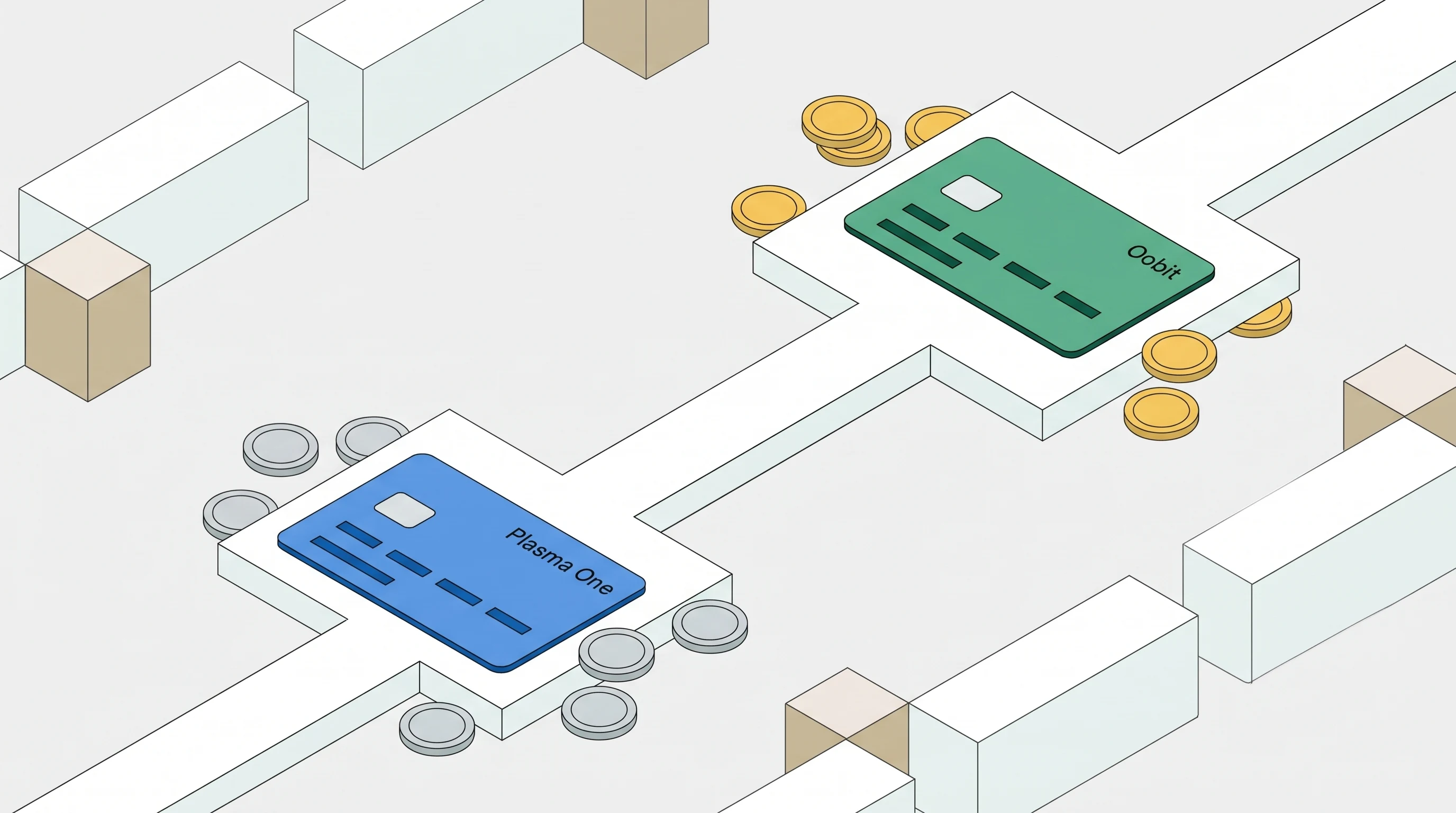
Plasma One is a third option for users who want a non-custodial setup by default, Lite pricing that varies by region and may be free, optional stablecoin yield, and tiered cashback currently paid in XPL.
KAST vs Fizen at a Glance
Feature | KAST | Fizen |
Card Network | Visa | Visa |
Custody Model | Partner-managed (Earn vaults non-custodial) | Fizen wallet is non-custodial, but the card is funded by a Fizen-held USD₮ balance |
Yield / Return on Balance | KAST Earn: up to 7% variable rate via non-custodial vaults. KAST Reserve: introductory cashback rewards of 8%, up to 10% on the first $50,000, and up to 12% on the first $200,000; promotional and subject to a $100M total Reserve-deposit threshold. | No live yield product; Fizen lists a USD₮ Vault with a 5% APR bonus for Adventure cardholders as coming soon |
FX / Conversion Fees | 0.5%–1.75% depending on country and currency | 1% on non-USD payments per Fizen’s fee table (some marketing pages advertise 0% FX); top-ups free apart from network gas fees |
Crypto Conversion Fee | 0% spread on stablecoin deposits (1:1); other assets: varies by token and is shown before confirmation | 0.5% crypto-to-fiat per Fizen’s fee table (marketing pages advertise 0%); card funded with USD₮ or USDC on Solana |
Staking / Lock-In Required | None for Standard membership or Reserve access | No token stake required for the current card or FiPoint campaign |
Regional Availability | Card usable at 150M+ merchants in 170+ countries; account availability varies by jurisdiction. | Availability varies by country; not offered to US Persons; new card creation is temporarily paused |
Fees, rates and limits as of October 2026. Terms vary by region and may change.
KAST vs Fizen: Key Differences
1. Fees & Costs
KAST has the stronger entry-level cost structure. Standard membership is free and includes 1.5% cashback on the first $2,000 of eligible monthly spend.
It includes up to two Standard virtual cards, although a $2 issuance fee applies in some regions. A Standard physical card has a $0 card fee plus $40 delivery.
KAST's Premium costs $1,000 per year and Private costs $10,000, so KAST becomes considerably more expensive at the top end.
Fizen’s fee table lists a $9.99 virtual card fee (waived for pre-registered users), a $1.50 monthly fee unless you spent $500 or more the previous month, a 1% FX fee on non-USD payments and 0.5% crypto-to-fiat conversion.
Some Fizen marketing pages advertise 0% FX and 0% conversion, so check the in-app fee schedule before relying on either figure.
The practical issue is availability. New Fizen card creation is temporarily paused while Fizen builds its next-generation card.
2. Yield, Cashback & Rewards
KAST Standard earns 1.5% cashback on the first $2,000 of eligible monthly spend, Premium earns 2% on the first $10,000, and Private earns 3% on the first $40,000. Redeemed cashback can only be used inside KAST.
Reserve separately offers promotional cashback rewards of 8% on Standard, up to 10% on the first $50,000 on Premium, and up to 12% on the first $200,000 on Private.
Fizen’s cashback campaign pays 5% in FiPoint on eligible purchases of $50 or more and 1.5% below $50. Selected UK Uber purchases can earn 10%.
FiPoint has a monthly cap, expires after 30 days, and is redeemed through Fizen’s reward program. Fizen has the stronger headline card reward, but KAST’s USD cashback is simpler to value.
3. Custody, Security & Control
KAST is not a bank, and its public materials state that custody, cards and on/off-ramp services are provided through licensed partners. The account itself remains within KAST’s managed infrastructure rather than being a non-custodial wallet.
Fizen’s wallet is non-custodial, so users control wallet keys and assets held there. The card itself is different: Fizen describes a USD prepaid Visa funded by a Fizen-held USD₮ balance.
That means neither product uses the same custody model across every feature. Fizen offers stronger wallet control, while KAST uses a more conventional provider-managed spending account.
4. Usability & Regional Availability
KAST’s strongest usability advantage is reach. It advertises card usage at 150 million merchants across 170+ countries, although account eligibility varies by jurisdiction. KAST also supports Apple Pay and Google Pay.
Fizen combines payments with travel tools, including QR Pay, eSIMs, card spending, and gift-card rewards. It markets card use in 160+ countries at 150M+ merchants, but new card creation is currently paused.
KAST takes the edge here because card creation remains open. Both cards run on Visa and support Apple Pay and Google Pay, but Fizen’s paused issuance limits new users regardless of its travel features.
Pros & Cons Comparison
KAST
Pros:
Simple USD-based spending experience
Cashback paid directly in USD
Broad card, ATM, stablecoin, and bank-transfer functionality
Stablecoin deposits convert to USD at 1:1 with 0% spread
Cons:
Partner-managed spending account reduces direct user control
Premium and Private tiers can be expensive
FX and ATM costs can reduce reward value
Fizen
Pros:
Non-custodial wallet control
Promotional FiPoint rewards on eligible card spending
Broader travel utility through QR Pay, eSIMs, and gift-card features
Cons:
New card creation is temporarily paused
FiPoint rewards expire and are subject to caps and redemption conditions
Card spending uses a Fizen-held USD₮ balance rather than the non-custodial wallet balance
Where Both Cards Fall Short
Both products rely on separate card-program infrastructure. KAST uses partner-managed spending services, while Fizen’s card is funded through a Fizen-held USD₮ balance rather than the user’s non-custodial wallet balance.
Both also make headline rewards conditional. KAST uses tier caps and a time-limited Reserve promotion, while Fizen uses a campaign with caps, expiry rules, and reward-redemption conditions.
Availability is another shared limitation. Eligibility depends on country and card-program rules, so merchant acceptance does not mean every resident can open the account.
The Dilemma: KAST is active and easier to evaluate today, but uses a partner-managed spending model. Fizen gives users a non-custodial wallet and stronger promotional rewards, but new card creation is paused.
Why Choose Plasma One Over KAST and Fizen?
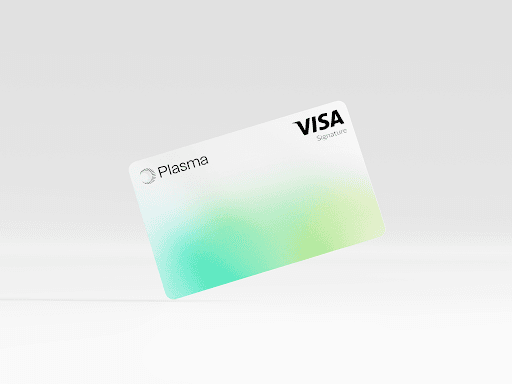
Plasma One offers a middle ground with non-custodial stablecoin balances, an active Visa card, and optional Earn without KAST’s provider-managed balance or Fizen’s paused onboarding.
1. Non-Custodial Stablecoin Balances for Everyday Spending
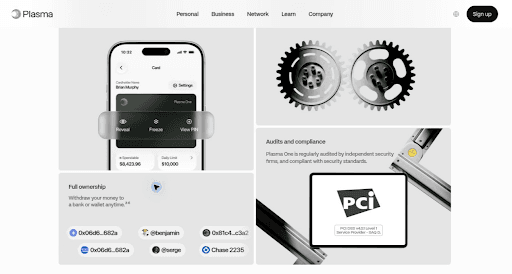
Plasma One does not custody stablecoins held in the account. The stablecoin balance remains user-owned, while the card operates alongside that account.
KAST uses a partner-managed spending account, while Fizen’s card terms describe a Fizen-held USD₮ balance. Plasma One keeps the card-spending custody model simpler.
2. An Active Card With a Defined Tier Path
Plasma One uses Lite, Core, and Platinum. Lite pricing varies by region and may be free, Core costs $199 per year or a 20,000 XPL lock for 12 months, and Platinum currently requires a 100,000 XPL lock for 12 months.
KAST’s upper tiers cost $1,000 and $10,000, while new Fizen card creation is temporarily paused. Plasma One’s Core tier costs $199 per year, compared with $1,000 for KAST Premium, though Platinum currently requires an XPL lock rather than an annual cash fee.
3. Optional Earn Without Promotional Reward Redemption
Plasma One offers up to 6% variable yield through opt-in Earn. The rate is not guaranteed and third-party DeFi risks apply.
KAST advertises higher promotional returns, while Fizen’s FiPoint cashback has expiry and redemption conditions. Plasma One separates Earn from its card-reward mechanics.
Three-Way Head-to-Head Matrix
Feature | KAST | Fizen | Plasma One |
Card Network | Visa | Visa | Visa |
Custody Model | Partner-managed (Earn vaults non-custodial) | Non-custodial wallet; card funded by a Fizen-held USD₮ balance | Non-custodial (you own and custody your stablecoins) |
Yield / Return on Balance | Earn: up to 7% variable. Reserve: introductory 8%, up to 10% on the first $50,000, and up to 12% on the first $200,000, subject to a $100M deposit threshold | No live yield product; Fizen lists a USD₮ Vault with a 5% APR bonus for Adventure cardholders as coming soon | Up to 6% variable via opt-in Earn |
FX / Conversion Fees | 0.5% to 1.75%, depending on country and currency | 1% on non-USD payments; 0.5% crypto-to-fiat (Fizen marketing advertises 0%) | Lite: ~2% total (1% Plasma + ~1% Visa); Core: ~1.5% total (0.5% Plasma + ~1% Visa); Platinum: 0% FX fee, Visa exchange rate applies |
Staking / Lock-In Required | None | None for the current card or FiPoint campaign | None on Lite; Core $199/yr or 20,000 XPL lock; Platinum 100,000 XPL lock |
Regional Availability | 170+ countries, including the US, subject to eligibility | Availability varies by country; not offered to US Persons; new card creation temporarily paused | Most countries; 7 unsupported and ID-document restrictions in others. 31 US states |
On / Off-Ramp | Bank deposits: ACH $2, FedWire $15, SWIFT $30, SEPA 0.5% | Buy/sell routes include P2P and Transak where available; card top-up supports USD₮ or USDC on Solana | In-app USD bank on/off-ramp; tiered fees apply |
Fees, rates and limits as of October 2026. Terms vary by region and may change.
Final Verdict: Which Should You Pick?
KAST wins the head-to-head for someone choosing a card now. Its active card program, clear USD pricing, broad transfer rails, and published rewards make it the more practical current option.
Choose KAST if you want USD cashback, active card issuance, stablecoin-to-USD conversion, and broad banking-style payment rails without token locking.
Choose Fizen if you already have access and value a non-custodial wallet, stronger promotional FiPoint rewards, QR Pay, and travel features. Its card creation pause makes it harder to recommend to a new applicant today.
Choose Plasma One if you want non-custodial stablecoin balances, an active card program, and optional Earn without KAST’s partner-managed spending balance or Fizen’s current onboarding pause.
How to Get Started With Plasma One
Download Plasma One: Install the app, complete identity verification, and create a virtual card.
Deposit Stablecoins: Fund your account, and optionally move eligible stablecoins into Earn for variable yield.
Start Spending Globally: Add the card to Apple Pay or Google Pay where supported and spend anywhere Visa is accepted, subject to regional eligibility and applicable fees.