Executive Summary & Quick Verdict
Overall Rating: 4 / 5
Best For: Crypto-native users who want 3% entry-tier cashback, non-custodial control, Visa Signature perks, and the choice to spend stablecoins directly or borrow against eligible assets.
Core Drawback: Borrow Mode adds variable interest and liquidation risk, while foreign-currency transactions can include a base FX rate plus an extra tier-dependent margin.
The Bottom Line: Ether.fi Cash is one of the stronger crypto cards for users comfortable with DeFi. Plasma One may suit users who prefer a simpler stablecoin-first account with optional Earn and no need to manage collateralized borrowing.
What Is ether.fi Cash?
Ether.fi Cash is a crypto-native Visa Signature credit card linked to an ether.fi membership Vault. The Vault is non-custodial, and ether.fi says it cannot access or move user funds.
The card is available across a broad list of supported countries and selected US states, subject to KYC. Users can choose Direct Pay for stablecoin spending or Borrow Mode to spend against eligible collateral.
Card Type: Virtual and physical credit cards.
Network: Visa Signature.
Custody Model: Non-custodial Vault controlled by the user.
Supported Assets / Currencies: Direct Pay supports USDC, USD₮, EURC, liquidUSD, liquidReserve, liquidEUR, frxUSD, and LiquidRWA.
Key Features & User Benefits
1. Rewards & Cashback Structure
Core members earn 3% cashback on the first $2,000 of eligible monthly USD spend, then 1% from $2,001 to $3,000 and 0.5% above $3,000.
Luxe extends the 3% band to $10,000 and Pinnacle to $50,000. Luxe and Pinnacle can be earned with points, deposits, or ETHFI staking without lockups, or bought for $199 and $999 per year, respectively. VIP cannot be purchased.
Cashback is calculated in dollar terms but currently paid in ETHFI after the applicable lock and claim process. Higher membership levels can also receive category cashback and additional travel benefits.
2. Supported Currencies & Conversion
Direct Pay lets users spend eligible assets directly from the Vault. Users can set spend priority across supported stablecoins and liquid assets.
Ether.fi also supports fiat funding and withdrawals through ACH, FedWire, SWIFT, SEPA, Faster Payments, PIX, SPEI, Interac, and other local rails.
When currency conversion is required, a prevailing FX base rate can apply, with an extra margin depending on membership level. EUR purchases currently have 0% FX on all levels, a feature ether.fi lists as beta.
3. Card Usability & Accessibility
Ether.fi Cash includes Apple Pay, Google Pay, custom spend limits, ATM access, and Visa Signature benefits such as concierge and purchase protection.
Core normally includes one free virtual card, though 14 listed regions charge $10 for the first card. Ether.fi's help pages differ on the Core physical card: newer pages list it as free with a shipping fee, while an older page lists $50. Eligibility still depends on KYC and jurisdiction.
The default daily card limit is $5,000, while the default account-level daily limit is $10,000. Users can adjust limits within the controls available to their account.
4. Direct Pay vs Borrow Mode
Direct Pay spends eligible stablecoin balances without creating a loan. Borrow Mode uses eligible assets as collateral, so card purchases can add to a loan balance.
Borrowed amounts accrue variable interest, and unhealthy positions can trigger liquidation. This adds capital flexibility, but it is more complex than a straightforward funded card.
Fee Structure & Limits
Fee / Limit | ether.fi Cash | Industry Average |
Card Issuance Fee | Core: first virtual card usually free; $10 in 14 listed regions. Core physical card: free plus shipping per ether.fi's latest help pages; an older help page lists $50 | Virtual: $0–$25, typically $0. Physical: $0–$100+, typically $0–$50. |
Monthly / Annual Fee | Core: first virtual card usually free; $10 in 14 listed regions. Core physical card: free plus shipping per ether.fi's latest help pages; an older help page lists $50 | Usually $0 on entry tiers. Paid entry-tier exceptions start around $25/year. |
Foreign Exchange Fee | Non-EUR foreign currency: prevailing FX base rate of around 1%, plus 0–0.5% Core or 0–0.25% Luxe markup; no added markup on Pinnacle/VIP. EUR purchases: 0% FX (beta) | 0%–3%, typically around 1%. |
Crypto Conversion Fee | No separate fixed spread published; eligible crypto is converted at point of sale in Direct Pay mode | Stablecoins: 0%–0.5%, typically 0%–0.1%. Other crypto: ~0.5%–1%, typically around 0.9%. |
ATM Withdrawal Fee | Core/Luxe fee not publicly disclosed; Pinnacle and VIP include up to 10 free withdrawals/month | 0%–3%, typically around 2%. Many cards include ~$100–$200/month free; some instead charge a ~$1–$3 flat fee. |
Daily Spending Limit | Default card limit: $5,000/day; default Vault limit: $10,000/day. Limits can be edited | About $5,000–$50,000, typically $10,000–$25,000. Some cards use higher or dynamic limits. |
Fees, rates and limits as of October 2026. Terms vary by region and may change.
Pros & Cons of ether.fi Cash
Pros
Strong entry rewards: Core is free and pays 3% cashback on the first $2,000 of eligible monthly USD spend.
Non-custodial control: Ether.fi says only the user can authorize transactions from the membership Vault.
Flexible spending: Direct Pay supports stablecoin spending, while Borrow Mode lets eligible users borrow against crypto instead of selling it.
Cons
Borrow Mode adds liquidation risk: Loans accrue variable interest and unhealthy collateral positions can be liquidated.
FX costs can stack: On non-EUR purchases, a base FX rate can apply alongside an extra Core or Luxe margin.
Membership economics are more complex: Luxe and Pinnacle are reached through points, deposits, ETHFI staking, or annual purchase, while VIP cannot be purchased.
Where ether.fi Cash Falls Short
The main drawback is complexity. Borrow Mode can turn card spending into a collateralized loan with variable interest, loan-to-value limits, and liquidation risk.
Foreign-currency spending also needs attention. On non-EUR purchases, Core can add up to 0.5% and Luxe up to 0.25% on top of the prevailing FX base rate. EUR purchases currently have 0% FX (beta).
Luxe and Pinnacle can be earned through points, deposits, or ETHFI staking, or purchased for $199 and $999 per year, respectively. The best-value path therefore depends on how the user engages with the wider ecosystem.
Key Takeaway: Ether.fi Cash offers strong rewards and non-custodial control, but users need to understand FX pricing, membership mechanics, and borrowing risk before using the card as a broader DeFi account.
Why Choose Plasma One Over ether.fi Cash?
Ether.fi Cash offers more DeFi flexibility. Plasma One is designed around stablecoin balances, card spending, optional Earn, and simpler tier progression without requiring users to manage a lending position.
1. Stablecoin Spending Without Borrowing Complexity
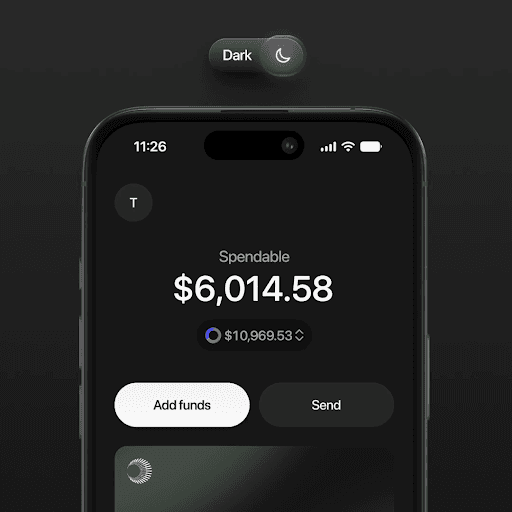
Plasma One does not require a separate DeFi borrowing position, although the stablecoin balance backing the card is owned and custodied by the user. Users can fund their account with supported stablecoins and spend without monitoring a loan-to-value ratio.
Ether.fi also offers Direct Pay, so borrowing is optional. Plasma One keeps the spending model narrower for users who do not need credit against crypto or want to monitor collateral.
This does not make Borrow Mode a weakness for every user. For experienced borrowers it can be useful, but Plasma One keeps ordinary card spending separate from loan management.
2. Lower Non-EUR FX Cost on Platinum
Plasma One Platinum charges 0% FX markup and no FX fee, converting at the Visa exchange rate with nothing added. Lite and Core cost about 2% and 1.5% in total, including Visa fees of around 1%.
Ether.fi removes its added markup on Pinnacle and VIP, but the prevailing FX base rate of around 1% still applies to non-EUR foreign-currency purchases. EUR purchases currently have 0% FX on all levels, a feature ether.fi lists as beta.
The trade-off is access. Platinum currently requires a 100,000 XPL lock for 12 months, while ether.fi Pinnacle can be bought for $999 per year or earned through points, deposits, or ETHFI staking.
3. A Simpler Card-Tier Structure
Plasma One uses Lite, Core, and Platinum. Lite pricing varies by region and may be free, Core costs $199 per year or a 20,000 XPL lock for 12 months, and Platinum currently requires a 100,000 XPL lock for 12 months.
Ether.fi has Core, Luxe, Pinnacle, and VIP. Luxe and Pinnacle can be reached through points, Liquid deposits, ETHFI staking, or annual purchase; VIP cannot be purchased.
Plasma One offers a simpler three-tier structure, though its higher tiers introduce their own XPL-lock trade-offs.
ether.fi Cash vs Plasma One at a Glance
Feature | ether.fi Cash | Plasma One |
Custody Model | Non-custodial Vault controlled by the user | Non-custodial (you own and custody your stablecoins) |
Yield / Return on Balance | Variable yield through Liquid and onchain lending products | Up to 6% variable through Plasma One Earn |
FX / Conversion Fees | Non-EUR foreign currency: prevailing FX base rate of around 1%, plus 0–0.5% Core or 0–0.25% Luxe markup; no added markup on Pinnacle/VIP. EUR purchases: 0% FX (beta) | Lite: ~2% total (1% Plasma + ~1% Visa); Core: ~1.5% total (0.5% Plasma + ~1% Visa); Platinum: 0% FX fee, Visa exchange rate applies |
Staking / Lock-In Required | No mandatory lock for Core; higher levels can be earned through points, deposits, ETHFI staking without lockups, or annual payment | None on Lite; Core: $199/year or 20,000 XPL locked for 12 months; Platinum: 100,000 XPL locked for 12 months |
Regional Availability | Available in supported jurisdictions on ether.fi’s published list; US physical card availability: 30 states plus DC; subject to KYC and eligibility | Most countries; 7 unsupported and ID-document restrictions in others. 31 US states |
On / Off-Ramp | Crypto funding plus ACH, FedWire, SWIFT, SEPA, Faster Payments and multiple local rails | In-app bank off-ramps (rails vary by region); USD ACH withdrawal 0.10% to 0.75% by tier plus ACH fee |
Fees, rates and limits as of October 2026. Terms vary by region and may change.

Final Verdict: Is ether.fi Cash Worth It?
Ether.fi Cash is worth considering for crypto-native users who want strong free-tier cashback, a non-custodial Vault, Visa Signature benefits, and the option to spend stablecoins directly or borrow against eligible assets.
Its main trade-off is complexity. Borrow Mode, membership levels, lending yields, and FX rules add more to understand than a basic funded card. Users who value 3% Core cashback, Direct Pay, travel benefits, and optional borrowing may prefer Ether.fi Cash.
Overall, Plasma One may be the stronger alternative for users who prefer a simpler stablecoin card, a three-tier structure, and optional Earn, without collateralized borrowing for everyday card spending.
How to Get Started With Plasma One
Apply for Your Card: Create a Plasma One account, complete the required identity checks and choose the Lite, Core or Platinum tier that fits your needs.
Deposit Stablecoins: Fund your non-custodial Plasma One account and allocate eligible stablecoins to Earn if you want variable yield exposure.
Start Spending: Activate your Plasma One Visa card and use it for eligible everyday purchases wherever supported.
Ready to get started? Get your Plasma One card