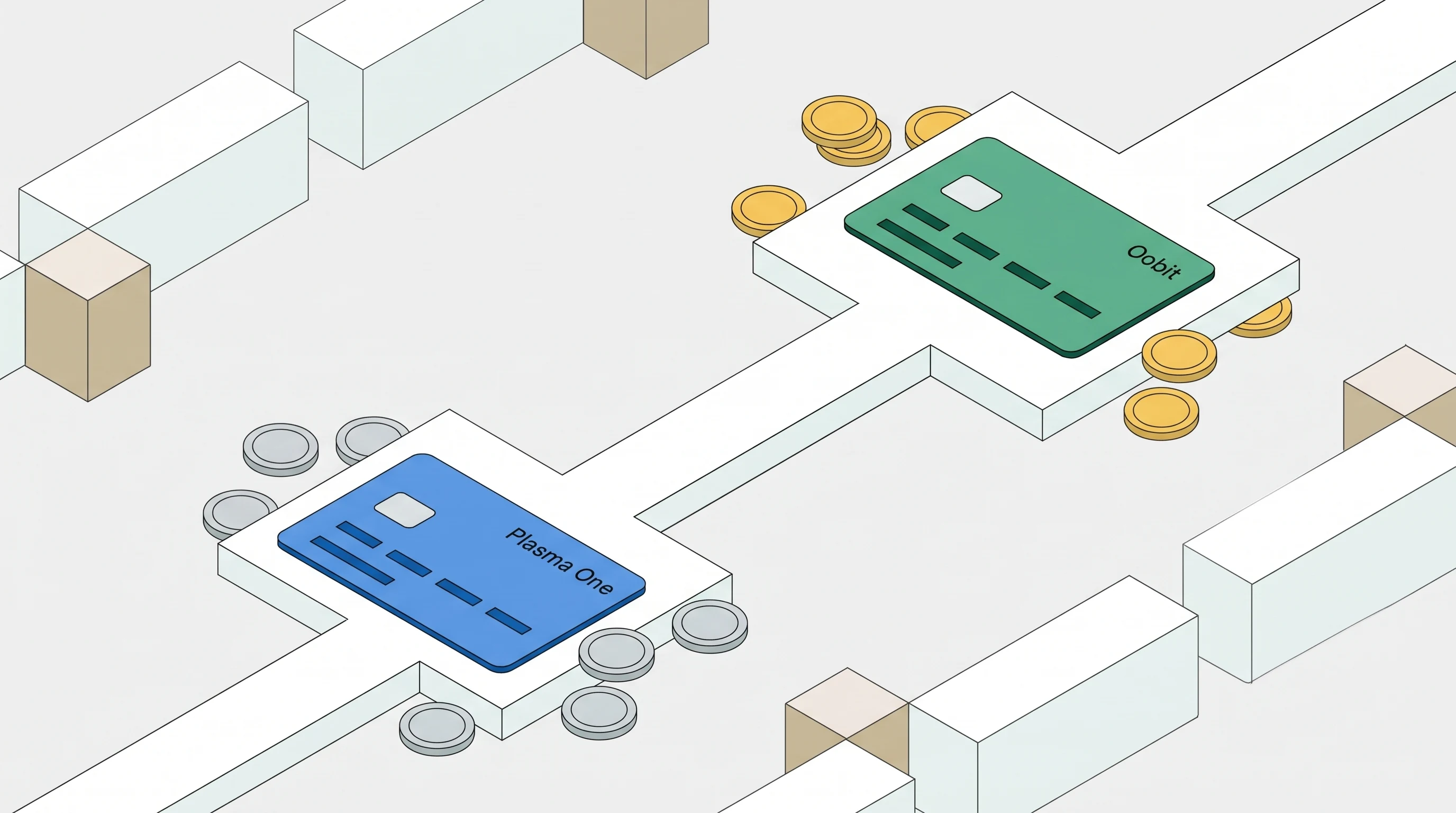
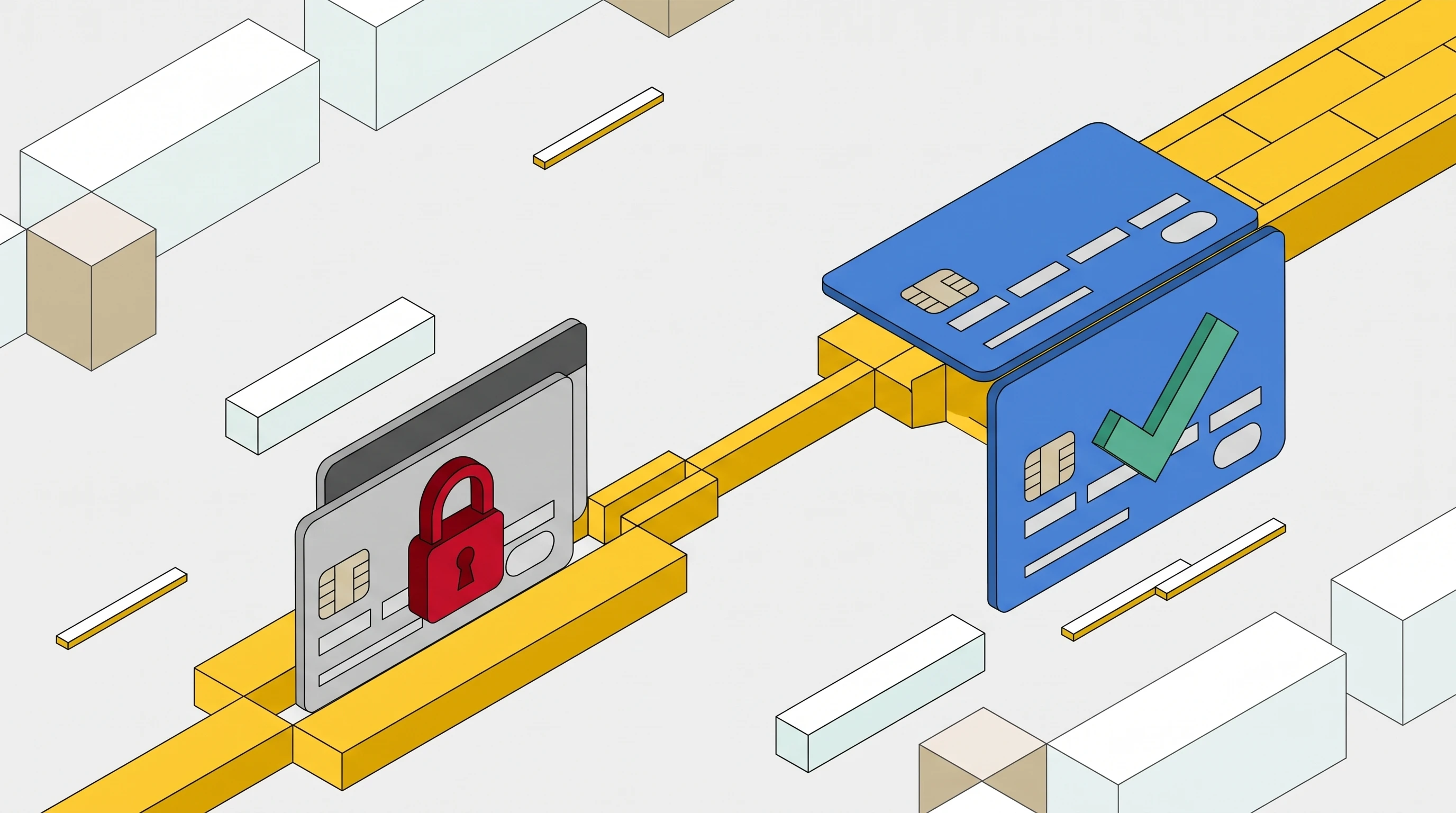
Crypto-funded cards combine several risks: the issuer’s card service, custody of the crypto, conversion, and the legal protections for each balance. FDIC insurance does not cover crypto assets. A separately held eligible bank deposit must be assessed under its own coverage rules.
You’ll learn how crypto cards store money, when protection might apply in the US/EU, and a checklist to vet any card before loading funds.
Key Takeaways
Check who issues the card, who holds each balance, and what happens if a provider fails. FDIC insurance covers eligible deposits at insured banks, not crypto assets. Pass-through coverage for funds held through an intermediary depends on the ownership and recordkeeping requirements; do not assume it applies.
Are crypto cards FDIC insured (or “protected”) in the US and EU?
Most “crypto card balances” should not be assumed to be insured. Protection depends on whether your money is actually a bank deposit, a stored value balance, or crypto custody.
The three buckets that get confused: bank deposits, stored value, and crypto custody
Bank deposit: money held in a deposit account at a bank. In the US, people often associate this with “FDIC insured.” In the EU, people often think of a deposit guarantee scheme.
Stored value is prefunded monetary value recorded on a payment instrument, such as a stored value card. It can look like “cash in an app,” but it may not be a deposit account.
Crypto custody: tokens held in a wallet, either custodial (platform controls keys) or non-custodial (you control authorization). This is not the same legal category as a bank deposit.
Marketing can blur these lines. Phrases like “FDIC-insured partner bank” can be true in general. They can still be misleading for a specific user balance.
Define key terms as you read terms and disclosures:
Program manager: the fintech running the card program day to day.
Issuer: the regulated entity issuing the card or stored value.
Stored value: prepaid balance, often redeemable, not necessarily a deposit.
Omnibus account: pooled account holding many users’ funds together.
Beneficial owner: the end user who is meant to own the pooled funds.
Decision tree: when deposit insurance might apply (and when it never does)
Start with one question: “Where is my $ balance legally held right now?” Do not rely on the card brand name alone.
Yes: You have a deposit account at an insured bank, in your name. Result: likely covered as a deposit, subject to the program’s actual structure and limits.
Maybe: Your funds are in a pooled bank account. Result: coverage may depend on “pass-through” treatment. That typically requires eligible deposits, proper titling, and records showing you as the beneficial owner.
If the balance is a stablecoin or other cryptoasset, it is not an insured bank deposit. Stored-value or prepaid funds require a separate check: eligible underlying deposits at an insured bank may qualify for pass-through coverage if the ownership, disclosure and recordkeeping conditions are met. That protection concerns bank failure, not every loss or the platform’s failure.
What is never covered by deposit insurance, even when a bank is involved:
Market losses on tokens or reward assets
Stablecoin depegs
Smart-contract failures
Exchange or wallet hacks
Unauthorized card purchases, which have separate statutory and card-program protections
How crypto cards work (and where the risk really sits)
Crypto-funded cards use different funding, conversion and custody models. The legal agreements and location of the assets, as well as the funding model, determine the customer’s rights if a provider fails.
A practical way to think about crypto card security is failure-first. Ask what you can still access if the app is down, support is slow, or a partner relationship ends.
Model 1: Prepaid or “stored value” cards (money sits with a program/issuer)
Stored value usually functions like a ledger balance inside a program. Even when the program uses banks behind the scenes, the user may not have a deposit account.
As a result, “FDIC insured” language often does not cleanly map to your balance. Your protection may instead depend on segregation, safeguarding claims, and bankruptcy treatment.
What to check before loading a stored value balance:
Who the issuer is and what jurisdiction governs the agreement
Whether funds are described as segregated or safeguarded
Your redemption rights and redemption timelines
Whether the program can pause redemptions during reviews
Operational risk is common in this model. Programs can be suspended, issuers can change, and funds can be frozen for KYC or AML reviews.
Model 2: Bank-account-linked debit cards (closest to traditional protections)
If you truly have a deposit account at an insured bank in your name, protection is usually the most familiar. The key is whether you can verify account ownership and bank identity.
If the balance is pooled, your protection may rely on pass-through style recordkeeping. That is a structure question, not a marketing question.
What documentation can help you verify the model:
The account agreement identifying the legal provider, bank and account type
Account or pooled-account details and disclosures showing how your interest is recorded
Statements or records identifying you as the customer or beneficial owner, as applicable
The applicable deposit-insurance limits, ownership category and pass-through conditions
If the fintech app fails but the bank account is still yours, you may still have a path to access funds. That should be spelled out in writing.
Model 3: Crypto wallet–funded cards (custodial vs non-custodial)
If your balance is stablecoins or other crypto, deposit insurance does not protect token value. Your main risk becomes custody, authorization, and the token’s own failure modes.
With custodial models, the platform may control the keys. That can simplify UX, but it concentrates insolvency and security risk at the custodian.
Self-custody does not remove an issuer’s token controls or a service provider’s obligations and restrictions. Inspect the actual signing, recovery, and access arrangements rather than inferring unrestricted use from a custody label.
Worked example: check a $1,000 “crypto card balance” in three scenarios
The same $1,000 can have three very different risk profiles. The difference is not the card. The difference is where the $1,000 sits at the moment something breaks.
Scenario A: it is a bank deposit with a debit card. Scenario B: it is stored value managed by a program. Scenario C: it is stablecoins funding card settlement.
Use this as a drill. Pretend the app is offline, then ask: “Who can return my $1,000, and under what legal obligation?”
Scenario A: $1,000 in a bank deposit account + debit card
If the $1,000 is a covered deposit at an insured bank, deposit protection may apply up to program limits. That protection is about bank failure, not everyday card disputes.
If the fintech app fails, your outcome depends on whether you can still reach the bank. If the account is truly yours, you may still access funds through bank channels.
If the bank fails, deposit insurance is the intended backstop. Your card may stop working, but the protection question is about the deposit, not the plastic.
Card fraud protection is separate from deposit protection. Card fraud protection is governed by applicable federal and state law, along with the card issuer’s policies and the card network’s rules.
Scenario B: $1,000 as stored value (prepaid/e-money-like)
A pooled account is not automatically outside FDIC coverage. Eligible deposits held through an intermediary may receive pass-through coverage when the required ownership, disclosure, and recordkeeping conditions are met. The arrangement must be checked; FDIC insurance does not protect against the failure of the nonbank intermediary itself.
You may still have protections, but they are structural. Recovery can depend on segregation, safeguarding, and whether the issuer can reconcile your balance quickly.
Failure modes to plan for:
Program manager insolvency or operational shutdown
Issuer insolvency or program termination
Frozen balance during compliance review
Slow or disputed chargeback handling
What evidence to screenshot and save before problems:
The cardholder agreement and fee schedule
Your balance and recent statements
A full transaction export, if available
Support ticket IDs and written responses
Any wallet addresses or payout instructions shown in-app
Your goal is simple: make it easy to prove you are the beneficial owner of the recorded balance.
Scenario C: $1,000 in stablecoins that fund a card (custodial vs non-custodial)
A stablecoin balance is typically a token holding, not a contractual deposit claim at a bank. Your risk is custody, security controls, and stablecoin-specific risks, not deposit insurance.
A token balance and a bank deposit are different assets. Check what you actually hold at each stage of funding or conversion before applying any insurance language.
Crypto card security checklist: what to check before you load funds
Verify the issuer, custody, applicable protections and available controls before depositing. Understanding where funds sit helps identify which provider and legal arrangement you depend on.
Treat every crypto card as a stack of vendors. Your app, issuer, bank partners, custodians, and onchain components can all affect safety.
The 10-point checklist (with “where to find it”)
Do this in official terms and help centers, not marketing pages. Save PDFs or screenshots before you deposit meaningful funds.
Criterion | Why it matters | Where to verify |
|---|---|---|
Issuer and regulatory status | Determines legal obligations | Cardholder agreement |
Jurisdiction | Governs disputes and insolvency | Terms and disclosures |
Where funds are held now | Deposit vs stored value vs crypto | Program disclosures |
“FDIC-insured” claim | Might not apply to your balance | Agreement, bank name |
EU/UK wording | Safeguarding differs from insurance | Terms, issuer license |
Custody model | Who can move funds | Wallet docs, FAQs |
Security controls | Prevents account takeover | App settings, help center |
Disputes and chargebacks | Impacts fraud recovery | Card rules, support docs |
Operational limits | Freezes, caps, geo blocks | Limits page, sanctions list |
Fee traps | FX markup and withdrawal fees | Fee schedule |
Two quick, practical checks:
Find the bank name and issuer name in writing.
Find the sentence that says what your balance “is,” legally.
If you cannot find those, treat the balance as higher risk and keep it small.
Common misconceptions (quick corrections)
“FDIC covers my crypto.” It may cover deposits, not token value. Verify what your balance legally is.
“Visa or Mastercard guarantees my balance.” Networks process payments. They do not promise your stored value balance.
A stablecoin and a bank deposit are different assets. Confirm what the customer holds after any funding or conversion step.
Self-custody does not remove applicable legal restrictions or a token issuer’s technical controls. Check the actual asset, network and service terms.
Conclusion
Crypto card security is mostly about where funds are held and what legal protection applies, not the card brand or the app’s homepage claims.
Your next step is concrete. Open the provider’s cardholder agreement and identify: (1) the issuer, (2) the custody model, and (3) any deposit insurance language and its conditions.