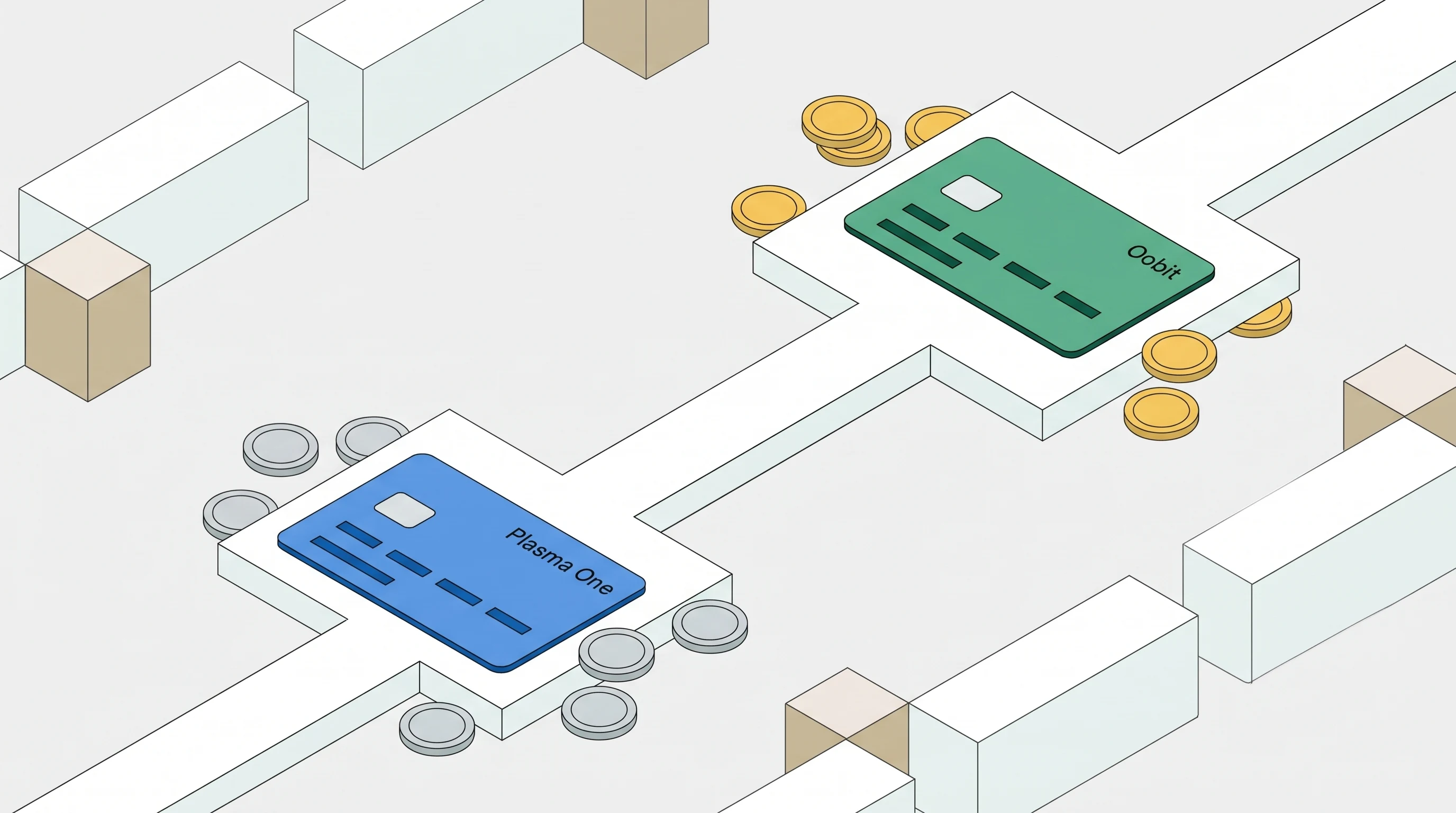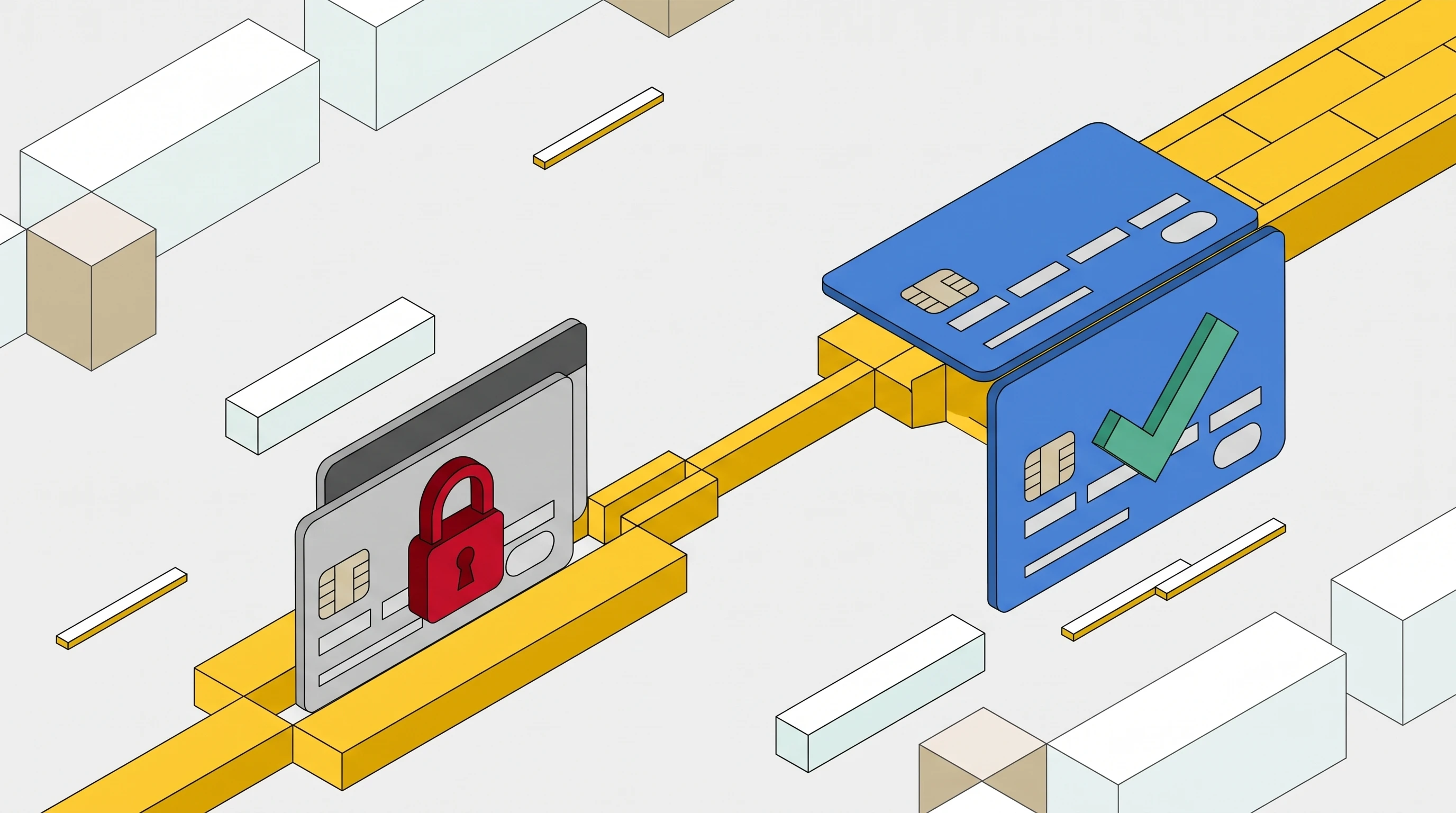
Crypto-linked cards let a holder pay merchants from a balance held with a card provider or in a wallet. In the UAE, as elsewhere, the merchant is paid in fiat over a card network, and the provider handles any conversion in the background. Costs, declines and availability depend on the specific program and its terms.
Key Takeaways
Card programs are region-specific. Eligibility depends on the issuer, the program and the holder's country of residence.
Merchants are paid in fiat over the card network. The provider converts or debits the crypto or stablecoin balance, and the timing of that conversion depends on its terms.
Declines can relate to merchant category restrictions, preauthorization holds or security checks.

Card Authorization, Conversion and Settlement
What You "Spend" at Checkout (And When Conversion Happens)
Most crypto cards are still card network payments under the hood. The merchant receives fiat, usually AED in the UAE. You are not sending crypto directly to a grocery store or the RTA at checkout.
A provider may convert assets before funding a fiat card balance or as part of a transaction flow. The conversion timing and applicable rate depend on the program’s terms.
A card transaction has authorization and settlement stages. The relationship between those stages and any asset conversion depends on the program:
The merchant submits the payment amount, currency and transaction details.
The issuer assesses the request against the available balance, program limits and risk controls.
Any required asset conversion follows the provider’s terms and can occur before or during the payment process.
The final transaction is cleared and settled through the card arrangement; holds or adjustments can change the posted amount.
The account record shows the resulting debit and applicable fees.
FX Rates, Spreads, and Who Controls the Rate
The total cost can include the card network’s exchange rate, an issuer or provider markup, and a separate asset-conversion spread. These are different components and may not all apply to every transaction.
Layer 1 is the card network FX rate. Layer 2 is any issuer FX markup. Layer 3 is the crypto-to-fiat conversion spread.
Stablecoins seek to track a reference currency, but can deviate from it. Even when the peg holds, the reference currency may differ from AED or the card’s settlement currency. Whether a conversion rate is fixed at authorization or later depends on the program’s terms.
A headline claim of no card fees does not by itself mean there is no FX markup or conversion spread. Those costs can still apply unless the terms explicitly waive them.
If a provider does not publish its FX or conversion method, treat the rate as unknown. The final debit can then differ from a mid-market quote.
UAE Acceptance and Declines: Common Causes and Investigation
Common UAE Decline Scenarios (Online, Travel, Fuel, Government)

A crypto-linked card runs on its card network, so acceptance follows that network and the issuer's rules. Possible causes include:
Insufficient available balance, often caused by holds rather than an actual lack of funds
MCC-based merchant restrictions
Security checks, including failed 3DS verification
Online merchants: a 3DS challenge can fail, or your address and phone details can mismatch what the merchant expects. Some merchants also flag cards issued outside the UAE.
Travel: hotels and car rental companies often place large deposit holds. Airlines can post later adjustments too, for example after a re-ticketing.
Fuel pumps can place preauthorization holds that exceed the eventual purchase. The hold and release timing depend on the merchant, network and issuer.
Government and quasi-government payments: fines, fees, and anything treated as a "cash equivalent" can be blocked outright, and MCC rules vary by issuer and program.
When a decline happens, it helps to note down:
Merchant name, amount, and currency
Timestamp and location
Any decline code shown in the app
The MCC, if the merchant can provide it
Investigating a Declined Transaction
A decline can arise from the balance, a pending hold, a security check, a program limit or a merchant restriction. The issuer’s reason code and support process are more useful than assuming a single cause.
Keep an extra buffer available for preauthorizations. Hotel and fuel holds can exceed the final charge.
If a contactless tap fails, try chip and PIN once rather than tapping repeatedly, since repeated retries can trigger a risk block.
For online payments, complete any 3DS step immediately, and confirm that your profile's phone number and address match your verified residency.
Some products separate your spendable balance from other balances. If your card only draws from a specific bucket, move funds into it before paying.
Fees, Custody and Program Risk
Fee Checklist for UAE Residents (Beyond the Headline "Free")
Costs can include issuer or bank FX markup, the card network's currency conversion fee, and extra charges on ATM withdrawals, which can combine a flat fee with a percentage charge.
A fee schedule may include:
Issuance and monthly fees (if disclosed)
FX markup for non-AED spend (if disclosed)
Crypto conversion fee (if disclosed)
ATM fees and withdrawal limits (if disclosed)
Funding fees for bank transfer, card top-up, or onchain deposits (if disclosed)
Security Basics: Custody, Card Controls, and Program Shutdowns
Custody and payment authorization are separate. A provider may hold the funding balance, or a card arrangement may draw on assets in a user-controlled wallet through previously granted permissions. A wallet-based design does not necessarily require a fresh signature for every purchase or remove issuer and smart-contract risks.
Programs can offer consumer controls such as freeze and unfreeze, virtual cards, spend limits and instant notifications. If a provider does not document these features, treat them as unknown rather than assuming they exist.
Shutdown risk is real, because card programs depend on issuers, network partners and licensing. A provider can withdraw a card from a market when those arrangements change.
An exit plan checklist worth keeping on hand:
Keep a backup bank card and a small cash buffer
Export your statements or transaction history regularly
Know your offboarding path to fiat or stablecoins before problems arise
Regional Availability of Card Programs
Many card programs are limited to specific countries, because each depends on an issuer and network arrangement for that region. A provider's own eligibility page and terms are the primary record of where a program is offered.
Payment and Product Terms Are Separate
Crypto-linked card transactions settle as fiat payments. Card eligibility, conversion charges, foreign-exchange treatment, custody and dispute rights depend on the particular program. A general explanation of those mechanics does not establish that a named card is issued to UAE residents.