Germany runs on girocard. At the end of 2024 it accounted for just under 72% of the country's debit card payments by revenue, which matters if you are counting on a Visa or Mastercard crypto card for everyday spending.
The best crypto card for euro spending in 2026 is a Visa or Mastercard debit or prepaid card with verified Germany availability, transparent EUR fees, and clear FX and ATM terms for everyday spending.
This guide includes a same criteria comparison table, a Germany residency matrix, and practical notes on SEPA salary use, SCHUFA concerns, and girocard only terminals.
Key Takeaways
Girocard dominates in Germany, so Visa and Mastercard crypto cards will not work everywhere.
Only some cards clearly confirm Germany eligibility and "no credit check" status.
Treat most crypto cards as spending tools, not salary ready SEPA bank accounts.
Direct Verdict for Germany (2026): Which Crypto Card Fits Euro Spending?
For Germany based euro spending, these are the most evidence backed fits by scenario: Crypto.com for published EU fee detail, Coinbase Card for SCHUFA sensitive users, Bitpanda for clear euro area residency rules, and Bybit Card for explicit Germany availability.
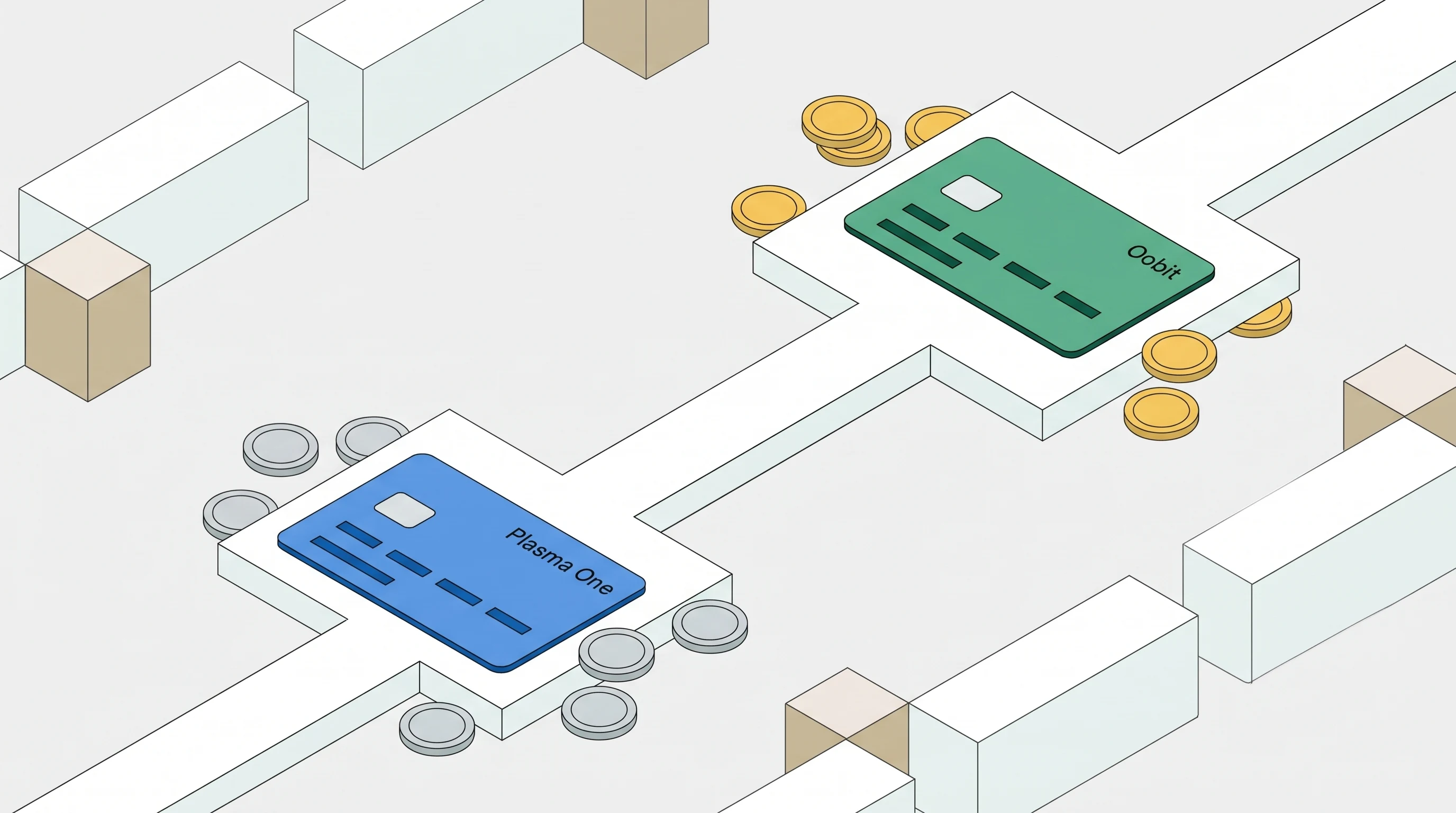
One disclosure up front: Plasma One is our own product. We have held it to the same evidence standard and scored it against the same criteria as every competitor on this list.
Germany adds a reality check that most "best crypto card for euro" listicles skip: girocard, not Visa or Mastercard, is the default payment method at most German points of sale (more on this below).
Best for transparent published fees in Europe: Crypto.com Prepaid Visa. The Crypto.com Prepaid Visa EU help pages publish an official fees and limits schedule, including ATM limits and other charges such as overseas transactions. See the dated Crypto.com fees and limits (Europe) and the card tiers page.
Best for SCHUFA sensitive users: Coinbase Card (Visa). Coinbase's German application page states that no credit check is required. See Coinbase Card beantragen.
Best for euro area residency clarity: Bitpanda Visa Card. Bitpanda requires applicants to be residents of the euro area with a verified account. Bitpanda's help materials cite a €10 minimum for fiat deposits and withdrawals, along with listed deposit and withdrawal limits. See the Bitpanda card page.
Best for explicit Germany availability: Bybit Card. Bybit's official help pages confirm Germany as a supported country for bank card payments. See Bybit Card Countries: Availability 2026 and the Bybit EU card page.
Consider if you want non-custodial onchain storage plus SEPA rails: Plasma One, if Germany is on its supported list. Plasma One supports EUR (SEPA) rails, and funds are held in a non-custodial smart account. Verify eligibility first on the Plasma One availability page.
Not available in 2026: Binance Card (EEA). Binance ended EEA Visa card services, with card payments stopping on December 20, 2023. See the Binance EEA notice and related Binance post.
Same Criteria Comparison Table (EUR Spending)
The tables below compare each option using the same decision criteria, drawing on primary sources where available. Where a provider has not published a dated fee table or clear eligibility terms, the field is marked "not publicly disclosed."
Comparison Table: Fees, FX, ATM, Rewards, SEPA, Support, and Issuer Basics
Option | Card type | DE eligible? | Network | Published EUR fees | FX disclosure | ATM fees/limits | Rewards headline | SEPA/IBAN tied to card | German docs | Key gotcha |
|---|---|---|---|---|---|---|---|---|---|---|
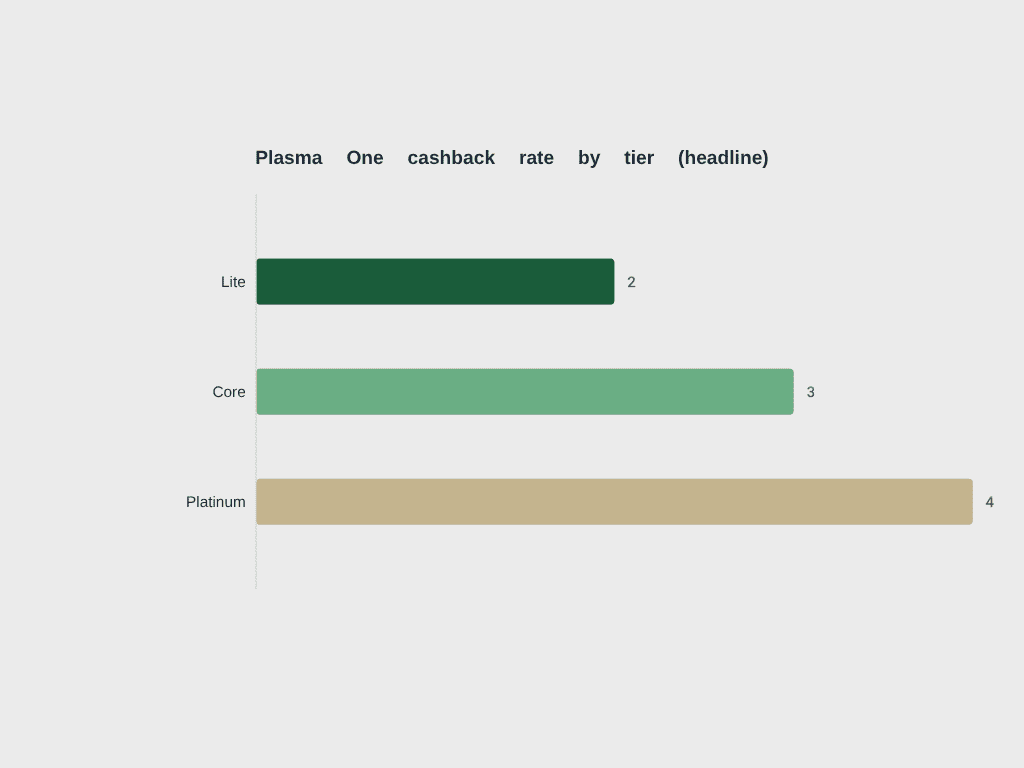
Plasma One | Debit | Unclear | Visa | Tier fees disclosed | +1% Lite, +0.5% Core, 0% Platinum | not publicly disclosed | Up to 2% Lite, 3% Core, 4% Platinum in XPL | EUR SEPA exists, but auto-converts to USD₮ | Unclear | Early access needs code or waitlist |
Crypto.com | Prepaid | Yes (Europe address) | Visa | CryptoCompare lists an inactivity fee of £5 per month after 12 months and a closure fee of £50. | Crypto.com FX fees for Midnight were reported as 0.2% in the EU/UK and 2% outside the EU/UK (announced in Oct 2022; effective 19 Dec 2022). | Free €200–€1,000/mo by tier; 2% above limit | Not publicly disclosed | not publicly disclosed | Yes | Inactivity and closure fees can bite |
Coinbase Card | Debit | Yes (FAQ lists Germany) | Visa | not publicly disclosed | not publicly disclosed | not publicly disclosed | Rewards currency selectable (rate not captured) | not publicly disclosed | Yes | Fee detail is thin in captured docs |
Bitpanda | Debit | Yes (euro area) | Visa | not publicly disclosed | not publicly disclosed | Not publicly disclosed | not publicly disclosed | not publicly disclosed | Yes | Requires €100 deposit for eligibility |
Bybit Card | not publicly disclosed | Yes (explicit) | not publicly disclosed | not publicly disclosed | not publicly disclosed | not publicly disclosed | Up to 10% cashback | not publicly disclosed | Unclear | Many critical fees missing in sources |
Nexo Card | Credit-like | Unclear (EEA claim) | Mastercard | “No monthly or annual fees” | not publicly disclosed | not publicly disclosed | Nexo Card rewards are tiered, topping out at 0.5% in BTC or 2% in NEXO (Platinum). | not publicly disclosed | Unclear | Spending is backed by crypto collateral |
Binance Card (discontinued) | Debit | No (ended) | Visa | not publicly disclosed | not applicable | not applicable | not applicable | not publicly disclosed | Unclear | [Unverified at generation — review required before publish.] |
Primary documentation used above includes Crypto.com EU fees, the Coinbase EU card FAQ, the Bitpanda card page, Bybit availability pages, and Nexo's press release.
Germany Residency and Geo-Restrictions: What "Available" Really Means
Availability in Germany typically depends on whether an applicant's residence is in a supported country and whether they meet the provider's onboarding and verification (KYC) requirements.
In practice, working in Germany does not mean a card works everywhere. Visa and Mastercard are widely accepted, but not universally, especially at smaller venues.
Option | German resident can apply? | Proof-of-address required? | Sanctions/doc blocks disclosed? | Waitlist/early access? |
|---|---|---|---|---|
Plasma One | Unclear; must verify list | Required in some countries (KYC docs) | Yes, detailed lists (availability) | Yes, access code or waitlist (codes) |
Crypto.com | Yes (Europe address) | not publicly disclosed | not publicly disclosed | Not indicated |
Coinbase Card | Yes (Germany listed) | not publicly disclosed | not publicly disclosed | Not indicated |
Bitpanda | Yes (euro area) | not publicly disclosed | not publicly disclosed | Not indicated |
Bybit Card | Yes (“full availability”) | not publicly disclosed | not publicly disclosed | Not indicated |
Nexo | Unclear (EEA claim) | not publicly disclosed | not publicly disclosed | Not indicated |
EU rules under MiCAR make issuer status and cross-border passporting relevant. Asset-referenced token offers are reserved for an EU-established authorized legal person or a credit institution, and e-money token issuers must be authorized as a credit institution or electronic money institution.
Documentation should clearly identify the issuer, since some regulators require the product name and key materials to name the issuer directly. Confirm this in the cardholder agreement before relying on any card.
How to Choose the Best Crypto Card for Euro Spending in Germany
The right card mostly comes down to three questions: where you actually spend, how much fee opacity you can tolerate, and whether you need the card tied to a SEPA account for salary or bill payments.
Mostly local, in-person spending? Lean on a girocard or cash for day-to-day purchases and treat your crypto card as a backup, since girocard is the default at most German checkouts.
Mostly online or travel spending? Visa and Mastercard coverage is usually enough, so fee transparency and FX terms matter more than acceptance.
Need SEPA salary or bill-pay features? Most crypto cards are not built for this. Check the SEPA and SCHUFA notes below before treating any of them as a main
Methodology, Evidence Standard, and Last Verified Process
This comparison relies on primary sources for every material claim wherever possible. Each card is judged against a rubric tailored to its primary category. Missing facts are marked "not indicated" when they are absent from publicly available sources, rather than being inferred.
This comparison was last verified on May 11, 2026, and is refreshed monthly to reflect frequent card program changes. Crypto.com's fee schedule is dated and subject to updates; see Crypto.com fees and limits.
If choosing a card for Germany, take one extra step: open the cardholder agreement and look for the issuing entity and its country. Many marketing pages do not surface this information.
Germany Specific Realities: Girocard, SEPA Salary Expectations, SCHUFA, and Language
Crypto cards can work well for online spending and travel, but Germany still runs on girocard first merchants and salary workflows built on IBAN credit transfers. Plan for both.
Girocard vs Visa/Mastercard Acceptance (What Crypto Cards Cannot Do)
A 2025 Bundesbank survey of retailers found that girocard is the most widely accepted cashless payment method in Germany, ahead of international schemes like Visa and Mastercard. See Bundesbank's retailer acceptance data.
That gap shows up at small shops, cafes, and some local services. A Visa or Mastercard crypto card can be declined at girocard only terminals, so it is worth keeping a girocard or cash as backup.
Offline terminal behavior is rarely documented by crypto card providers. Offline support should not be treated as a simple checkbox; it is a set of behaviors that needs to be defined explicitly, and it matters most for trains, tolls, and areas with patchy connectivity.
SEPA Salary and "Main Account" Suitability (IBAN Reality Check)
Available sources do not confirm whether card providers explicitly market their card linked accounts as "salary ready." Salary suitability is not publicly disclosed for Crypto.com, Coinbase, Bitpanda, or Bybit in the sources captured here.
Plasma One offers EUR (SEPA) rails, but fiat automatically converts to USD₮ on receipt. EUR and GBP virtual accounts also use a business beneficiary name. See fiat rails and auto-conversion details and virtual account information.
SCHUFA and Credit Checks: What's Confirmed vs Unknown
Coinbase explicitly states that no credit check is required on its German application page. See Coinbase Card beantragen.
For other cards, the "debit" or "prepaid" label suggests no credit line, but it does not prove there is no SCHUFA query. Treat SCHUFA impact as unclear unless explicitly stated, since scoring details are not fully disclosed and may be withheld as a trade secret.
Nexo positions its card as a way to spend without selling crypto, backed by collateral and a credit line. See Nexo's Mastercard and DiPocket announcement. This can matter for anyone who prefers to avoid credit products.
German Language and Support Expectations
German language help content is a practical trust signal. Crypto.com publishes German card related help articles, such as "Gebührenerlass für neue Karten-Nutzer." See the Crypto.com EU fee documentation.
Coinbase also offers German language help pages for the Coinbase Card, covering account management and troubleshooting. See Coinbase Card beantragen. Bitpanda has a dedicated German card page as well; see Bitpanda DE.
For EEA users, Bybit points to its EU cards page at bybit.eu/cards; see Bybit EU cards. For Nexo, German language support is not publicly disclosed in the primary sources captured for this review.
Conclusion
For euro spending in Germany, choose a crypto card based on where you spend, your fee tolerance, and whether SEPA salary features matter to you. If your spending is mostly local and offline, plan around girocard only acceptance. If you spend online or travel often, Visa or Mastercard coverage is often enough.
Act on this checklist today:
Verify Germany eligibility on an official supported country page.
Read the dated fee schedule for FX, ATM, inactivity, and closure costs.
Confirm the reward asset and whether caps apply.
Then stress test acceptance. Try the card at a small local merchant, and keep a girocard or cash fallback for day to day reliability.
If you are evaluating Plasma One specifically, start with eligibility. Account availability is limited to a supported list, and access is gated by code or waitlist. See Plasma One availability and access codes.
If it is available where you live, it stands out for non-custodial onchain storage and EUR SEPA rails for deposits and withdrawals. See how funds are stored and which fiat rails are supported.
Whichever card you choose, verify Germany eligibility and the fee schedule directly with the provider before applying. Card programs and terms change often, and this comparison will be updated as they do.
Ready to get started? Open your account today.