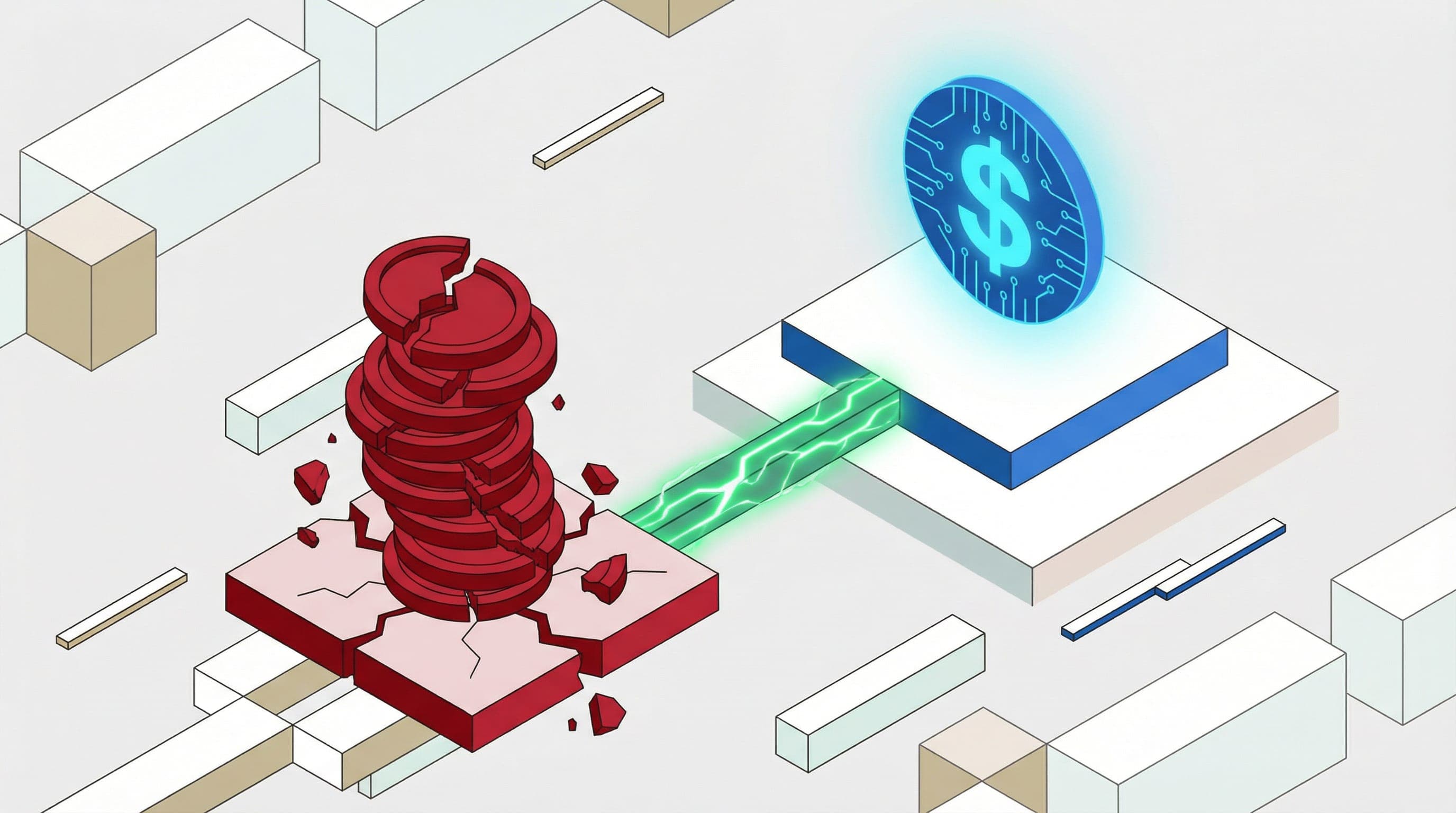
Stablecoins are meant to hold a steady dollar, yet quotes can drift by fractions of a cent. Traders step in, buying when price slips below $1 and selling when it nudges back above.
Stablecoin arbitrage means either trading against par with the issuer (buy below $1 and redeem at $1, or mint at $1 and sell above $1) or trading between venues by buying the cheaper quote and selling the more expensive one, even if both are above or below $1.
This guide explains why pegs drift, where gaps form, and step-by-step methods to capture spreads. It also outlines risks, data checks, and key coins so readers can judge opportunities with clarity.
Key Takeaways
Stablecoin arbitrage is the practice of buying a stablecoin below its $1 peg and selling (or redeeming) it above $1 to lock in profit. The spread is usually less than 0.2 percent and closes quickly once traders act.
Execution edge hinges on four factors: sub-cent price gaps, deep order-book or pool liquidity, low all-in fees, and transfer speed. Cross-exchange moves, triangular loops, and onchain liquidity shifts are the most common setups.
Risk control is crucial. Slippage, gas spikes, withdrawal holds, or issuer redemption queues can erase gains. Hedging with perps, sizing positions relative to depth, and diversifying venues are common ways traders seek to limit losses during market stress.
Stablecoin Arbitrage Primer
Understanding Stablecoins and Price Deviations
Types of Stablecoins
Fiat-backed tokens such as USD₮ and USDC hold cash and T-bills in reserve, redeemable 1:1, giving them the deepest liquidity for arbitrage.
Commodity-backed coins mirror gold or similar assets. Low depth and a non-USD reference price mean dollar-peg spreads are rare and often unprofitable.
Crypto-backed stablecoins are backed by digital assets locked in public smart contracts. Because anyone can check and redeem that collateral on a decentralized exchange (DEX), the price usually hugs $1.
On big centralized exchanges, trading depth can be thin, so a rush of sell orders during market stress may push the coin below $1 until new buyers step in.
Algorithmic models rely mainly on market incentives rather than collateral. Pegs can drift farther and stay off center for hours, so these tokens often show the highest volatility among stablecoin designs.
Hybrid systems combine reserve assets with onchain stabilizers. Transparency of their issuance and redemption mechanics differs across projects, which influences how quickly the peg tends to recover after a deviation.
Yield-bearing stables pay reserve interest to holders. Pegs stay tight, but fee schedules or withholding periods sometimes create short arbitrage windows.
Why Stablecoins Deviate from Their Peg
Fragmented trading. Stablecoins move on dozens of exchanges and blockchains, each with its own buyers and sellers. If one venue has extra demand, its price can edge above $1, while another venue with surplus supply can slip below.
Slow transfers. Moving funds between venues takes time. Bank hours, issuer redemption windows, and network congestion delay the flow of tokens that would normally close the gap. While money sits in transit, the difference lingers.
Shallow depth and news shocks. A single large order in a thin order book can nudge price a cent off peg. Negative headlines may spark rapid selling, and the token can drift further until new bids appear and balance is restored.
Most stablecoin deviations are minor and brief, measured in fractions of a cent. A notable exception was TerraUSD (UST) in May 2022, a stablecoin that lost its dollar peg and collapsed to near zero. Unlike fiat-backed models, UST relied on incentives and token issuance rather than reserves.
This rare case does not represent how major reserve-backed stablecoins typically behave.
The Arbitrage Opportunity
Price Discrepancy Examples
In early 2025, USD₮ often traded at a small premium on certain Asian venues, while US platforms generally kept USDC close to $1. DeFi can show similar gaps: during a June 2023 imbalance in Curve’s 3pool, the USDC/ USD₮ pair on Binance briefly touched $1.0034 before arbitrage flows restored the peg.
Market Statistics and Frequency of Deviations
Kaiko notes that USD stablecoins are constantly depegging from the U.S. dollar, showing how often small peg moves occur across major trading pairs.
CCData reports combined stablecoin circulation of $278B (Aug 2025); a 0.05% gap on that supply equals roughly $139M of notional value, illustrating why micro-moves matter even when spreads are small.
How Stablecoin Arbitrage Works
Basic Arbitrage Mechanics
Cross-Exchange Arbitrage
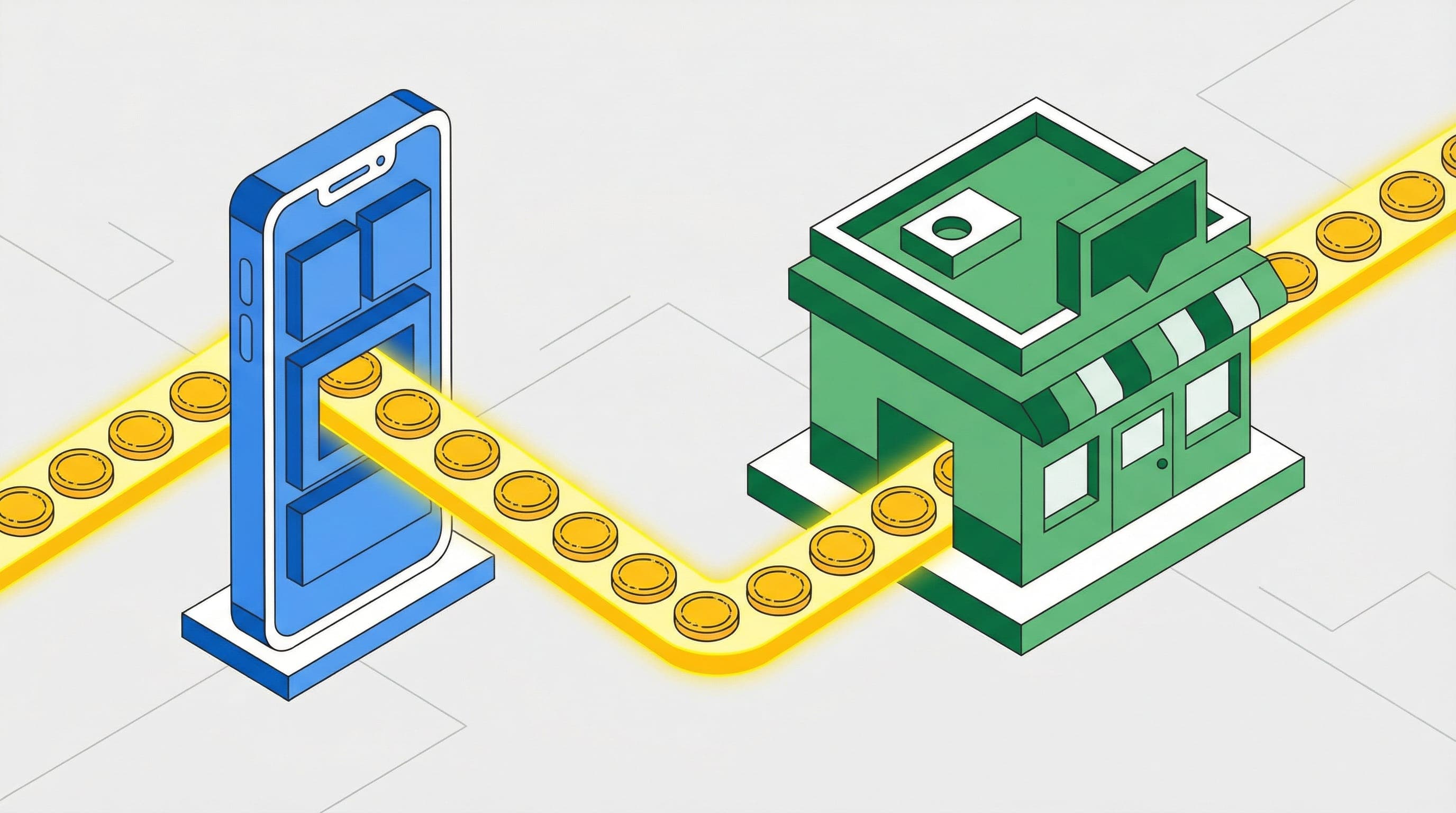
One of the simplest arbitrage setups is the cross-exchange trade, where two centralized venues quote slightly different prices for the same stablecoin.
Imagine Exchange A listing USD₮ at $0.999 while Exchange B shows $1.001. A participant buys on A, locks the price gap with a small perpetual hedge, and transfers the tokens to B.
When the transfer clears, the trader sells at the higher price on B and closes the hedge. The gross spread is 0.2 %, trimmed by withdrawal, taker, and funding fees.
Triangular Arbitrage
Quote mismatches across USD₮/USDC, USDC/USD, and USD₮/USD can yield risk-neutral profit. Algorithms sequence the three legs in milliseconds, looping back to the starting asset with a higher notional balance.
Advanced Strategies
High-Frequency Trading (HFT)
Think of HFT desks as race-cars on the trading track. Their computers sit inside exchange data centers, shaving milliseconds off every order.
When a stablecoin ticks half a cent off $1 on Venue A, an algorithm places a buy and an instant-or-cancel sell on Venue B, flattening the position in seconds.
Because spreads vanish quickly, speed and tiny fees decide who wins. Even sub-cent gaps add up when the system repeats the trade thousands of times a day.
DeFi Liquidity Provision
Another path is acting as the pool itself. Liquidity providers deposit two stablecoins, say USD₮ and USDC, into an automated market maker (AMM).
Each swap pays a fee. If withdrawals pull more USD₮ than USDC, the pool price tilts. Providers can remove the extra USD₮, sell it where it is above $1, and reload both coins evenly.
The cycle earns swap fees plus the small price gap, but providers face impermanent loss if one coin de-pegs for long.
Flash-Loan Arbitrage
Flash loans let a smart contract borrow millions for a single Ethereum block with no upfront collateral.
A contract can buy a stablecoin at $0.998 on DEX 1, sell it for $1.000 on DEX 2, and repay the loan, all inside one transaction.
If any step fails or gas spikes, the whole block reverts, so builders add MEV protection and test gas limits carefully. The reward is profit without tying up their own capital.
Popular Stablecoins for Arbitrage
Major Fiat-Backed Stablecoins
Tether (USD₮)
Liquidity & volume: Market cap $173 B; spot volume $131 B/day.
Price stability: Kaiko logs sub-0.1 % gaps that close within minutes
Exchange availability: Listed on 420+ markets, the broadest coverage.
USD Coin (USDC)
Liquidity & volume: Market cap $74 B; volume $17 B/day.
Price stability: Trades within ±0.05 % of $1 on USD venues 95 % of the time.
Exchange availability: Live on 300+ CEX pairs and all major DEXs.
Other Fiat-Backed Options
FDUSD: $7.5 B daily volume; some Binance pairs delisted March 2025.
PYUSD: $1.6 B cap, volume $80 M/day, concentrated on PayPal-linked venues.
EURC: $254 M cap; MiCA compliance raises European listings.
Crypto-Backed and Algorithmic Stablecoins
USDS and Decentralized Options
Liquidity & volume: DAI as proxy: cap $5.3 B; volume $107 M/day.
Price stability: Stays within ±0.1 % on DEXs; CEX depth is thinner.
Exchange availability: Active on all top DEXs and about 150 CEX pairs.
Algorithmic Stablecoin Considerations
Liquidity: Most trade under $50 M/day; depth varies sharply.
Price stability: BIS and NBER studies report wider, longer de-pegs.
Exchange availability: Fewer tier-one listings limit arbitrage routes and raise tail-risk.
Risks and Challenges
Market Risks
Liquidity Risk
During liquidity stress, Kaiko records that order-book depth can fall sharply on major venues, making advertised prices harder to hit.
Counterparty Risk
When withdrawals stopped on FTX in November 2022, many arbitrage positions remained frozen for days, highlighting how an exchange pause can strand capital.
Price Volatility During Execution
On days with unusually high network demand, Ethereum gas fees can spike, materially raising transfer costs and squeezing arbitrage margins.
Run Risk and Mass Redemptions
A BIS study notes that during the March 2023 USDC de-peg, the token traded below $0 .90 for about 36 hours until redemption flows restored parity.
Increasing Market Saturation
The arbitrage market has grown more competitive as automated systems now dominate trading. Kaiko’s research shows micro-spreads on major stablecoin pairs often close within seconds once arbitrage capital reacts.
Many exchanges and DeFi pools are monitored by bots around the clock, leaving fewer gaps for manual strategies. This competition reduces the size and duration of opportunities, making arbitrage less about finding price differences and more about execution speed and reliable infrastructure.
Conclusion
Stablecoin arbitrage shows how tiny, frequent price gaps emerge when liquidity is scattered across exchanges and chains. Spreads are usually below 0.2 % and close in seconds once capital moves.
As trading tools improve and more venues list USD₮, USDC, and newer coins, competition is likely to narrow gaps further, turning speed, fee efficiency, and reliable data into the main differentiators.
Whether on centralized books or DeFi pools, arbitrage remains arbitrage is just one part of a wider stable-asset market that’s still growing and changing.