USD₮ exists on multiple blockchains, so “USD₮” can mean different token formats depending on the network you use.
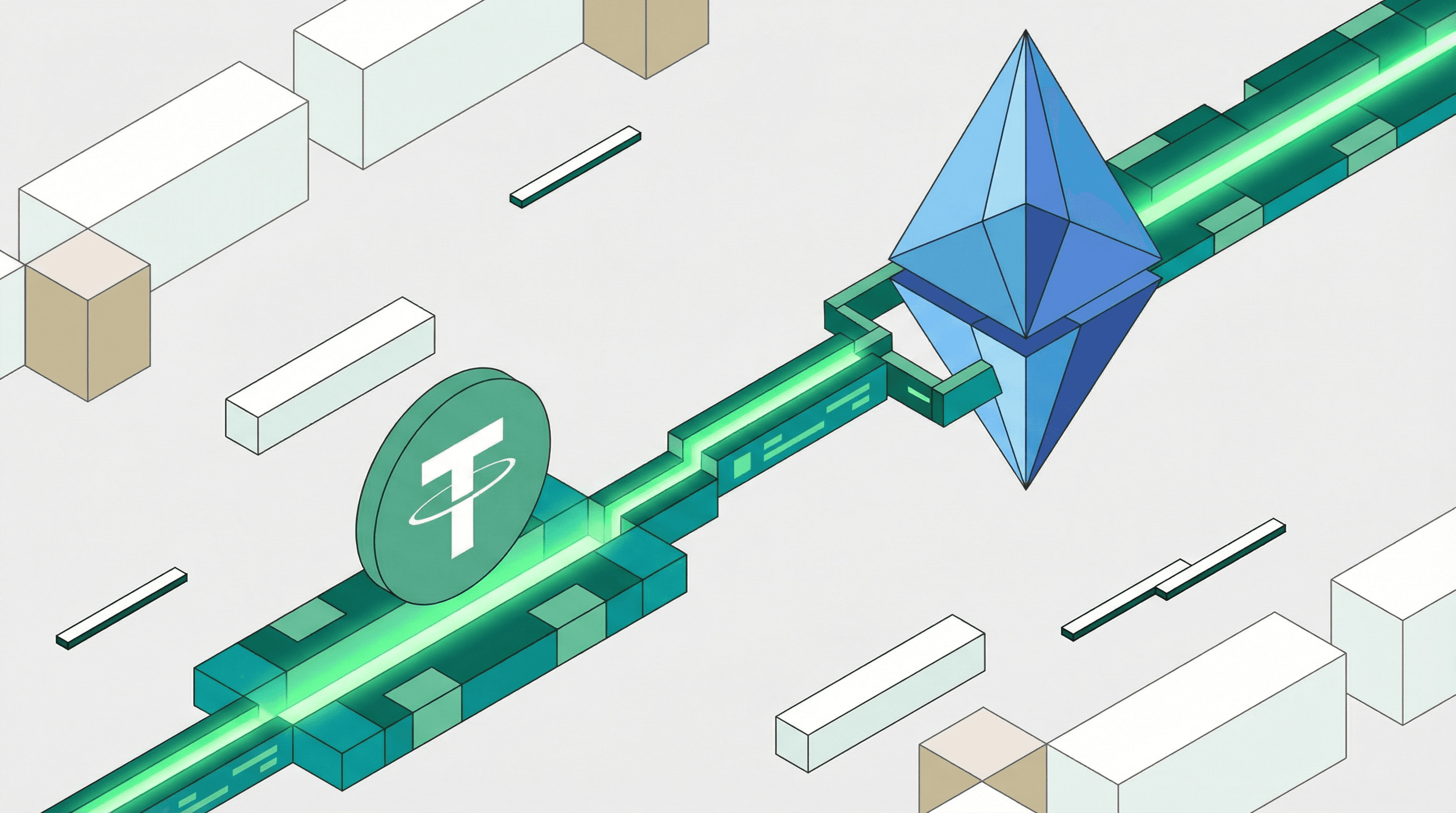
USD₮ ERC-20 is USD₮ issued as an Ethereum token. ERC-20 is the common rulebook Ethereum apps use to send, receive, and track fungible tokens.
In this article, you’ll learn how USD₮ ERC-20 works, what gas fees mean, common DeFi uses, and when Plasma can make USD₮ payments simpler. Keep reading.
Key Takeaways
USD₮ ERC-20 is USD₮ that follows Ethereum’s ERC-20 token standard, so it works across most Ethereum wallets and apps.
Sending USD₮ ERC-20 needs ETH for gas, and fees can vary with network demand.
Plasma is designed for stablecoin payments, including zero-fee USD₮ transfers and stablecoin-native UX.
What Is USD₮ ERC-20?
USD₮ ERC-20 is the version of Tether's stablecoin that operates on Ethereum following the ERC-20 technical specification. It represents 35-40% of all USD₮ tokens in circulation and functions through standardized smart contracts.
This implementation ensures that every token behaves identically across the entire Ethereum ecosystem. Wallets, exchanges, and applications can interact with USD₮ without custom integration code.
The token contract address is publicly verifiable onchain, providing transparency into the total supply and distribution. Anyone can audit the contract code and token movements using standard block explorers.
Overview of the ERC-20 Standard
ERC-20 is a token interface standard for fungible assets on Ethereum.
A token that follows ERC-20 exposes common functions like “transfer, approve”, and “transferFrom” so apps can integrate without custom code.
That standardization is why most Ethereum wallets can support new tokens quickly once the contract address is known.
USD₮ ERC-20 is simply USD₮ that lives on Ethereum and follows the ERC-20 interface, rather than living on Tron, Solana, or other networks.
When people ask “what is USD₮ ERC20,” they are usually trying to confirm which network their USD₮ is on before depositing, trading, or transferring.
One practical detail is that Ethereum USD₮ has a specific contract address (a long hex string), and that address is what wallets and exchanges use to identify the token.
How USD₮ ERC-20 Works on the Ethereum Blockchain
The Role of Smart Contracts
On Ethereum, USD₮ ERC-20 is controlled by a smart contract that keeps track of balances and enforces transfer rules.
When you “send USD₮,” you are really calling the token contract’s transfer function, which updates balances and emits an onchain event.
Because this happens on Ethereum, transfers inherit Ethereum’s Proof of Stake security model and execution rules.
Currently, Ethereum time is divided into 12-second slots and 32-slot epochs, and blocks are proposed at a fixed cadence under Proof of Stake. That predictable block rhythm is useful, but it does not mean every transaction is instantly final at the same time for every use case.
The Transaction Process for USD₮ ERC-20
Sending and Receiving USD₮ ERC-20
To send USD₮ ERC-20, you need the recipient’s Ethereum address (starts with 0x). The address is the destination, not an exchange “memo.”
You sign a transaction in your wallet, and the token contract records the transfer onchain once validators include it in a block.
On the receiving side, wallets display the new balance after they read the contract’s balance of state (BoS), or index recent transfer events.
A common beginner mistake is sending USD₮ ERC-20 to a platform that only accepts USD₮ on another chain, which can create recovery friction or permanent loss.
Always match the deposit network to the withdrawal network, and do a small test transfer when you are unsure.
Understanding Gas Fees
Even though you are moving USD₮, Ethereum still charges gas fees in ETH because ETH pays validators for computation and block space.
With Ethereum Improvement Proposal 1559 (EIP-1559), your total fee is split into a base fee and a tip, and the base fee changes with congestion.
Ethereum.org describes the base fee as protocol-set and adjusted per block, while the priority fee is user-chosen to incentivize inclusion.
For USD₮ ERC-20 users, the key takeaway is simple: you need a small ETH balance in the same wallet to pay for transfers. If ETH is missing, you can still “hold” USD₮, but you generally cannot move it until you add ETH for gas.
Security Features of ERC-20 USD₮
USD₮ ERC-20 benefits from mature tooling: widely used wallets, explorers, and security practices built around ERC-20.
It also carries smart contract risk: bugs, integrations that misuse approvals, and user errors like approving a malicious spender.
The “approve” and “transferFrom” pattern is powerful, but it can be abused if you grant a large allowance to the wrong app, since a spender can pull funds up to the approved limit.
A safer habit is setting limited allowances, revoking unused approvals, and using separate wallets for long-term holdings versus active DeFi.
There is also issuer and reserve risk with fiat-backed stablecoins, because the token’s backing depends on the issuer’s reserves and policies.
As of June 30, 2025, Tether reported reserve figures for USD₮ in its attestation materials, published alongside an independent accountant’s opinion and a management-prepared reserves report.
Tether also published a quarterly attestation update describing issuance and reserves metrics for that period.
Benefits and Use Cases of USD₮ ERC-20
Integration with DeFi Platforms and DApps
ERC-20 compatibility makes USD₮ easy to plug into Ethereum apps like DEXs, lending protocols, and payment contracts.
Many DeFi flows require the two-step pattern: first “approve”, then the app uses “transferFrom” to move tokens on your behalf when you trade or deposit.
That design reduces friction for apps, since they can pull the exact amount needed at execution time, rather than asking you to manually send tokens.
For beginners, the most important point is that an approval is not a transfer; it is permission. If a dapp looks unfamiliar, it is worth reading the approval prompt carefully, because “unlimited” approvals are common and can increase risk.
Liquidity and Trading Advantages
USD₮ ERC-20 often has deep liquidity across Ethereum venues because Ethereum is one of the most used smart contract ecosystems.
That liquidity can help with tighter spreads and easier routing when swapping between tokens in DeFi, especially for pairs that settle through USD₮.
The tradeoff is that Ethereum block space is a shared resource, so during high demand, users can face higher and less predictable fees.
If you are actively trading, gas costs can matter as much as the swap fee, since approvals, swaps, and bridging can add multiple transactions.
Long-Term Storage and Security Considerations
For long-term holding, the biggest advantage of USD₮ ERC-20 is broad wallet support, including hardware wallets and many institutional custody stacks.
The biggest practical drawback is that you still need ETH for gas, so even a “cold” wallet may need a small ETH top-up before you can move funds.
If you plan to store USD₮ for months, consider writing down the network detail clearly, since “USD₮” alone does not tell you whether you hold ERC-20 or another format.
For security hygiene, keep backups offline, verify contract addresses from trusted sources, and avoid signing messages from unknown sites.
Plasma - The Better Alternative
Ethereum is a powerful general-purpose chain, but stablecoin payments often need fast settlement, predictable costs, and simpler UX for everyday sending and receiving.
Plasma is a Layer 1 designed specifically for global stablecoin payments, while staying EVM compatible so teams can use familiar tooling.
On Ethereum, fee payment is denominated in ETH and follows EIP-1559 dynamics, which can make costs variable during congestion.
Plasma’s stablecoin-native contracts enable zero-fee USD₮ transfers, aiming at removing the “need ETH to send USD₮” problem for basic payments.
Plasma implements this through a relayer design that sponsors eligible transfers, and identity-aware controls intended to reduce abuse like spam.
For more complex activity, Plasma also has custom gas tokens, meaning fees can be paid in whitelisted assets like USD₮, rather than forcing users to acquire a separate native token for every action.
This model is especially relevant for payment apps, since “pay the network fee in the same currency you are sending” is a more natural checkout flow than asking users to manage ETH.
On settlement speed, Ethereum produces blocks every 12 seconds, and finalization is commonly discussed in epochs, which can mean minutes to finalized state depending on the definition used.
Plasma’s PlasmaBFT is a more pipelined Fast HotStuff implementation with deterministic finality typically within seconds, which is a better fit for merchant-like payment expectations.
For builders, Plasma emphasizes EVM compatibility and support for familiar tooling like Foundry and Hardhat, which reduces migration costs from Ethereum-style apps.
Plasma has integrated infrastructure through partners, including on and offramps, compliance tooling, and card issuance, which can matter more for payments than for pure DeFi protocols.
If your core use case is sending USD₮ between people or businesses, those choices aim to reduce the two biggest real-world frictions: fee surprises and UX complexity.
Conclusion: What is USD₮ ERC-20 and when Plasma fits better
USD₮ ERC-20 is USD₮ implemented as an ERC-20 token on Ethereum, so it works across a huge range of Ethereum wallets and apps.
Its core mechanics come from ERC-20’s standardized functions like transfer and approvals, which power everything from simple sends to DeFi deposits.
The main tradeoff is cost and UX: even when you move USD₮, you still need ETH for gas, and fees can change with network demand under EIP-1559.
Plasma is built for stablecoin payments, with features like zero-fee USD₮ transfers and the ability to pay fees in USD₮ for broader activity, which can make USD₮ feel more like a payment app and less like a power user workflow.
A practical rule to consider: use USD₮ ERC-20 when you need Ethereum-native liquidity and app coverage, and consider Plasma when your priority is sending and receiving USD₮ with fewer fees and token-management steps.