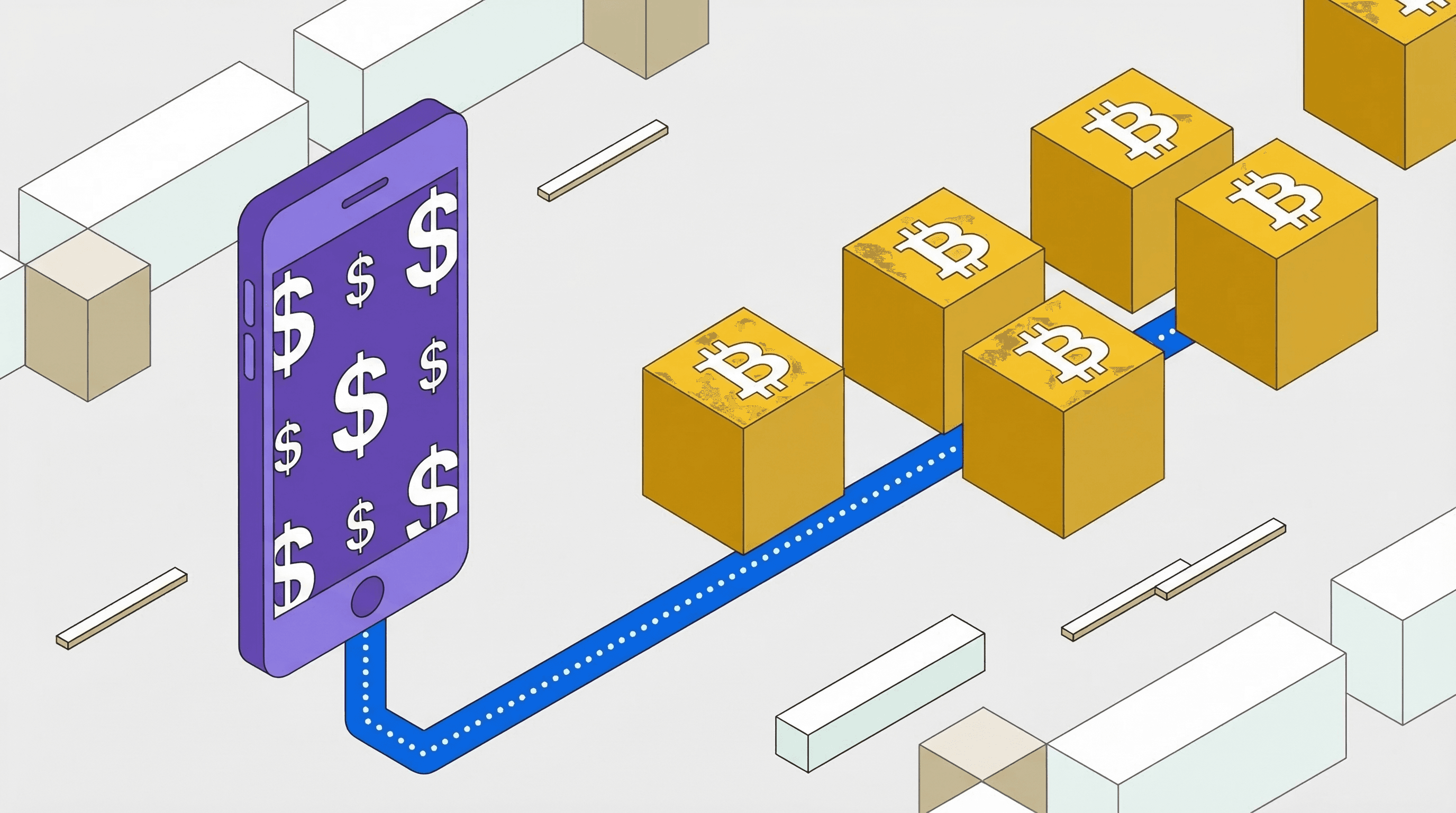
Digitally-native banks have grown fast by removing branches and rebuilding banking around apps, data, and always-on access.
A neobank is a digital-only financial institution that delivers banking services mainly through mobile apps and web platforms rather than physical branches. Depending on its license, it may be a fully regulated bank or a fintech working through partner banks or limited authorizations.
This article explains what a neobank is, how neobanks differ from traditional banks, how providers like Revolut, Monzo, and Nubank fit into the category, and where crypto-linked models fit.
Key Takeaways
Neobanks are branchless, app-first financial institutions, but the term covers both fully licensed banks and fintechs using partner-bank or e-money models.
Their edge comes from lower operating costs, modern technology, faster onboarding, and efficient payments, though profitability and compliance remain demanding.
Mainstream neobanks are expanding into crypto services, while future growth is being shaped by AI, global licensing, and the shift toward fully digital economies.
What Is a Neobank?
A neobank is a digital-only or digital-first provider of banking services. The IMF describes neobanks as direct, branchless banks that acquire and serve customers primarily through digital touchpoints such as mobile apps.
There is no single universal definition of a neobank. The European Parliament notes that the term can include fully licensed credit institutions as well as fintech firms that rely on partner banks or on lighter authorizations, such as e-money licenses.
That licensing diversity is central to the concept. Traditional banks are, by definition, fully licensed and regulated entities, while neobanks can sit across a wider spectrum of authorization and supervision.
How Neobanks Differ From Traditional Banks
The clearest difference is the operating model. Neobanks are built around mobile and web channels from onboarding to support, while traditional banks still rely on physical branch networks alongside digital services.
Their technology stack is also different. The BIS says neobanks make extensive use of technology, big data, and advanced analytics, often on digitally native platforms that are not burdened by legacy IT systems.
Their cost structure is typically lighter. Without branches and older infrastructure, neobanks avoid significant overhead and can often pass on efficiency gains to users through lower fees or no-fee offerings.
Licensing is another major split. Some neobanks hold full banking licenses, while others use e-money, payment institution, or sponsor-bank models and may not face the same prudential regulation as traditional banks.
Their funding and lending profiles can differ too. ECB analysis shows digital-only banks often rely heavily on retail deposits, including cross-border deposits, and tend to run more specialized lending books.
Benefits for Consumers and Businesses
For users, the biggest benefit is convenience. Neobanks let customers open and manage accounts remotely through apps or browsers, without paper forms or branch visits.
Speed is part of the appeal. Digital account opening can take minutes rather than days or weeks, improving access for consumers and helping businesses move faster when setting up financial services.
Lower costs can also matter. A branchless model and modern infrastructure support lower operating expenses, which can translate into reduced fees and simpler pricing.
Payment experience is another advantage. Neobanks integrate with modern rails such as Faster Payments, SEPA Instant, and Pix, supporting faster transfers and more seamless digital money movement.
The Rise of Mainstream Neobanks
Neobanking has scaled beyond early adopters. Grand View Research estimates the market at $66.82B in 2022 and projects $2,048.53B by 2030, reflecting rapid growth across regions.
Revolut shows how large digital-first banking can get. It reported 52.5M customers in 2024, £3.1B in revenue, and £790M net profit.
Monzo shows a different path with a tighter geographic focus. For the year ended March 31, 2025, it reported £1.2B in revenue, 12M+ customers, and £60.5M pre-tax profit.
Nubank shows neobanking at Latin American scale. It reported 114.2M customers as of December 31, 2024, and said it became Brazil’s third-largest financial institution by customer count.
Licensing Models and Regulatory Differences
How Neobanks Obtain Licensing
Full Banking Licenses
A full banking license places a neobank on a similar regulatory footing to a traditional bank. It allows deposit-taking, broader lending, access to central bank facilities, and participation in deposit insurance schemes.
Monzo and Revolut Bank UAB are examples of this route. In these models, the neobank remains a digital-first operationally, but it is prudentially supervised as a bank.
Partnering With Traditional Banks
Many neobanks launch through a Banking-as-a-Service or sponsor-bank model. The neobank owns the app, user experience, and brand, while a licensed partner bank provides regulated account and payment infrastructure.
This model is especially common in the United States. It allows faster launch and lower regulatory capital needs, though the neobank still operates under partner-bank oversight and relevant AML rules.
E-Money or Digital Asset Permissions
Some neobanks operate with narrower permissions than a bank charter. E-money institution models are part of the category, reflecting the sector’s licensing heterogeneity.
Digital asset permissions are becoming more relevant too. Revolut’s EEA crypto services are provided via Revolut Digital Assets Europe Ltd, which is licensed as a MiCA CASP in Cyprus and is listed as a crypto-asset service provider in Spain.
Differences From Traditional Banks
Operational Cost Advantages
Neobanks benefit from a lighter operating model. Without branch networks, they avoid major costs tied to rent, utilities, and in-branch staffing.
Modern infrastructure strengthens that cost edge. The BIS notes that neobanks often run on digitally native platforms rather than costly legacy systems common in traditional banking.
Efficiency can scale in measurable ways. Revolut says that despite 38% customer growth in 2024, it limited the increase in customer support costs to 5% after deploying generative AI and enhancing its chatbot. (Revolut Annual Report 2024)
Tech-Driven Product Development
Neobanks can iterate faster because their systems are built for change. Tech-native stacks and analytics-driven design help them launch features and improve products more quickly than institutions constrained by legacy IT.
The BIS frames this as an advantage in data and technology. That edge shapes not only product velocity, but also user experience, personalization, and operating flexibility.
Faster Onboarding and Payment Services
Onboarding is one of the most visible advantages. Customers can open accounts fully online through apps or browsers, with no paper forms and no branch appointment.
Payment services are built for digital speed. Neobanks connect to instant payment rails such as Faster Payments, SEPA Instant, and Pix, while also supporting card networks and in-app peer-to-peer transfers.
Scale shows the operational impact. Revolut processed more than £1 trillion in transaction volumes in 2024, highlighting how digital-first models can handle very large payment flows.
Regulatory Challenges and Compliance
Anti-Money Laundering (AML) and KYC
Compliance is one of the hardest parts of scaling a neobank. The IMF warns that proportional regulation may not always be sufficiently risk-based for different neobank models and risk appetites.
Supervisors have signaled that growth cannot outrun controls. In a 2025 Final Notice, the FCA penalized Monzo and said rapid customer growth must not come at the expense of systems that counter financial crime risk.
Neobanks are responding with more technology. Revolut reported investments in fraud controls and ML/AI-based detection that it said prevented an estimated £600 million in potential fraud in 2024.
Cross-Border Payment Regulations
Cross-border expansion makes supervision more complex. ECB analysis cited by the European Parliament points to challenges created by the large share of cross-border deposits at some digital-only banks.
Resolution planning becomes harder across jurisdictions. A neobank operating in dozens of countries must manage a patchwork of local licenses, rules, and supervisory expectations.
Consumer Protection Requirements
Consumer protection rules are tightening around digital finance. In the UK, the FCA Consumer Duty requires firms to put customers’ needs first and deliver good outcomes across products, pricing, understanding, and support.
Deposit protection remains a core issue in the US model. FDIC insurance protects deposits up to at least $250,000 at each FDIC-insured bank, which is why many US neobanks rely on insured sponsor-bank partners.
In the EU, payment rules shape the user experience. PSD2 and Strong Customer Authentication support open banking, security, and user control over financial data in digital payment environments.
Crypto-Native Neobanks
The Emergence of Blockchain-Based Banking
Stablecoin Payments and Wallet Integration
Specific stablecoin payment integrations vary by provider. Many neobank-style platforms are expanding into crypto services and building toward broader digital asset functionality.
That direction aligns with the infrastructure shift now underway. Plasma is purpose-built for stablecoin and digital dollar payments, giving businesses and institutions global, instant, low-cost rails with regulatory-ready design.
Decentralized Finance (DeFi) Features
Not all neobanks offer DeFi lending features today. Demand for crypto-related services is rising, and some providers are experimenting with how digital finance can be delivered through neobank interfaces.
What matters is the strategic trajectory. As digital finance matures, the line between app-based banking, tokenized payments, and programmable financial services is likely to keep narrowing.
24/7 Borderless Transfers
Always-on transfers are already part of the neobank value proposition. Revolut cites instant local and global peer-to-peer payments, supported by modern payment rails and its own ecosystem.
These services are not necessarily blockchain-based today. But they reflect the same user expectation that stablecoin networks address more directly: money that moves instantly, globally, and at internet speed.
Bridging Traditional and Digital Finance
Collaboration With Legacy Banks
Partnerships remain one of the main bridges between old and new models. Sponsor-bank arrangements let neobanks offer regulated accounts and payment services while focusing on software, user experience, and distribution.
That same pattern matters for digital assets. Hybrid structures can connect familiar banking protections with newer forms of programmable money movement and custody.
Hybrid Models for Compliance and Innovation
Hybrid models are becoming the practical center of the market. A neobank may combine app-first design, partner-bank infrastructure, local licenses, and selected crypto permissions rather than rely on a single regulatory path.
Revolut is a good example of this layered approach. It combines banking licenses, regional permissions, and CASP registrations while expanding both traditional financial services and crypto trading capabilities.
Expanding Consumer Trust in Crypto Banking
Trust depends on clear regulation, strong controls, and reliable service. That is why licensing, consumer protection, fraud prevention, and transparent supervision matter as much as product design.
The lesson from mainstream neobanks is straightforward. New financial interfaces gain adoption when they pair convenience with credible governance, not when they treat compliance as secondary.
Future Trends in Neobanking
AI and Personalized Financial Services
AI is becoming a core operating layer for neobanks. Revolut said generative AI and an enhanced chatbot reduced customer resolution times by 80% in 2024.
The payoff is both economic and operational. AI helped keep support-cost growth to 5% despite a 38% increase in Revolut’s customer base, and similar tools are being piloted in compliance work.
Global Expansion and Market Penetration
Leading neobanks are still pushing aggressively across borders. Revolut filed for more than 10 new licenses in 2024 and advanced banking or payment permissions in Mexico, India, and Brazil.
Market penetration is still rising in core regions too. In the euro area, digital-only banks increased aggregate market share from 3.1% in 2019 to 3.9% in 2024, indicating steady adoption rather than a temporary spike.
Evolution Toward Fully Digital Economies
Neobanks reflect a broader shift toward digital economies. As customers normalize branchless finance, regulators and institutions must adapt supervision, consumer safeguards, and resolution planning to more interconnected models.
This is where payment infrastructure becomes decisive. Plasma fits that direction by providing stablecoin-native rails designed for instant, low-cost, global money movement with regulatory-ready architecture.
Plasma One
Plasma One is a stablecoin app and card designed for saving, spending, sending, and earning with digital dollars in one place.
You can spend directly from your stablecoin balance with no manual top ups, so your balance can keep earning until the moment you use it. Rewards are tier-based, paid in XPL tokens, with cash back up to 4% and additional boosts at select partners.
For moving money, Plasma One supports zero-fee USD₮ transfers via Plasma routes and bank withdrawals through connected off-ramps. Timing and fees depend on region and partner coverage.
Setup is designed to be quick. After simple in-app verification, you can get an instant virtual card, add it to Apple Pay or Google Pay, and order a physical card where available.
Security is built around biometric sign-in, encryption, and hardware-backed keys instead of seed phrases, plus controls like real-time alerts, spending limits, and instant freeze.
Plasma One is a fintech product, not a bank, and Plasma does not custody your assets. Rewards, rates, and availability can change, and third-party fees may apply.
Conclusion
So, what is a neobank? It is a digital-only or digital-first financial institution that delivers banking services through apps and online platforms, often with a very different cost base, technology stack, and licensing structure from traditional banks.
The category is broad, but the direction is clear. Revolut, Monzo, and Nubank show that consumers will adopt banking products that are faster, simpler, and better aligned with digital behavior.
The next step is infrastructure that better supports instant, borderless, and always-on value transfer. Stablecoin-native systems like Plasma are one approach aimed at delivering that availability, depending on regulation, integrations, and adoption.