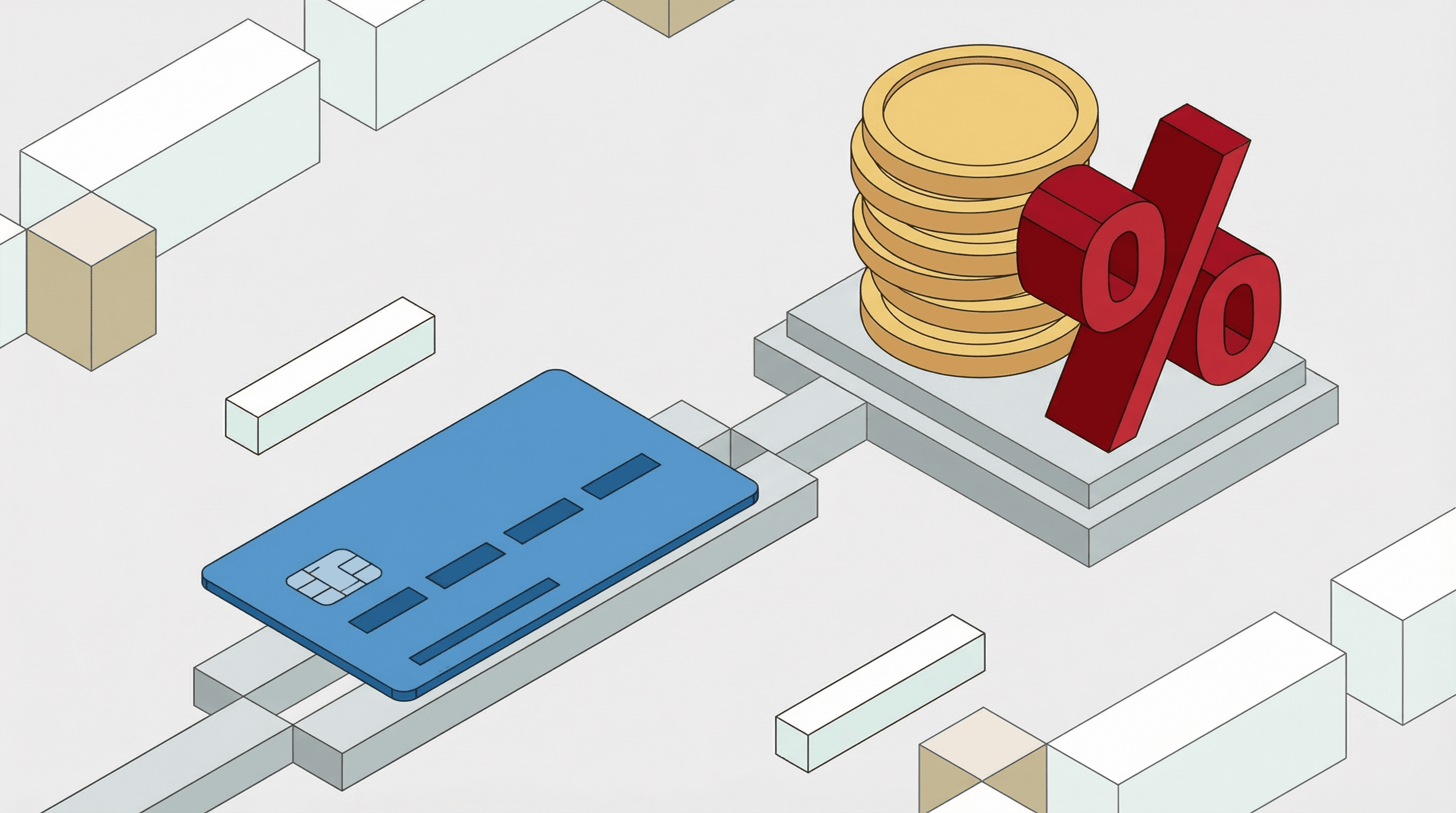
International card payments often include hidden costs that allow providers to market "fee-free" conversions while quietly increasing the total price through layered surcharges and adjusted rates.
FX markup fees are the spreads and additional costs added on top of a mid-market exchange rate by card networks, banks, and merchants. These invisible fees ensure that consumers rarely receive the "fair" interbank price, with total markups often exceeding 3% of the transaction value.
This guide explains how currency conversion really works, from network scheme rates to the pitfalls of dynamic currency conversion. You will learn to identify these costs and how stablecoins offer a more transparent path for global value movement.
Key Takeaways
FX markups are multi-layered, involving card network "scheme rates," issuer-side foreign transaction fees, and point-of-sale markups.
Consumers rarely access the pure mid-market rate, and the network or issuer rate applied may differ from public benchmark quotes depending on the card program and processing model.
Stablecoins provide a high-transparency alternative by settling onchain in real-time, eliminating multi-day settlement lags and opaque intermediary spreads.
The Invisible Fee Inside Every International Card Payment
Why FX Costs Are Easy to Miss
Currency Conversion Happens Automatically
Most consumers remain unaware of FX markups because the conversion process is handled automatically by the payment rail during settlement. Because the final amount is simply debited from a bank account in the local currency, the underlying spread remains buried within the transaction total.
The Difference Between Price Transparency and Price Visibility
There is a stark difference between seeing a final price and understanding the rate formation. While a statement provides price visibility, true transparency regarding the markup over the mid-market rate is usually absent, leaving the cardholder unable to benchmark the fairness of the deal.
What “FX Markup” Actually Means
Defining the Spread
An FX markup is any charge or spread added on top of a benchmark exchange rate. In the currency markets, the spread is the difference between the buy and sell prices, and the markup pushes the consumer’s executable price further away from this neutral midpoint to generate profit.
Mid-Market Rate vs Card Network Rate
The mid-market rate is a fair-value midpoint, but card networks like Visa and Mastercard use wholesale-based "scheme rates" instead. These rates may differ from public mid-market benchmarks, and issuers or merchants may add further fees or markups on top.
How Markups Get Layered
A single transaction often carries multiple stacked costs. The total FX markup is an accumulation of network-level assessments, issuer fees, and potential merchant markups, moving the final price progressively further from the theoretical mid-market rate seen on financial news sites.
The Mid-Market Rate: The Benchmark Everyone References
How the Mid-Market Rate Is Calculated
Interbank Trading and Liquidity Pools
Mid-market rates are derived from high-volume data snapshots provided by benchmark entities like WM/Refinitiv or central banks. These providers capture bid and offer quotes from liquid interbank platforms to calculate a transaction-oriented median that reflects the real-time state of the market.
Why This Rate Is Considered “Fair”
This rate is considered "fair" because it represents the mathematical center of the global market without added profit margins. It serves as the essential benchmark for all FX pricing, though it remains largely inaccessible to retail consumers through traditional banking channels.
Why You Never Actually Get the Mid-Market Rate
Built-In Network Adjustments
Card networks do not provide direct access to interbank pricing. Visa and Mastercard apply their own proprietary conversion rates which, while based on wholesale activity, are not identical to the mid-market rate and may be adjusted to account for the networks' own internal costs.
Scheme FX Rates and Pricing Windows
Card-network FX rates are not the same thing as a live spot quote.
Visa, for example, says its currency conversion rate is selected from a range of wholesale market rates and may be adjusted by an Optional Issuer Fee.
Separately, benchmark providers such as WMR build reference rates using defined sampling windows rather than a single instantaneous quote, which helps explain why benchmark rates and card-network rates may differ from what consumers see on financial news sites.
Buffering for Volatility
Financial institutions incorporate buffers to protect against sudden currency swings. Visa states its rate may be adjusted by an Optional Issuer Fee, while benchmark providers set standard spreads for each currency pair to manage the risks associated with liquidity and market timing.
Who Adds the Markup in a Card Transaction
Card Networks
Card networks function as the primary layer of the conversion process. Visa and Mastercard charge assessment fees to issuing banks for cross-border transactions, costs that are frequently passed down to the consumer as a percentage of the total purchase amount.
Assessment and Currency Conversion Fees
For Visa, the International Service Assessment (ISA) fee is typically 1.0% when currency conversion is required. If the transaction is processed in the card’s issued currency, Visa says no ISA applies, although a merchant-side DCC fee may still appear.
That said, cross-border activity can still generate a network-level charge even without conversion: GSA SmartPay’s example notes a 0.8% same-currency Cross Border Fee for Mastercard and a 1.0% fee when conversion is required.
Issuing Banks
The bank that issued your card often adds the most visible layer of cost. Issuing banks typically charge Foreign Transaction Fees (FTFs) ranging from 0% to 3%, which are applied as a surcharge on every transaction after the network has already converted the currency.
Foreign Transaction Fees
These fees are explicitly disclosed in cardmember agreements but are bundled into the total cost. For example, American Express charges a 2.7% FTF on many consumer cards, a direct markup that is applied once the network converts the charge into the cardholder's home currency.
Payment Processors and Wallets
Third-party platforms and digital wallets may introduce another layer of pricing complexity. If a wallet performs its own conversion, the platform may apply a separate FX spread on top of existing network fees, further inflating the total cost for the end-user.
Platform-Level FX Spreads
Platforms often use proprietary spreads to monetize the convenience of their interface. This results in a multi-layered fee structure where the processor adds a margin to the rate provided by the bank, making it difficult for users to track the cumulative markup.
Step-by-Step: How Currency Conversion Happens at Checkout
Authorization Stage
The process begins when a merchant requests approval for a transaction. At this point, the exchange rate provided is often merely an estimate, and the network’s online calculators clearly state that these figures are indications rather than a guarantee of the final price.
Rate Estimation vs Final Settlement Rate
Because the market is moving, there is a discrepancy between the authorization estimate and the final billed amount. Depending on the card network and issuer setup, the final billed rate may be locked earlier or determined later in processing.
Clearing and Settlement
Final conversion occurs during the settlement stage after the transaction is submitted for clearing. Amex commonly converts on the processing date; Visa may use the authorization-time rate, depending on the transaction and issuer setup.
When the Final FX Rate Locks In
The rate only locks in when the back-end processing is finalized. The delay between purchase and processing exposes the cardholder to market volatility, meaning a weakening home currency during those 48 hours can lead to a significantly higher final bill.
Dynamic Currency Conversion (DCC) vs Card Network Conversion
How DCC Is Presented to Cardholders
Dynamic Currency Conversion is an option offered at the point of sale to pay in your home currency. While this provides upfront certainty, it is often presented in a confusing manner that encourages users to accept a rate that is significantly worse than the network default.
Merchant-Offered Conversion at POS
When a merchant offers DCC, they are bypassing the network’s wholesale rate in favor of their own. This allows the merchant and their acquirer to set the rate, often including a "standalone fee" that is added to the transaction to generate extra revenue at the checkout.
Why DCC Rates Are Often Worse
DCC rates are almost always less favorable than the card network’s standard conversion. Because Mastercard and Visa are not involved in setting DCC markups, the merchant has the freedom to apply substantial spreads that are not moderated by network wholesale competition.
Incentive Structures Behind DCC
Merchants are incentivized to offer DCC because they share the profit from the markup. The revenue generated from currency conversion is split between the merchant and their acquirer, creating a commercial motivation to push a more expensive service onto the cardholder.
Pricing Models for FX Markups
Flat Foreign Transaction Fees
The most common model involves a static percentage added to every international purchase. Many banks use a flat percentage-based fee that applies regardless of the currency pair’s volatility, providing a predictable but often expensive revenue stream for the issuer.
Percentage-Based Pricing
This model is easy to calculate but rarely offers the best value. Whether it is the 2.7% Amex FTF or the 1.0% Visa ISA fee, percentage-based pricing ensures that larger transactions carry proportionately higher costs regardless of the actual work required to settle them.
Blended Exchange Rates
Some providers use an "all-in" rate that avoids separate fee line items. In this model, markups are baked directly into the displayed exchange rate, making it appear that there are no fees while the provider profits from the difference between their rate and the wholesale market.
All-In Displayed Pricing
This is the standard for DCC and some fintech wallets. While all-in pricing provides the user with an upfront final cost, the embedded markup is often significantly higher to compensate for the risk of currency fluctuations that might occur before the provider settles the trade.
Regional and Currency Pair Variations
Major vs Exotic Currency Costs
Liquidity plays a massive role in determining the size of the markup. Major pairs like USD/EUR have tighter spreads because they are highly liquid, whereas exotic currencies like the Thai Baht have wider spreads to compensate for the increased risk of sourcing the currency.
Liquidity and Volatility Effects
When liquidity is low, the cost of conversion rises. Less-liquid currencies often end up with wider consumer pricing, but benchmark-construction spreads should not be equated directly with retail markups.
Weekend and Off-Market Pricing
FX costs frequently spike when primary markets are closed. During weekends or bank holidays, financial institutions widen their spreads or use "rate freezes" to create a risk buffer against potential market gaps that might occur when trading resumes on Monday.
Rate Freezes and Risk Buffers
WMR benchmarks for local close currencies may remain unchanged after markets shut. This lack of live data forces providers to institute hefty price markups to hedge against backend fluctuations that occur while the user is transacting off-market.
How Stablecoins Change the FX Equation
Onchain Settlement vs Card Rails
Stablecoins offer a fundamental shift by utilizing onchain settlement. Unlike card networks that settle days later, stablecoin transactions finalize in minutes or seconds, eliminating the time lag that forces traditional providers to charge high volatility buffers.
Eliminating Multi-Layer Markups
By moving value peer-to-peer, stablecoins can bypass the traditional hierarchy of fees. Payments made with tokenized balances remove the need for issuer FTFs and network assessments, potentially reducing the total cost of conversion to a fraction of the traditional rate.
Stablecoin FX Liquidity
The pricing of stablecoin swaps is determined by open, competitive markets. Liquidity pools on centralized and decentralized exchanges provide real-time pricing, allowing users to access market-driven rates that are often closer to the mid-market benchmark than bank rates.
Crypto-Native Conversion Paths
Instead of relying on a private bank rate, users can swap one stablecoin for another on public order books. This provides a "what you see is what you get" experience, where the exact executable price is visible before the user confirms the transaction.
Cost Transparency: Card Rails vs Stablecoin Payments
Visibility Into Rate Formation
On traditional rails, rate formation visibility is exceptionally low. Card networks use opaque wholesale selection processes that are not fully transparent, whereas stablecoin systems rely on public market data that anyone can verify on a blockchain or exchange.
Real-Time Market Pricing
Stablecoins enable real-time market pricing that reflects current supply and demand. Users can see the exact rate before execution, a contrast to the "static rates" warned about in Visa Direct literature, which often hide large markups to cover backend risks.
User Experience and Disclosure
The shift toward modern platforms is focused on placing control in the hands of the user. Modern payment products allow users to approve a rate before proceeding, a design pattern that is native to crypto rails but often absent in the traditional card experience.
Displaying FX Fees Upfront
While some fintechs attempt to solve this by passing through mid-market rates with a separate fee, stablecoins make this transparency a default feature. By displaying FX costs upfront, platforms build trust and allow for a more honest comparison of transaction value.
Designing Better Cross-Border Payment Products
Passing Through Mid-Market Rates
A growing number of fintech companies differentiate themselves by passing through the mid-market rate directly. Charging a separate, explicit fee for the service instead of a hidden markup builds customer trust and aligns the provider with the user's interests.
Revenue Tradeoffs
Forgoing hidden markups requires a shift in the business model. While issuers lose the spread-based revenue, they can gain market share by offering a more transparent value proposition that appeals to savvy international travelers and global businesses.
When Markups Are Strategically Justified
Markups are not always used for pure profit; they often cover essential operational expenses. Strategically applied markups fund currency hedging, compliance overhead, and treasury management, ensuring the provider can maintain liquidity across multiple jurisdictions.
Risk, Compliance, and Treasury Costs
Managing international money movement involves significant back-end complexity. Markups help offset the costs of regulatory compliance and the risk of holding various currencies, but the modern goal is to make these costs explicit rather than burying them in the rate.
Key Takeaways for Payment and Fintech Builders
Where the Hidden Costs Sit
Hidden costs in the current system are concentrated in the settlement delay and the layering of intermediary fees. The gap between authorization and processing remains the primary source of FX risk, leading to the protective markups that consumers ultimately pay.
How to Reduce FX Friction
The most effective way to reduce friction is through increased transparency and settlement speed. Moving toward a model where users approve a live rate before execution eliminates the uncertainty of the card-based two-stage authorization and settlement process.
The Role of Stablecoins in Future FX Pricing
Stablecoins are the logical infrastructure for the future of global payments.
As cross-border payments evolve, users will increasingly expect clearer pricing, faster settlement, and fewer hidden costs. Plasma One reflects that shift by offering a stablecoin-based payment experience designed around transparency and efficient global transfers.