Crypto onboarding has a well-documented problem. Seed phrases, gas fees, browser extensions, and manual key management create friction that drives mainstream users away before they ever complete a transaction.
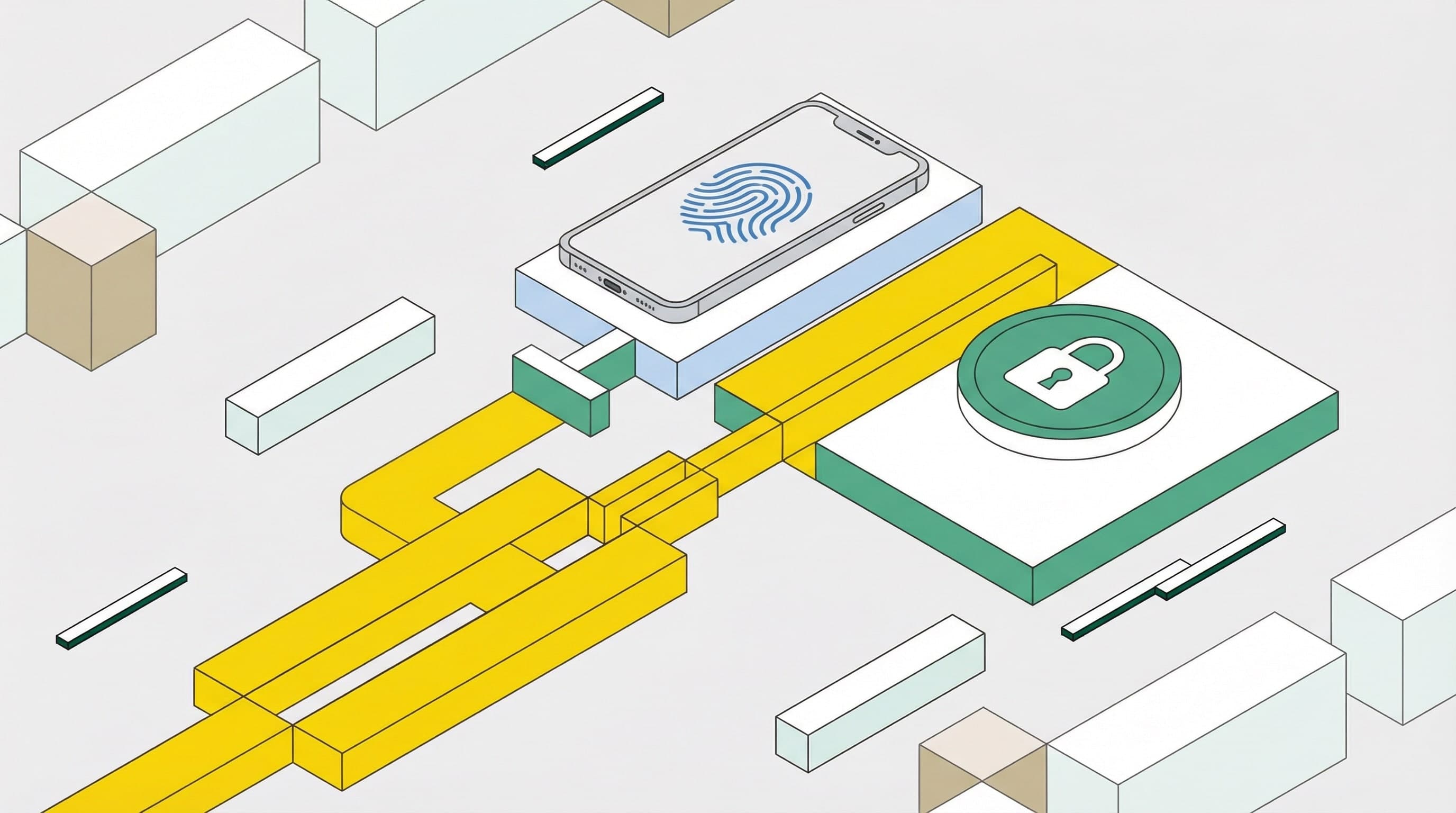
Embedded wallets solve this by integrating wallet infrastructure directly into the application layer, removing the need for external software and replacing seed phrases with modern authentication methods like email, biometrics, and social login.
This article explains how embedded wallets work under the hood, the cryptographic models that make them secure, and how Privy’s architecture handles key management across the custody spectrum.
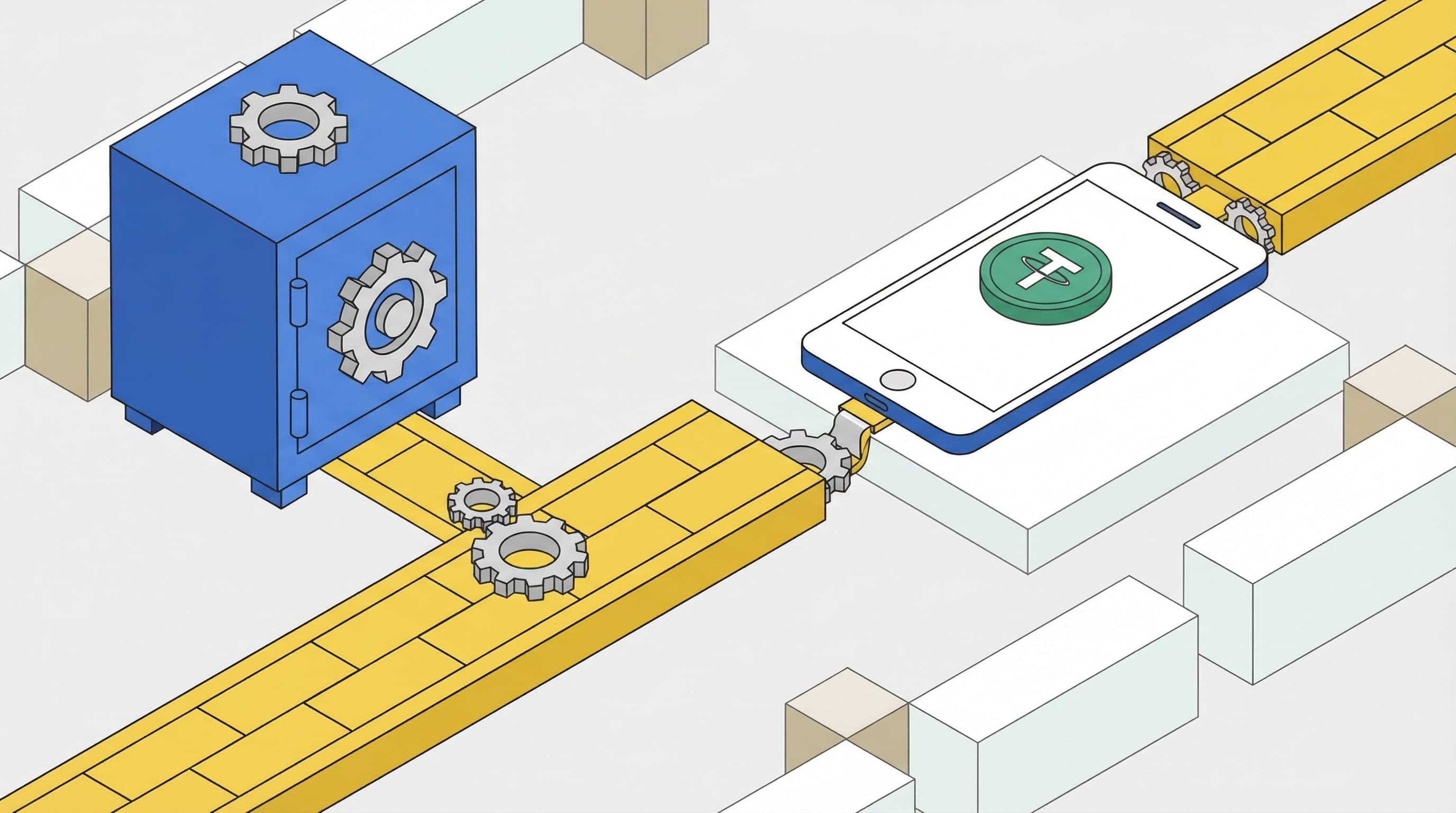
You will also learn how this infrastructure enables consumer and business financial products like Plasma One to offer stablecoin payments without exposing users to blockchain complexity.
Key Takeaways
Embedded wallets abstract away seed phrases by handling private key management behind the scenes, often using distributed or hardware-backed security models.
Different key management architectures, such as MPC or Trusted Execution Environment (TEE)-backed systems, offer distinct trade-offs between security, performance, and user control.
Privy combines key sharding via Shamir’s Secret Sharing (SSS) and a TEE implementation to reconstruct keys briefly in a hardware-isolated environment during signing, with no single component ever holding the full key.
This infrastructure enables financial products like Plasma One to offer consumer and business accounts, stablecoin-powered payments, and cross-border transfers with a fintech-grade onboarding experience.
Why Seed Phrases Fail Mainstream Users
The traditional self-custody model requires users to generate, record, and securely store a 12 or 24-word recovery phrase. If they lose it, their funds are permanently gone.
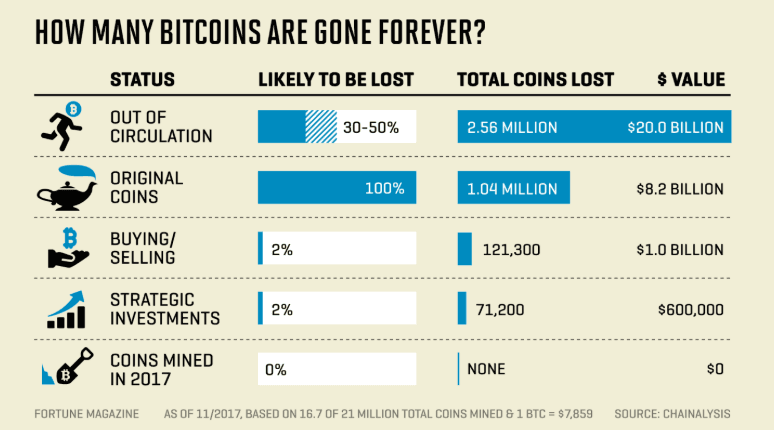
Fortune visualization of Chainalysis estimates of Bitcoin likely lost forever, highlighting the recovery-key problem. Source: Fortune (Original research from Chainalysis)
Beyond recovery risk, the onboarding process itself creates drop-off at every stage. Users must install browser extensions, understand gas fees (the transaction fees a blockchain network charges to process operations), acquire native tokens just to move stablecoins, and navigate network selection. Each step adds cognitive load and introduces a failure point.
This friction is fundamentally incompatible with the expectations of everyday users, who are accustomed to logging in with an email and transacting immediately. Embedded wallets exist to close this gap.
The Key Management Spectrum: Understanding the Trade-offs
One of the most important design decisions in embedded wallet infrastructure is the key management model. There is no single correct answer; different approaches serve different use cases. Understanding the spectrum is essential for evaluating any embedded wallet provider.
Multi-Party Computation (MPC)
MPC is a technique where multiple parties jointly compute a cryptographic operation (like signing a transaction) without any single party ever holding the complete private key. Each party holds a key share and contributes to the signing process independently. The full key is never reconstructed in any single location.
The advantage of MPC is that there is no single point of compromise. The trade-off is computational overhead: coordinating multiple parties for every signature adds latency, which can affect the responsiveness of consumer-facing applications. Providers like Fireblocks and Fordefi use MPC-based approaches.
Shamir’s Secret Sharing + Trusted Execution Environments (SSS + TEE)
This is the model Privy uses. Shamir’s Secret Sharing is a cryptographic technique that splits a secret (in this case, a private key) into multiple shares, where a defined threshold of shares is needed to reconstruct the original. Critically, any individual share reveals nothing about the key on its own. Even if an attacker obtains one share, they cannot derive or guess the original key from it.
Privy uses a 2-of-2 model: one share is held server-side within an AWS Nitro Enclave (a hardware-isolated Trusted Execution Environment), and the other is tied to the user’s authentication credential. When the user needs to sign a transaction, both shares are brought together inside the TEE, the key is reconstructed briefly in isolated memory; the transaction is signed, and the key material is immediately destroyed.
The advantage of this model is speed, with sub-20ms signing latency achieved in some integrations.
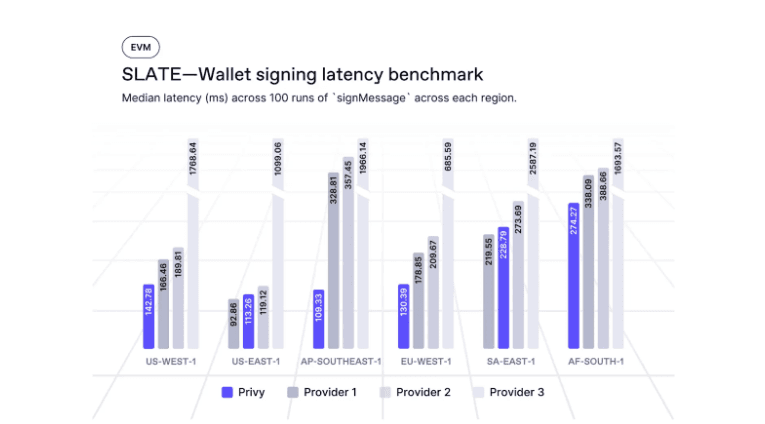
Privy’s SLATE benchmark compares median wallet signing latency (ms) across six regions, based on 100 signMessage runs per region. Source: Privy
Key Abstraction: How Privy Handles the Cryptography
Key abstraction is the practice of replacing manual key management with automated systems that handle key generation, storage, signing, and recovery on behalf of the user. The user authenticates; the infrastructure handles everything else.
Key Generation
When a user creates an account, Privy generates a private key using a cryptographically secure pseudorandom number generator. The resulting entropy (random data) is immediately split into two shares using SSS. The full key exists for only the brief moment it takes to perform this split, and is then discarded. From this point forward, only the shares exist.
Key Storage
One share is encrypted and stored within Privy’s infrastructure, specifically inside an AWS Nitro Enclave. Nitro Enclaves are hardware-isolated virtual machines with no persistent storage, no external networking, and no operator access. Even Privy’s own engineers cannot extract data from a running enclave.
The second share is encrypted and linked to the user’s authentication credential (their email, social login, or passkey).
Transaction Signing
When a user initiates a transaction (for example, sending USD₮ to a friend), the following happens in the background:
The user authenticates via their chosen method (email, social, biometric).
Both encrypted shares are fetched and sent to the TEE.
Inside the enclave, the shares are decrypted and the private key is reconstructed in isolated memory.
The transaction is signed.
The reconstructed key is immediately destroyed. It never leaves the enclave.
The entire process completes in milliseconds. From the user’s perspective, they clicked "send" and it works.
Recovery Without Seed Phrases
Because the user’s share is tied to their authentication credential, recovery works through the same flows users already know: email verification, social login, or biometric re-authentication. If a user loses their phone, they can recover their wallet by logging back in through their email or social account, the same way they would recover access to any other app.
Privy also supports key export, meaning users can extract their private key and use it with any other wallet client if they choose. This preserves the option of full self-custody for users who want it, while defaulting to a managed experience for everyone else.
Privy can also serve as a signer for MetaMask Smart Accounts in integrated apps, bridging the gap between embedded and externally owned account (EOA) wallet experiences.
Account Abstraction: Removing the Last Layer of Friction
Embedded wallets handle key management, but there is another source of friction: gas fees. On most blockchain networks, the user must hold the network’s native token (ETH on Ethereum, for example) to pay for transaction processing, even if they only want to send a stablecoin.
Account abstraction solves this. Standards like EIP-4337 (which enables smart contract wallets that can sponsor gas fees and batch multiple operations into a single transaction) and EIP-7702 (which allows standard accounts to temporarily delegate to smart contract logic) let applications pay gas on behalf of users.
Combined with embedded wallets, this means a user can sign up with their email, receive USD₮, and send it to someone else without ever knowing they are using a blockchain. No seed phrase, no gas token, no network selection. The experience is indistinguishable from a traditional payment app.
What This Enables for Consumer Products
When you combine embedded wallets, key abstraction, and account abstraction, you get applications where the blockchain is infrastructure rather than the product. The user experience can finally match what mainstream fintech users expect.
Consumer & Business accounts: Plasma One
Plasma One is a consumer and business financial platform that uses embedded wallet infrastructure to deliver a full-featured money experience on top of stablecoin rails. Members sign up, verify their identity, and can have the full fintech experience with digital dollars without encountering seed phrases, gas fees, or wallet management.
This is the design pattern that embedded wallets enable: the product feels like a modern financial app, and the blockchain is the settlement layer running in the background. Privy's infrastructure handles the key management, the Plasma team handles the financial experience, and the member sees a clean, simple interface.
Cross-Border Payments
Global money movement is one of the strongest features this stack enables, and a core capability inside Plasma One. Traditional remittance services are slow and expensive. A cross-border financial product built on embedded wallet infrastructure can offer instant settlement, low fees, and a familiar interface, while members move USD₮ globally without any awareness of the underlying technology.
Social Commerce and Gaming
Social commerce apps use embedded wallets to enable in-app purchases and rewards through existing social accounts, without requiring users to leave the app to manage a separate wallet. Gaming platforms let players own in-game assets and trade on open secondary markets while keeping the focus entirely on gameplay. In both cases, the wallet is invisible, and the value proposition is the product itself.
The Shift in Product Design Philosophy
The industry is moving toward a model where "crypto" is an implementation detail. The most successful blockchain-based products are the ones that never mention blockchain in their user-facing experience. They solve a real problem (fast payments, digital ownership, global access to financial services) and use decentralized infrastructure to do it better than centralized alternatives.
Building for mass adoption requires this kind of invisibility. When the technology disappears, the utility comes forward. Embedded wallets and key abstraction are what make this possible, turning the complexity of self-custody into a solved infrastructure problem rather than a burden placed on every individual user.
Financial products built on this stack, like Plasma One, can match traditional financial services on everyday experience such as accounts, spending, transfers; while adding the settlement speed, programmability, and global reach of stablecoins.
Disclaimer
This article is for educational and informational purposes only. It does not constitute, and should not be construed as, investment advice, financial advice, legal advice, tax advice, a solicitation, an offer, or a recommendation to buy, sell, or hold any digital asset or financial instrument. The technologies described involve substantial risks, including but not limited to smart contract vulnerabilities, regulatory uncertainty, and potential loss of assets. Readers should conduct their own due diligence and consult qualified professionals before making any decisions.