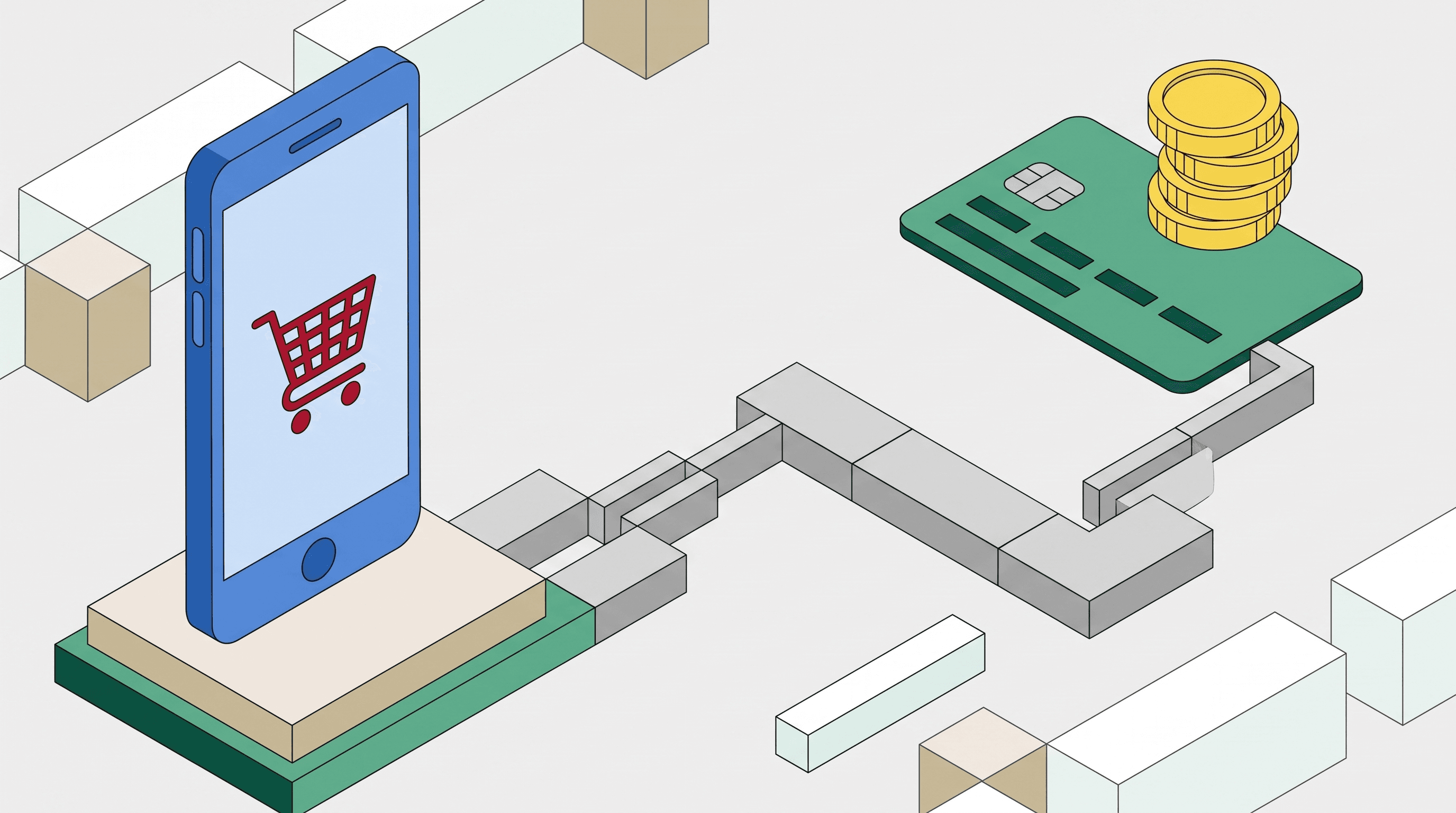
Financial services are no longer confined to bank branches or standalone apps. Instead, they are becoming a natural, invisible part of the digital tools and platforms we use every day.
Embedded finance is the seamless integration of financial services, such as payments, lending, or insurance, directly into the products and user experiences of non-financial companies via APIs. This model allows businesses to offer native, contextual financial tools within their existing software.
In this article, you will learn how this technology works, explore real-world examples in retail and SaaS, and understand the risks and future trends. Keep reading to see how money is changing.
Key Takeaways
Embedded finance makes financial transactions a native part of the customer journey through APIs and Banking-as-a-Service (BaaS).
Businesses benefit from significantly higher customer lifetime value, increased retention, and new high-margin revenue streams.
Embedded finance depends on partnerships between brands, fintech infrastructure providers, and regulated financial institutions, with APIs making the experience feel native to the platform.
What Is Embedded Finance?
A Simple Definition of Embedded Finance
At its core, embedded finance enables non-financial businesses to integrate banking-like capabilities into their core product. Rather than acting as a standalone product, the financial service becomes a functional feature of a platform, like a ride-sharing app or a retail shop.
This shift allows for the creation of native, contextual financial offerings that feel like a natural extension of the brand.
For example, a marketplace can manage sign-ups, sales, and payouts for its users through a single, integrated solution rather than using disparate outside systems. By consolidating these functions, platforms can offer a unified experience that keeps users engaged within their ecosystem.
How Embedded Finance Works in Everyday Digital Experiences
The delivery of these tools relies on a sophisticated tech stack that abstracts the complexity of regulated banking. Infrastructure providers handle the backend information, including compliance and bank partner negotiations, so the frontend business can focus on the user experience.
The Role of APIs and Banking-as-a-Service (BaaS)
BaaS is the foundational infrastructure enabling embedded finance. It functions as a systems-level arrangement where licensed banks provide their regulated services directly to non-financial businesses through modular software components.
These systems use Application Programming Interfaces (APIs) to enable non-financial platforms to securely connect to core banking systems. This connectivity enables real-time actions, such as approving card transactions instantly or allowing for instant settlements via payment rails like RTP.
How Financial Institutions and Non-Financial Platforms Work Together
Operational success normally requires a tripartite model involving the brand, the fintech partner, and the regulated bank. The brand owns the customer relationship and user experience, while the fintech partner provides the API platform and orchestrates technical execution, such as fraud detection.
The regulated bank provides the legal foundation, holding the necessary charters and licenses for money movement. This collaboration allows brands to issue payment cards or offer treasury services without needing to become a bank themselves.
Why Embedded Finance Has Grown So Quickly
Changing Consumer Expectations
Modern users demand one-click contextual convenience within the apps they already use daily. This preference has turned financial services into an invisible utility, where transactions are effortless and embedded directly into the digital interfaces of non-financial brands.
The Rise of E-Commerce and Mobile Apps
The proliferation of digital platforms has created endless surfaces for embedding. For instance, platforms can now attach cards to open-loop wallets, providing users with more integrated money movement options directly within their shopping or work environments.
Advances in Fintech Infrastructure
The maturation of cloud-native, scalable infrastructure has enabled providers to deliver comprehensive debit and credit solutions as modular components.
Modern API documented guides simplify how developers build and manage card programs, making complex deployments accessible to any company.
Common Types of Embedded Finance
Embedded Payments
Embedded payments represent the most common form of integrated finance, allowing users to complete transactions without leaving an app or website. This technology integrates pay-in and pay-out functionality directly into the user journey, removing the friction of traditional redirects.
In-App and One-Click Payments
One-click payments eliminate the need to enter card details repeatedly by securely storing credentials for future use. For the consumer, this creates a seamless transaction experience.
For the platform, it significantly reduces cart abandonment and improves conversion rates. By simplifying the checkout, brands can capture intent immediately.
Digital Wallets and Mobile Payment Systems
Digital wallets facilitate mobile-first transactions by allowing users to store value and manage cards in a centralized hardware or software vault.
These systems allow for manual or in-app push provisioning, where a newly issued card is instantly added to a mobile wallet like Google Pay or Apple Pay.
Embedded Banking
Embedded banking provides white-labeled banking products through non-financial software. This allows companies to offer their customers monetary accounts, cards, and financing directly within their existing software, with these services handled by back-end infrastructure providers.
Accounts, Debit Cards, and Money Management Tools
Platforms can now issue branded physical and virtual cards to their users. For example, mobility platforms like Uber and Lyft offer driver-specific debit cards, such as the Uber Pro Card or Lyft Direct, ensuring drivers have immediate access to their earnings.
Banking Features Inside Consumer and Business Platforms
Many Software-as-a-Service (SaaS) platforms integrate financial utility directly into their management dashboards. For instance, Shopify Balance uses embedded infrastructure to help merchants manage their business funds and rewards without needing a separate bank.
Embedded Lending
Buy Now, Pay Later (BNPL)
BNPL integrates installment payments directly into the e-commerce checkout flow. The CFPB reported that six major BNPL firms served a combined 53.6 million consumers who took out at least one BNPL loan in 2023.
Point-of-Sale Financing
Beyond simple installments, Point-of-Sale (POS) financing offers larger loans for significant purchases like appliances or electronics. This contextual credit allows platforms to increase their average order value by offering clear, fixed-rate terms at the moment of sale.
Business Financing and Invoice Funding
Business lending allows SaaS platforms to offer capital based on internal platform sales data rather than traditional credit scores. Solutions like Shopify Capital provide merchant financing to help small businesses grow their inventory or marketing efforts based on their proven sales history.
Embedded Insurance
Embedded insurance offers point-of-sale protection by bundling coverage into the purchase of a product or service. This hyper-personalized protection ensures that a consumer is covered only for the specific risks associated with their current activity.
Insurance at Checkout
Insurance is frequently added during the purchase flow for high-risk items like electronics. By offering protection during the transaction, brands ensure coverage is relevant to the item being purchased, significantly increasing the likelihood of adoption.
Product, Travel, and Auto Insurance Integrations
Platforms facilitate travel and auto insurance integrations that allow travelers to protect their flights or car rentals with a single checkbox. This integration ensures the insurance product is contextual, matching the user's selected travel dates or vehicle type.
Embedded Investing
Embedded investing democratizes access to financial markets by placing investment tools inside non-financial apps. This lowers the barrier to entry by automating the investment process for users who may not have a dedicated brokerage account.
Fractional Investing and Round-Up Features
Fractional investing and round-up features allow users to invest small amounts of spare change from daily transactions. Automation removes the cognitive burden of manual saving, embedding investment behavior into routine spending patterns.
Crypto and Digital Asset Investing
Platforms are increasingly integrating digital dollars and stablecoins like USD₮, with some providers offering stablecoin-backed card programs in over 30 countries. This allows users to store and spend digital assets as easily as traditional currency.
Real-World Examples of Embedded Finance
Ride-Sharing and Mobility Apps
Mobility platforms use embedded finance to support drivers by providing immediate access to their weekly or daily earnings through specialized digital accounts. Uber offers the Uber Pro Card, a debit card that enables instant payouts and provides fuel rewards, such as 5% cash back at gas stations.
Similarly, the Lyft Direct business debit card allows drivers to manage their business expenses and access funds without waiting for traditional bank settlement cycles.
E-Commerce and Retail Platforms
Retailers have shifted from simple payment processing to offering flexible credit through BNPL integrations at the digital checkout.
Major providers like Klarna, Affirm, and Afterpay enable installment payments that have been shown to increase average order values and reduce cart abandonment. This growth illustrates how installment credit has moved from a niche option to mainstream checkout infrastructure.
SaaS and Business Software Providers
SaaS platforms have become financial hubs for small businesses by embedding payroll, lending, and merchant accounts into their core dashboards. Shopify Payments is a primary example, as it reached a penetration level of roughly 65.6% of its total Gross Merchandise Volume (GMV) by the end of 2025.
By using infrastructure from partners like Stripe, Shopify provides merchants with faster access to funds and capital rewards.
Travel and Hospitality Platforms
Modern travel sites now embed insurance and protection products directly into the booking flow. Platforms like Expedia and Booking.com partner with insurers such as Cover Genius to offer hyper-personalized micro-insurance based on the specific trip details.
These partnerships allow platforms to offer protection as a seamless add-on rather than a separate purchase decision.
Gig Economy and Freelancer Platforms
For independent workers, liquidity and cash flow are major hurdles that embedded financial tools are designed to solve through integrated digital wallets. By embedding banking services, platforms can offer automated tax withholding and expense tracking alongside their primary labor marketplace.
This turns the platform into an all-in-one management dashboard, ensuring freelancers can access their pay in USD₮ quickly to cover living costs.
Benefits of Embedded Finance for Businesses
Creating New Revenue Streams
Embedded finance allows non-financial companies to generate income through transaction fees and interchange fees. Instead of simply facilitating a sale, a business can earn a portion of the fee every time a customer uses a card or accesses credit through their platform.
This transforms the payment process into a secondary profit engine that grows as transaction volume increases.
Improving Customer Retention and Loyalty
This integration creates switching costs that naturally improve retention metrics over time. When financial products become embedded in daily workflows, switching costs rise naturally for the end user.
When a customer relies on a platform for their banking or business capital, they are less likely to switch to a competitor.
Delivering Better User Experiences
Integrating payments or lending reduces friction in the purchase path, leading to higher sales. By simplifying the path to purchase, embedded payment tools capture sales that might otherwise be lost to friction.
By removing the need to visit a separate banking app, businesses capture intent more effectively.
Using Financial Data for Personalization
Access to transaction history allows businesses to tailor offers based on real-world spending behavior. Using this data, companies can provide customized insurance or dynamic credit limits that reflect a user's actual needs.
This personalization creates a more trustworthy experience and ensures that financial products are relevant to the individual user.
Increasing Competitive Advantage
In crowded software markets, offering financial tools provides a clear point of differentiation. Flexible payment options encourage larger basket sizes and bring customers back for subsequent purchases.
These results allow businesses to stand out by offering more flexibility than traditional retailers.
Benefits of Embedded Finance for Consumers
Faster and More Convenient Transactions
The primary driver for adoption is the one-click experience that eliminates the friction of switching apps. Consumers increasingly favor digital channels that offer hyper-personalized and data-driven access to services exactly when they need them.
The speed of these integrated systems creates measurable momentum in purchase decisions, reducing the window where intent might evaporate.
Easier Access to Financial Services
Embedded finance lowers the barrier to entry for essential tools. Platforms can provide users with faster access to funds and critical financial products directly within their existing workflows.
This is particularly helpful for independent merchants or gig workers who may be underserved by traditional banks.
More Flexible Payment and Credit Options
Contextual financing, such as BNPL, provides liquidity at the point of sale. While these users often have lower credit scores, the integration allows for flexible budgeting; furthermore, some providers now report data to credit bureaus to help build credit history.
Simplified Financial Management
Using embedded tools creates a unified dashboard where payments, rewards, and balances are visible in one place. This structure helps consumers manage digital dollars or traditional currency without navigating the silos of legacy banking infrastructure.
Embedded Finance vs Traditional Banking
How the Customer Journey Differs
Platform-based finance is digital-first, offering 24/7 access to services embedded directly within a user's existing journey.
Unlike traditional branch-based banking, which requires customers to actively step out of their daily flow and visit physical locations during rigid hours, embedded models bring the bank to the user.
Why Non-Financial Brands Are Entering Financial Services
Non-financial brands can embed services like monetary accounts, cards, and financing directly into their own software. This allows them to leverage a wealth of user data to offer highly contextual and personalized products.
For example, a business platform might offer a loan based on a merchant's real-time sales data, whereas traditional banks often offer generic products.
The Shift Toward Platform-Based Finance
Modern infrastructure allows for a lower operational cost structure because it is built on scalable cloud infrastructure and modular APIs.
Traditional banks often struggle with monolithic legacy systems and high overhead from physical networks, leading to slower innovation cycles. By shifting to platform-based models, the industry is moving toward "invisible" banking.
Embedded Finance vs Open Banking
While often used interchangeably, these two concepts focus on different parts of the financial ecosystem. Open Banking focuses on data portability, while Embedded Finance focuses on the integration of native services.
How Open Banking Enables Embedded Finance
Open Banking acts as a data-sharing framework that mandates financial institutions to share customer information with third parties. Regulatory frameworks in regions like the UK and EU have accelerated adoption by mandating interoperability standards.
This data functions as fuel for integrated services, as platforms can access historical financial data to improve underwriting or personalize a product.
Key Differences Between the Two Models
The primary distinction lies in the outcome for the user. Open Banking is fundamentally about data access, allowing one app to see what is happening in another.
It enables transparency but does not necessarily move money within the same interface. Embedded Finance is about service delivery, where the actual financial functions (such as bank accounts and cards) exist directly inside a non-financial software suite.
Embedded Finance vs Decentralized Finance (DeFi)
The financial world is currently moving along two parallel tracks: regulated API-driven finance and onchain decentralized systems. While both seek to modernize how we move money, they rely on different architectures.
Centralized vs Decentralized Financial Systems
Embedded finance relies on regulated fiat currency rails and traditional bank partnerships to ensure compliance and stability. In contrast, DeFi offers programmable financial services like lending and borrowing without traditional intermediaries.
While DeFi promotes automation through smart contracts, mainstream embedded finance prioritizes the security of established banking frameworks.
How Blockchain Fits Into Modern Financial Experiences
Stablecoins like USD₮ can be integrated into embedded solutions to facilitate faster and more efficient cross-border payments. These centralized stablecoins bridge the gap between traditional fiat systems and the speed of blockchain infrastructure.
Hybrid models combining stablecoin settlement with traditional products are beginning to emerge, allowing for instant settlement within a regulated environment.
Challenges and Risks of Embedded Finance
Regulatory and Compliance Requirements
Regulators are increasingly scrutinizing BaaS and 'rent-a-bank' models. In September 2024, the FDIC proposed new recordkeeping requirements for custodial accounts used by BaaS platforms, aiming to ensure beneficial owners are properly identified for pass-through deposit insurance.
UK regulators announced in March 2026 that a unified framework for reporting serious operational incidents will take effect in March 2027, requiring firms to maintain an annual register of material third-party arrangements.
Data Privacy and Cybersecurity Risks
Embedding financial services requires sharing sensitive customer data across multiple third parties, creating wider surfaces for potential cyberattacks.
An operational incident that disrupts service or affects data confidentiality can have severe consequences for a user's financial privacy. Markets like the EU are addressing this through the Digital Operational Resilience Act (DORA).
Dependence on Third-Party Providers
The failure of a lone intermediary can trigger a systemic ripple effect. The 2024 collapse of BaaS provider Synapse resulted in a deposit shortfall of roughly $85 million per court-appointed trustee findings, leaving over 100,000 customers with frozen funds.
To mitigate these risks, brands are encouraged to implement contractual safeguards and predefined wind-down playbooks.
Technical Integration Complexity
Maintaining API reliability and legacy compatibility remains a major hurdle. Technical fragility in middleware can lead to inadequate reconciliation of funds, making it difficult to determine true ownership during a system failure.
This is especially risky when using pooled custodial accounts, where recordkeeping must be near-perfect to qualify for pass-through deposit insurance.
Customer Trust and Transparency Concerns
The frictionless nature of embedded credit can lead to unmanageable debt for financially vulnerable users.
A May 2024 CFPB interpretive rule classified BNPL lenders as credit card providers under Regulation Z, granting consumers legal rights to dispute charges and receive refunds for returned merchandise. Similarly, the UK will begin regulating BNPL on July 15, 2026.
Key Technologies Powering Embedded Finance
APIs and Cloud Infrastructure
APIs and cloud-native infrastructure serve as the foundational technical components that enable embedded finance. These systems utilize synchronous APIs for real-time requests, alongside asynchronous patterns like webhooks for transaction settlement notifications.
Artificial Intelligence and Data Analytics
Artificial Intelligence (AI) and advanced data analytics drive the real-time underwriting and fraud detection necessary for instant financial products.
By 2026, lenders will combine high-assurance digital identity attributes with consented access to transaction history to make near-instant credit decisions. This significantly improves underwriting speed and quality.
Open Banking Frameworks
Open banking frameworks provide the shared protocols and messaging standards required for secure data liquidity. The global adoption of the ISO 20022 messaging standard ensures a common language for participants to communicate.
By providing a richer, more structured data layer, these standards allow for better automation.
Real-Time Payments and Digital Identity Verification
Real-time payment (RTP) systems, such as FedNow and The Clearing House’s RTP network, provide 24/7/365 fund availability. These rails eliminate interbank settlement risk, as funds are transferred with immediate finality.
Complementing these rails, digital identity standards like eIDAS 2.0 provide secure frameworks for frictionless customer onboarding.
Industries Being Transformed by Embedded Finance
Retail and E-Commerce
Retail remains the primary battleground for integrated checkouts. The most visible manifestation is BNPL, where providers like Klarna, Affirm, and Afterpay offer installment options.
These tools have become so ubiquitous that they now represent a significant shift in how consumers access credit at the point of purchase.
Healthcare
Medical platforms are integrating payments and financing for complex procedures to make care more accessible.
By offering credit options at the point of care, providers can help patients manage high costs without the need for separate bank loans, reducing the financial barrier to essential treatments.
Transportation and Mobility
In this sector, embedded banking removes the friction of waiting for traditional settlement cycles. Drivers can access earnings immediately upon completing rides, while platforms strengthen retention through financial utility that binds workers more closely to the service.
Gig workers benefit from immediate fund availability and streamlined expense tracking within the same platform where they find work.
Real Estate and Property Technology
Real estate apps are simplifying the user experience by automating rent payments and security deposit management.
By embedding these functions, platforms can provide property managers and tenants with a unified interface for all financial interactions, reducing the likelihood of late payments and administrative errors.
Telecommunications
Mobile providers are increasingly offering wallet and lending services to provide financial utility to their global user bases.
By leveraging their existing subscriber data, telcos can offer personalized credit for device upgrades or utility payments, turning a standard service bill into a comprehensive financial relationship.
The Future of Embedded Finance
Growth of Personalized Financial Experiences
Data-driven personalization allows platforms to offer financial products precisely at the point of need. Unlike traditional banks that offer generic products, software platforms use contextual data to provide dynamic credit limits or tailored insurance offers based on the user's specific history.
Expansion of Embedded Finance in B2B Markets
The B2B sector is poised for massive expansion as software platforms integrate banking, lending, and tax services directly into business workflows.
The embedded finance ecosystem continues to attract investment as businesses recognize the revenue potential of integrated financial services. Software providers that embed financial tools are increasingly capturing value that previously flowed to traditional financial institutions.
The Role of AI, Blockchain, and Automation
AI and blockchain are beginning to streamline the underwriting and settlement process. While most systems currently use fiat rails, centralized stablecoins like USD₮ are emerging to facilitate faster and cheaper cross-border payments.
As these technologies converge, companies will need robust frameworks to ensure resilient systems.
Financial Inclusion and Global Adoption Trends
Embedded finance can broaden financial inclusion by serving the underbanked through mobile-first apps. While infrastructure gaps remain, adoption of real-time payment rails is expanding across emerging markets, bringing previously excluded populations into the digital economy.
For many, these tools provide the first reliable access to digital dollars and credit without needing traditional bank branches.
The Evolution of Digital Money
Embedded finance is not just a trend; it is the important rewiring of the financial system. By moving services directly into the platforms where we live and work, the boundary between utility and finance is disappearing.
This shift creates a world where money movement is as frictionless as information movement, empowering both businesses and consumers. For the consumer, this means money management becomes an effortless extension of daily life.
Whether you are saving for the future or spending on everyday needs, having access to digital dollars in one place is a natural extension of the broader shift toward integrated digital financial experiences.
Plasma One is a stablecoin app and card for saving, spending, sending, and earning with digital dollars in one place. It brings the efficiency of embedded finance to your pocket, making it easy to manage your money with the speed of any other digital application.