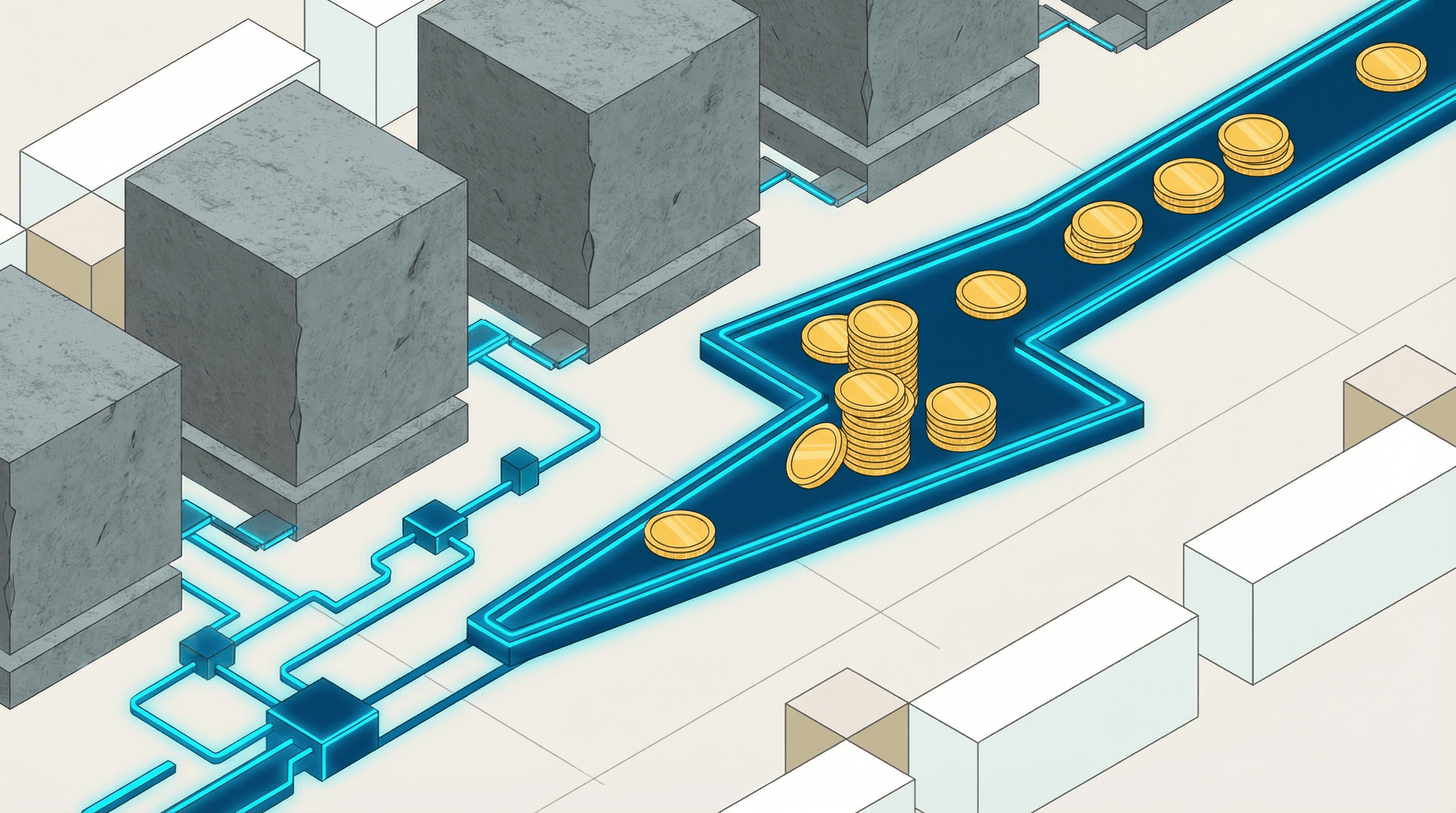
The rise of digital assets has pushed stablecoin transaction volumes to roughly $33 trillion in 2025. As adoption scales, the speed differences are an important consideration as usage grows.
The best blockchains for fast stablecoin transactions include Ethereum and its L2 networks like Arbitrum and Base, Solana for high-speed settlement, Tron for emerging market transfers, BNB Chain for exchange liquidity, and Plasma, which eliminates fees while maintaining regulatory compliance.
In this article, you will learn about the key metrics defining transaction speed, compare the performance of major networks, and discover why Plasma is the logical evolution for stablecoin payments.
Key Takeaways
Solana is among the highest-throughput chains in active use; Plasma is designed to support fast stablecoin payments.
Ethereum remains the largest base-layer venue for stablecoins; many day-to-day transfers have shifted to L2s (e.g., Arbitrum, Base) for lower fees.
Some payment-focused networks are positioned around compliance and institutional needs; adoption varies by jurisdiction and institution.
Introduction
Why Speed Matters in Stablecoin Payments
Latency directly impacts the efficiency of cross-border settlements and foreign exchange. Slow settlement times expose parties to FX rate volatility, which can reduce the final value of a transfer. High latency forces businesses to manage uncertain cash flows and face increased intermediary costs.
Cross-border wires can take 1 to several business days, especially when multiple correspondent banks are involved. Slow transaction times can add friction for real-time commerce use cases.
Reducing settlement lag improves stablecoins’ usefulness as a payment rail.
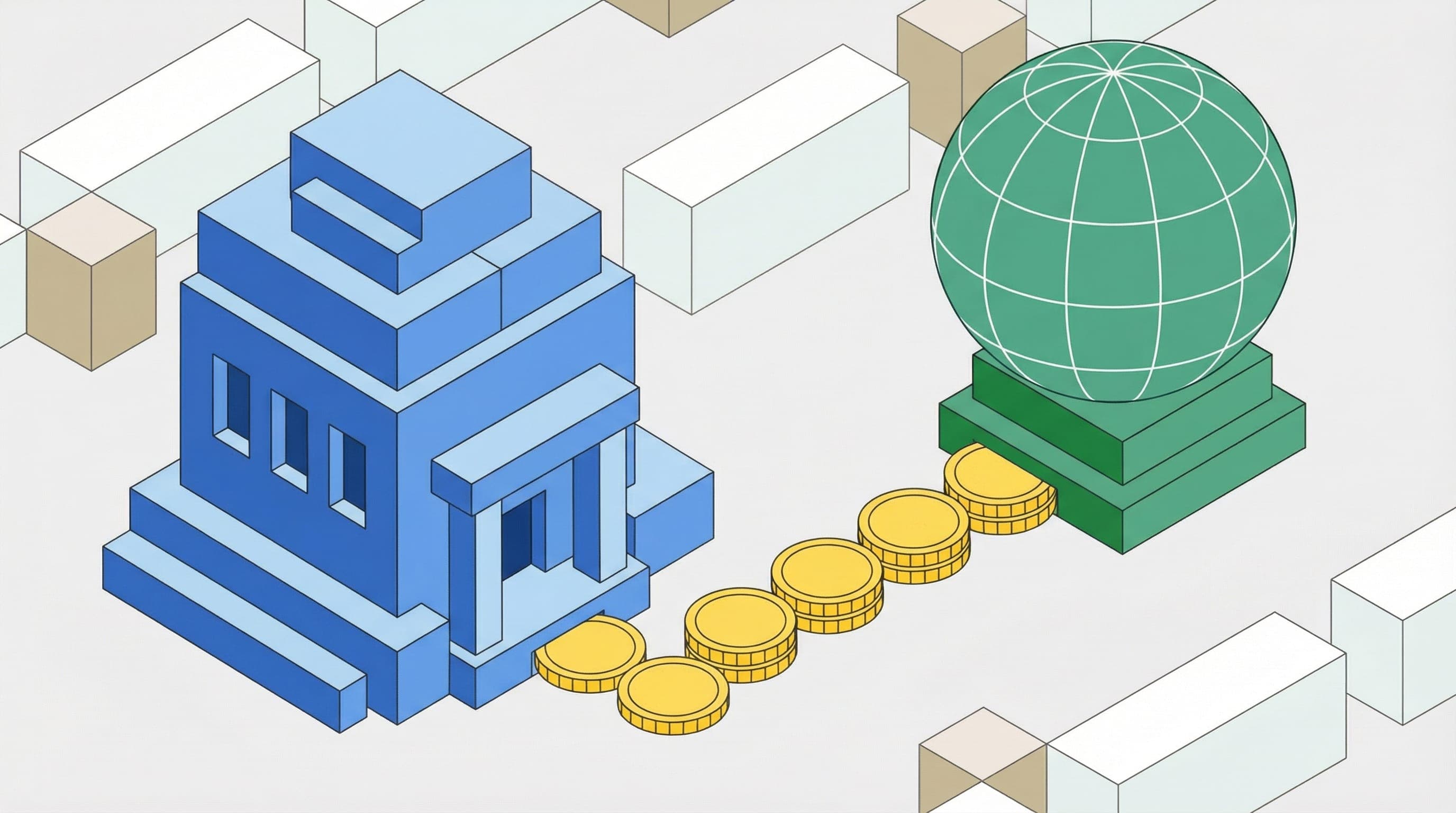
Stablecoins as a Bridge Between Traditional Finance and Blockchain
Financial institutions are increasingly adopting stablecoins to modernize their on/off ramps. According to a September 2025 EY-Parthenon survey, 15% of financial institutions currently offer stablecoin services, while 57% plan to explore new products in this category.
Cross-border payments dominate institutional use cases, leveraging blockchain rails to bypass correspondent banking delays.
The "internet of money" envisions a world where value moves as instantly as data. Stablecoins serve as the primary medium enabling this transformation by reducing some frictions of legacy rails, especially for 24/7 settlement and cross-border transfers.
This shift allows for a more integrated global economy where capital moves without the friction of traditional rails.
Key Metrics for Evaluating Blockchains for Fast Transactions
Throughput, or transactions per second (TPS), is a critical measure of network capacity. High-performance blockchains like Solana achieve real-world throughput between 1,200 and 4,000 TPS, ensuring the network remains responsive even during periods of high demand and heavy stablecoin activity.
Finality measures how long it takes for a transaction to be permanent. Near-instant finality is achieved when a transaction settles in under one second, providing the certainty required for retail payments.
Without rapid finality, merchants face the risk of payment reversals or delayed service delivery.
Evaluating chains requires balancing these three dimensions against ecosystem maturity, regulatory posture, and geographic liquidity distribution.
Ethereum: The Foundation for Stablecoin Liquidity
Market Share and Transfer Volumes
Despite the rise of newer networks, Ethereum remains a dominant force in value settlement. Ethereum hosted approximately $1.2 trillion in stablecoin transactions throughout 2024 and 2025.
This dominance stems from first-mover advantage and the concentration of DeFi protocols that rely on stablecoin liquidity for lending, trading, and collateralization.
Average transaction costs for stablecoin transfers on Ethereum hover around $0.15 in gas fees, though this fluctuates with network demand.
The base layer processes between 15 and 30 transactions per second, with finality times exceeding 12 minutes. These constraints have driven institutional and retail users toward Layer 2 scaling solutions that inherit Ethereum's security while offering faster confirmation and lower costs.
Popular Stablecoins on Ethereum
The network serves as the primary home for the market’s most trusted assets. USDC and USD₮ represent a significant portion of the stablecoin liquidity held on the Ethereum base layer.
The concentration of liquidity on Ethereum creates network effects that sustain its position despite technical limitations.
Developers benefit from established tooling, audited contracts, and deep composability with existing DeFi protocols, making Ethereum the reference implementation for new stablecoin issuers.
Institutional Adoption and Regulated Issuers
Ethereum’s maturity makes it a preferred choice for regulated financial entities. Most institutional stablecoin issuers prioritize Ethereum due to its robust developer tooling and long track record.
Financial institutions conducting treasury operations or settlement functions prioritize networks where counterparty risk is minimized through battle-tested infrastructure.
Ethereum's validator set and economic security provide assurances that newer chains cannot yet match, particularly for large-value transfers.
Ethereum L2 Solutions for Faster Payments
Arbitrum: Mainstream Asset Settlement and DeFi Collateral
Arbitrum is among the largest L2s by total value secured. The stablecoin supply on Arbitrum grew 82% year-over-year to over $8 billion by 2025. Its high Total Value Secured makes it a premier destination for users seeking the security of Ethereum with lower costs and faster speeds.
Arbitrum's optimistic rollup architecture reduces finality to minutes while cutting transaction costs to fractions of a cent. This combination makes it viable for frequent settlement between exchanges, treasuries, and automated market makers.
Developers benefit from full EVM compatibility, allowing seamless migration of contracts without code rewrites or tooling changes.
Base: Payments, Commerce, and Merchant Adoption
Base focuses explicitly on payments and commercial applications, attracting platforms that integrate stablecoin checkout flows for retail and business-to-business transactions.
The network's design prioritizes user experience and merchant integration over complex DeFi primitives, aligning with Coinbase's strategic emphasis on mainstream utility.
Transaction costs remain competitive with other Layer 2 solutions, while settlement finality approaches Ethereum's security guarantees through regular state commitments to the base layer.
Polygon PoS: Scalability and Institutional Pilots
Polygon PoS continues to push the boundaries of scalability through its Gigagas Roadmap. The network aims to achieve 100,000 TPS to support institutional-grade payment volume, a goal supported by partnerships with Stripe and Mastercard.
These integrations span remittance corridors, merchant settlement, and card network interoperability, positioning Polygon as a bridge between traditional payment processors and blockchain rails.
The network's Proof of Stake consensus and checkpoint mechanism balance decentralization with throughput requirements, though it operates as a sidechain rather than a strict Layer 2 rollup.
Solana: High-Speed, Low-Latency Payments
Throughput and Transaction Finality Advantages
Solana is engineered for maximum performance and low-latency execution. Solana typically runs in the high hundreds to low thousands of TPS, with peaks exceeding 5,000 TPS, making it one of the fastest active networks.
With ~400ms block times, it offers a distinct advantage for high-frequency trading and payments.
This performance profile enables use cases that require near-instantaneous settlement, such as point-of-sale payments and high-frequency trading operations.
Solana's architecture relies on proof-of-history timestamping and parallel transaction processing to achieve these speeds without compromising cryptographic security.
Stablecoin Activity and Wallet Integrations
The network’s speed has attracted significant capital and user activity. As of December 2025, stablecoins circulating on Solana peaked above $16 billion. This growth is supported by seamless wallet integrations that allow users to swap and send stablecoins with minimal technical overhead or delay.
Institutional traders leverage Solana's throughput for arbitrage and liquidity provision across multiple venues.
Retail and Institutional Use Cases
Major global payment processors have recognized Solana’s technical superiority. Visa launched USDC stablecoin settlement on Solana in December 2025, marking a breakthrough for blockchain integration.
PayPal also supports the network, allowing U.S. customers to transact utilizing Solana’s infrastructure.
Tron: The Workhorse for Emerging Markets
Low Fees and High-Frequency Transfers
Tron has become a staple for users who prioritize low costs above all else. Tron processed over 65 million USD₮ payments monthly during 2025, serving as a vital rail for high-frequency activity.
The network reduced fees by 60% in August 2025, restoring cost competitiveness for small-value transfers that define its user base.
This fee structure makes Tron viable for use cases like payroll disbursements, savings transfers, and frequent remittances where even dollar-level fees would erode economic utility.
USD₮ Dominance and Dollar-Denominated Utility
The network is the primary venue for the world's most liquid stablecoin. Tron hosted over 46% of the global USD₮ supply as of September 2025, with roughly 78 billion tokens in circulation. This concentration of liquidity makes it the default choice for dollar-denominated transfers in many regions.
Real-World Applications: Remittances, Payroll, and Savings
Beyond speculation, Tron is used for fundamental financial services. Remittances and payroll are primary use cases for Tron in emerging markets, where traditional banking is slow or expensive. It provides a stable way for individuals to save and move value across borders without high barriers.
BNB Chain: Exchange-Liquidity Hub
Market Position and Transfer Volumes
BNB Chain leverages its massive user base to drive consistent transaction volume. The network reached a record 31 million daily transactions in October 2025, demonstrating its ability to handle immense scale. With over 700 million unique addresses, it remains a pillar of the onchain economy.
Stablecoin Ecosystem
The network maintains a diverse and deep stablecoin ecosystem. BNB Chain holds approximately $13 billion in stablecoins and processes billions in transaction volume every single day. Assets like USD₮ and FDUSD are central to the liquidity and trading activity found across the network's apps.
Geographic Focus and User Demographics
BNB Chain has captured a significant share of the global market. Electric Capital’s analysis of stablecoin wallet activity (July–September 2025) suggests BSC activity is concentrated during working hours in Asia, the Middle East, and Africa, with minimal activity during U.S. working hours (<3%).
This focus has created a self-sustaining ecosystem of users and local payment providers.
Plasma: The Next-Generation Chain
Fee-Free Transfers and Compliance-Focused Payments
Plasma is purpose-built to solve the fragmentation of general-purpose blockchains. Plasma supports zero-fee transfers through native contracts and a paymaster mechanism, removing the need for users to hold native gas tokens. This architecture allows for a seamless, "gasless" user experience.
The network is also designed to meet the strict requirements of global regulators. Plasma partnered with Elliptic to enable AML, KYC, and KYT checks at scale, ensuring its infrastructure is regulatory-ready.
This combination of speed and compliance makes it the logical choice for institutional money movement.
Developer Ecosystem and Early Adoption Metrics
Compatibility and ease of use are central to the network's growth strategy. Plasma is fully EVM compatible and supports account abstraction standards like EIP-4337, allowing developers to port existing tools easily.
Factors to Consider When Choosing the Best Fast Stablecoin Chain
Speed, Scalability, and Network Throughput
When evaluating a chain, you must look at its long-term capacity. High throughput is essential for avoiding network congestion during peak times, which can lead to failed transactions.
Networks that prioritize scalability, such as Solana and Polygon, provide a more reliable foundation for high-volume apps.
Transaction Costs and Fee Structures
Cost remains one of the biggest hurdles for mainstream stablecoin adoption. Sub-cent fees can be important for micropayments and high-frequency use cases. While Ethereum offers security, the zero-fee model of Plasma provides a superior experience for everyday users.
Ecosystem Support and Integration Options
A blockchain is only as strong as the services built upon it. Extensive developer tooling and DeFi integrations are vital for asset utility, as seen in the mature Ethereum ecosystem.
Rapidly growing networks like Solana and Plasma are quickly attracting the liquidity and apps needed for global scale.
Regulatory Compliance and Institutional Trust
For businesses, the ability to meet legal requirements is non-negotiable. Chains designed with regulatory-ready features help institutions mitigate risk and ensure long-term viability.
Plasma is positioning around embedded compliance tooling and integrations for regulated use cases.
Conclusion
The future of fast stablecoin transactions is moving toward specialized payment rails. While general-purpose chains like Ethereum and Solana pioneered the technology, Plasma represents the next step by offering fee-free transfers and regulatory-ready design.
Selecting the right blockchain is no longer just about speed; it is about finding the right balance of cost, compliance, and liquidity. The 'internet of money' requires infrastructure that is as fast as data, and specialized networks are uniquely positioned to deliver this level of performance.
As stablecoin transaction volumes continue to set records, the shift toward purpose-built chains will accelerate. Plasma stands out as a high-authority solution for institutions and users who demand the speed of the internet combined with the trust of traditional financial systems.